On opposition, political itinerancy, and the illusion of salvation — by Demola Adetunji
Just last week, I wrote a piece on opposition politics, the Ibadan political summit, and my views on the state of the opposition in Nigeria. I was motivated largely by the body language and conduct of the political parties that participated in that summit.
Let me restate my position clearly, as I did in that piece: I appreciate opposition in any democratic space. Opposition makes election seasons attractive—even sexy. I enjoy the banter, the verbal abuse, and the diversity of opinions. These are essential elements of a functioning democracy.
However, when opposition politics degenerates to a point where no one can clearly articulate what the opposition stands for, what its mission is, or what principles guide its actions, one begins to wonder whether a one‑party system is preferable to the level of confusion and political cluelessness currently on display among Nigeria’s opposition politicians.
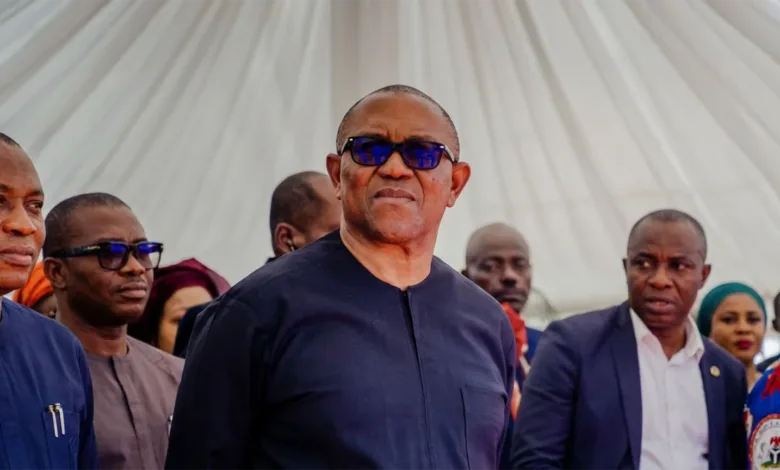
This morning, we woke up to what can best be described as a sermon according to Rabiu Kwankwaso, and shortly after, Peter Obi added an icing to an already badly baked cake. Both men had officially exited political parties they joined less than a year ago. What made their decisions particularly striking was not the act of leaving itself, but the excuse offered for doing so.
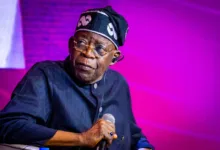

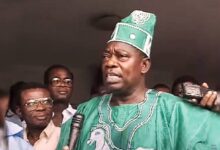
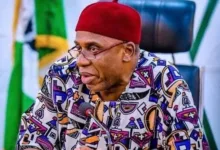
Both accused the ruling party of planting moles within their former and present political parties, pointing accusing fingers at Bola Tinubu as the architect of their political misfortunes.
Let us interrogate this claim honestly.
Peter Obi’s political journey is well documented. He left APGA, joined the PDP, left the PDP, rejoined the PDP, left again, joined the Labour Party, left the Labour Party, joined the ADC, left the ADC, and has now found himself in yet another political arrangement. If history is our guide, are we to believe that Bola Tinubu was also responsible for Obi’s first political transition from APGA to the PDP? Readers are free to draw their own conclusions.
Rabiu Kwankwaso’s story follows a similar pattern. He became governor and senator under one party, left for another, joined the APC to contest for the presidency and lost, returned to the PDP, later dumped the PDP for the NNPP, and has once again moved on. To where exactly remains unclear.
What is most concerning about these serial defections is not movement itself—politics allows for realignment—but the glaring absence of clearly defined missions. Neither Peter Obi nor Rabiu Kwankwaso has taken the time to educate Nigerians on what their ideological mission is beyond one singular obsession: unseating Bola Tinubu.
Without any doubt, it is now obvious that many Nigerian politicians—particularly Peter Obi and Rabiu Kwankwaso—have no coherent mission geared toward salvaging the country. Obi continues to drift aimlessly from party to party, while Kwankwaso appears to be positioning himself for 2031. Yet the kind of political capital, discipline, commitment, and organisational depth required to achieve such an ambition cannot be built by politicians who lack the patience and structure to raise a new generation of disciples and sustain a formidable political movement.
You cannot build a future on political accidents.
This is why I conclude that those who helped sink a ship cannot genuinely present themselves as its saviours.
As for Daddy Atiku, honesty compels me to say this: his selfishness will be the headline when the epitaph of his political memoir is eventually written. Here is a man who had every opportunity to rise above personal ambition—but chose instead a path of endless entitlement, transactional politics, and self‑preservation. History will remember that he never became the Abraham Lincoln of Nigeria he desperately wished to be.