Open letter to former president Goodluck Ebele Jonathan, by Bukola Oyeniyi
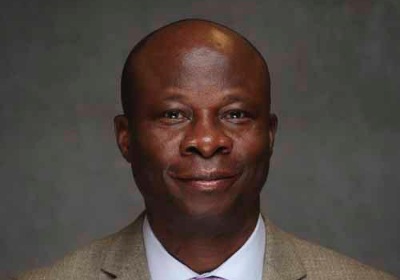
Dear Dr. Goodluck Ebele Jonathan,
I write to you as a concerned citizen and, importantly, as someone who once cheered for your rise. As an indigene of Iresi in Osun State, I was proud to learn that you spent your National Youth Service Corps year in my hometown, teaching at the Community Secondary School in Iresi. That personal connection had me rooting for you; your journey from humble beginnings (we all remember the story of your shoeless childhood) to the presidency inspired hope.
I believed that someone who had lived among ordinary Nigerians – someone who had been an “Iresi man” even if for a year – would understand the plight of the common citizen and govern with empathy and accountability. It is therefore with deep disappointment that I must candidly say: your performance in office was dismal, a profound disgrace to the high expectations we had for you.
This open letter is both an appeal and a documented reminder of the failures that occurred under your leadership, failures that you have yet to fully acknowledge. I urge you to reflect on these issues, take responsibility, and chart a course that puts Nigeria’s well-being above any personal or political ambitions.

Squandered Oil Wealth and Economic Mismanagement
When you assumed the presidency, Nigeria was enjoying unprecedented oil revenues. The price of crude oil was high for most of your tenure, and one would expect that this windfall would be wisely managed for the nation’s future. Instead, under your watch Nigeria squandered a historic opportunity.
You inherited substantial savings – former President Olusegun Obasanjo notes that he left $25 billion in the Excess Crude Account (oil savings) and about $45 billion in foreign reserves in 2007 (after Nigeria had paid off its debts). In fact, oil revenues were so robust that by late 2007, reserves had swelled to $67 billion. But by the time you left office in 2015, those reserves had plummeted to roughly $30 billion. All the oil savings – tens of billions of dollars – were effectively drained.
Obasanjo bluntly accused your administration of “squandering” the $25 billion in crude oil savings he left, as well as additional foreign reserves built up by your predecessor. In his words, failing to save for the rainy day led Nigeria into the economic mess we later found ourselves in.
The data bear this out. During your tenure, Nigeria’s Excess Crude Account (our rainy-day oil savings) fell from about $9 billion at the end of 2012 to just $2.5 billion by early 2015, despite high oil prices through most of that period. Essentially, the massive oil earnings were not saved or invested for tough times. As a result, when oil prices eventually dropped, the country had little cushion and the naira’s value plummeted, throwing the economy into turmoil. By January 2015, the naira was trading around ₦190 to $1, a sharp decline from about ₦150 previously, largely because foreign reserves had been depleted and investor confidence eroded. A responsible economic manager would have foreseen that oil booms don’t last forever. Yet, instead of exercising discipline, your government continued spending as if the party would never end.
It is galling that even as our foreign reserves and savings were vanishing, allegations surfaced that staggering sums of oil revenue were simply unaccounted for. In late 2013, your own Central Bank Governor, Sanusi Lamido Sanusi, alerted you that the state oil company (NNPC) had failed to remit between $10 billion and $20 billion that should have gone to the national treasury. This was not a frivolous charge – Sanusi provided pages of documentation and saw it as part of a pattern of “leakages” of cash in Nigeria’s oil industry. Your response, however, was not to launch a transparent investigation or crack down on those responsible. Rather, you publicly dismissed his claim and removed Sanusi from his post. You cited procedural reasons and mismanagement on his part, but to the Nigerian public it looked like the whistleblower was being punished while the monumental questions he raised were left unanswered.
Indeed, a later forensic audit would still find that NNPC owed the government $1.48 billion that was unaccounted for, even after attempting to rationalize other missing sums. To this day, the true story of that missing oil money has never been fully clarified.)
By failing to plug these leaks and by exhausting our oil savings, your administration set the stage for the economic crisis that followed. When your successor took over in 2015, he met virtually empty coffers despite years of record oil income. Observers noted that you had more resources at your disposal than perhaps any previous Nigerian leader, yet achieved far less in terms of lasting economic buffers. It is telling that Chukwuma Soludo, a respected economist and former CBN Governor, rated your economic management as “the worst… relative to the resources at its disposal”. Soludo pointed out that with the oil boom, Nigeria “should have left more than $100 billion in reserves”, but you left only about $30 billion. He lamented the “unprecedented rate of debt accumulation” that occurred under your watch. In short, despite officially healthy GDP growth during your tenure, the fundamentals were badly managed. Unemployment and poverty remained painfully high (by some estimates, over 60% of Nigerians lived in poverty by 2015) even as Nigeria’s GDP was rebased to become Africa’s largest economy. The growth was largely on paper and fueled by high oil prices, not accompanied by broad improvement in living standards. When you often claimed credit for Nigeria’s economic growth, many of us wondered: growth for whom? The average Nigerian was not feeling it.
Your contemporaries and predecessors illustrate the missed opportunities of your era. Obasanjo – with far lower oil prices in his time – paid off Nigeria’s crippling external debt and left healthy reserves. Under your administration, Nigeria’s debt crept back up and the reserves drained away. Even President Muhammadu Buhari, who succeeded you, despite all his own shortcomings, at least prioritized the recovery of stolen assets and reducing leakages (for example, enforcing a Treasury Single Account for government revenues, which your government only half-heartedly implemented). Buhari also had to take the difficult decisions you dodged – like adjusting an unsustainable fuel subsidy regime later – because the fiscal space had vanished. It says something that in the 2015 election, Nigerians were willing to elect a former military ruler in the hope that he would impose discipline where you had not. In fact, Soludo remarked that he supported Buhari over you partly because he saw that your economic team was “bankrupting the economy and had no clue” how to fix it. Nigerians desperately wanted a leader who would not repeat your administration’s profligacy.
Corruption and Lack of Accountability
Every Nigerian leader has pledged to fight corruption; under your presidency this promise rang especially hollow. Corruption flourished like never before on your watch. Public funds were brazenly stolen or diverted, and there was a pervasive sense that those in high office could get away with anything. Even when scandals broke into public view, your administration’s response was tepid or outright indifferent, creating an atmosphere of impunity.
It’s worth recalling some of the infamous cases. We had the fuel subsidy scam – an audacious scheme where over ₦2 trillion in false subsidy claims were paid out to “marketers” for fuel that was never delivered, bleeding the treasury. There was the Malabu oil block scandal (OPL 245), in which a lucrative oil field was effectively sold in a shady deal that funneled over $1 billion in bribes to politicians and middlemen; half of that money was allegedly used to grease palms of Nigerian officials who in turn splurged on private jets and armored cars. We saw a massive pension fund fraud, and an egregious “kerosene subsidy” scam where billions were paid out but citizens still bought kerosene at exorbitant black-market prices. Shockingly, when a high-profile political ally was actually convicted of corruption, you granted him a presidential pardon (I refer to Mr. DSP Alamieyeseigha, ex-governor of Bayelsa) – sending a demoralizing message in a country hungry for justice.
Under your leadership, Nigerians watched as anti-corruption institutions deteriorated. The two main agencies – the EFCC and ICPC – became, to quote one commentary, “toothless bulldogs” that only existed in name. In the words of one report from 2014, the fear that corrupt officials once had of the EFCC “was the beginning of wisdom” in earlier years, but “that is no longer the case”. Indeed, for the entirety of your presidency, not a single high-profile corruption case led to a conviction. This was despite countless probes and drama in the media – the end result was always the same: no big man ever faced punishment. Even those who were clearly caught (as in the legislature’s fuel subsidy probe where a video showed a bribe being taken) managed to evade jail. Transparency International’s indices during your tenure reflected this sad state – Nigeria continued to rank among the most corrupt nations, and a 2013 survey found 84% of Nigerians felt corruption had worsened in the previous two years, with 75% believing the government was ineffective in fighting it. It is hard to disagree. As one newspaper summarized in 2014: “in the last four years, corruption has assumed a frightening dimension, with the Jonathan administration lacking the will to rein in corrupt officials and address deep-seated rot”. Even as things fell apart, you insisted your government was doing well on corruption, which only added insult to injury. We remember clearly that you gave yourself a high score in anti-corruption at a campaign event – a claim utterly at odds with reality.
Perhaps more than any single failure, this entrenchment of impunity is the most damaging legacy of your time in office. A culture took root in which public officials felt untouchable, knowing that as long as they were loyal to the powers that be, they could loot and go free. Nigeria’s international image suffered, but more painfully, we citizens suffered – because the money that was stolen or wasted was money not spent on hospitals, schools, or jobs. The corruption was not an abstract notion; it was felt in the daily lives of Nigerians as missing roads, power outages, and inadequate security (all things I address later). Even the war against Boko Haram was hampered by corruption – funds meant for military equipment were allegedly embezzled, leading to ill-equipped soldiers. Under your watch, some senior officials were accused of turning the war into a money-making venture (the infamous Dasuki arms procurement scandal came to light after your tenure, revealing how billions allocated to security just vanished).
In sum, there was a leadership vacuum in accountability. You often deflected blame, claiming corruption is “not the same as stealing” – a remark that rightly outraged Nigerians. What we needed was a president who would lead by example, strengthen institutions, and hold even his own allies accountable. What we got was the opposite. By 2015, Nigeria had become a “kleptocrat’s haven” in the eyes of the world, to the point that recovering our plundered wealth became a primary focus of the next administration. I urge you to reflect on how this happened under your watch, and how you might even now help make amends (for example, by speaking the truth about unresolved cases like the NNPC missing billions or the Malabu scandal, and encouraging those culpable to face justice). Silence or denial from you only adds to our disillusionment.
Infrastructure Promises Unfulfilled
Nigerians vividly remember the promises you made when you first ran for office in 2011 – prominent among them was a pledge to transform our national infrastructure. You inherited a country with crumbling roads, unreliable power supply, and decaying public utilities, so the high hopes were justified. Yet, by the end of your tenure, infrastructure development remained woefully insufficient, and many of your grand promises were left unfulfilled.
Let’s start with roads, an area you frequently claimed success in. It is true that some road rehabilitation occurred under your administration, and your ministers often gave glowing reports of thousands of kilometers of roads “revived.” However, Nigerians who travel those roads every day saw a very different picture. Despite budgets allocating trillions of naira to road projects, our highways largely remained death traps. As one report noted, your administration spent or budgeted about ₦1.76 trillion on 184 road projects across the country – an enormous sum – yet the **“dismal picture” on ground hardly improved. Even critical arteries were neglected. For instance, you vowed in 2011 to reconstruct the Lagos Murtala Muhammed International Airport road – the gateway into Nigeria – but left office without delivering on it. The same is true for the Apapa-Oshodi Expressway leading to our busiest seaports; it remained riddled with potholes and congestion throughout your tenure, despite being vital to commerce and revenue. In the Southwest, the Lagos-Ibadan Expressway project did not progress as expected (work only accelerated after you left). In the North, the Kaduna–Abuja road and others stayed in poor condition. In the Middle Belt, the critical Lokoja-Abuja highway dragged on interminably.
Most striking was the neglect in the regions you politically banked on. In the South-East, two of the most strategic highways – Onitsha–Enugu and Enugu–Port Harcourt – were in deplorable condition throughout your presidency, even though you personally promised to fix them. People joked that those roads had “more craters than the moon,” as journeys that should take a few hours turned into all-day ordeals. By 2015, those roads had actually worsened compared to 2011, with whole stretches virtually impassable. Similarly, in the South-South (Niger Delta), aside from some cosmetic work, the flagship East-West Road remained under construction and largely impassable for years, despite repeated assurances from your government. This was a road that directly affects the lives of your own Niger Delta people, yet it “suffered neglect in spite of government assurances”. In Abia State and others, governors cried out that federal roads had “virtually collapsed”, urging the federal government (i.e., your administration) to act or allow states to take them over. Such pleas fell on deaf ears.
To be fair, there were some positive steps. Railway rehabilitation is a notable example often cited as an achievement of your government. You did resuscitate the long-defunct Lagos-Kano narrow-gauge rail line, and initiated the Abuja-Kaduna standard-gauge rail (completed just after your tenure). These are commendable, but they were baby steps given Nigeria’s huge infrastructure needs. Even in the power sector – which many Nigerians consider the litmus test of progress – results were deeply disappointing. You oversaw the privatization of power generation and distribution companies and often claimed that power output was improving. Yet, the average Nigerian home still experienced relentless blackouts in 2015, no better (and in some places worse) than in 2010. The national grid’s output stagnated around 4,000 megawatts, a figure embarrassingly low for a country of over 170 million people. The reforms, while conceptually sound, were mismanaged and marred by favoritism in the sale of assets. The outcome was that Nigerians continued to spend billions on generators and diesel, waiting for a stable public power supply that never arrived.
Infrastructure is one area where leadership vision and integrity are critically tested. It requires not just announcing big projects but seeing them through by tackling the corruption and incompetence that often plague execution. Your administration, unfortunately, did not pass this test. High-profile projects were announced with fanfare but fizzled into abandonment. Billions appropriated for infrastructure either never fully released, or vanished into corrupt contracts. Even your own party’s officials at times expressed dismay – in late 2014, the PDP’s National Publicity Secretary publicly decried the terrible condition of roads in the South-East and had to “summon” your Works Minister to do his job. When a ruling party is berating its own government’s performance, you know there’s a serious problem.
The bottom line is this: the quality of life of Nigerians did not significantly improve under your infrastructure programs. Where we expected new roads, rail, power, and water systems, we largely got groundbreaking ceremonies and excuses. You often blamed “limited resources” or political opposition for delays, but as Nigerians saw it, the resources were there – what lacked was the prudent, urgent, and honest deployment of those resources.
Security Collapse and Insurgency
Of all the duties of a president, the security of citizens is paramount. Here, history will record your tenure as a period when Nigerian security collapsed in an unprecedented manner. When you took office in 2010, the nation faced security challenges, yes – notably the emerging Boko Haram militant group in the northeast – but few imagined how much worse things would get. Under your watch, Boko Haram grew from a fringe terror group to a formidable insurgency that at one point seized control of a territory the size of a small European country, declaring a caliphate in our own sovereign land. The Nigerian Northeast became a war zone, tens of thousands of our people were killed or abducted, and millions displaced. It stands as one of the darkest chapters in Nigeria’s post-civil war history, and your leadership during this crisis was, frankly, gravely inadequate.
Nothing illustrates this better than the tragedy of the Chibok girls’ kidnapping in April 2014. Over 270 schoolgirls were abducted from their dormitory by Boko Haram militants, an incident that drew global attention and outrage. Nigerians waited for decisive action – immediate pursuit, rescue efforts, something. Instead, your government’s response was shockingly slow and disorganized. It’s documented that it took a staggering three weeks for security forces to even visit the town of Chibok after the incident. In the critical early days when the trail was hottest, there was confusion and denial – some of your spokesmen even questioned if the abduction really happened, calling it a stunt by your opponents. That vacuum of leadership was disastrous. A civil society activist aptly described the situation: “It was an absent state. A state that does not carry out its responsibilities”. As the #BringBackOurGirls protests gained momentum and the world’s media shone a light on Nigeria, our government was missing in action. The delay and lack of coordination allowed the captors to disperse and hide the girls. Over a month later, your officials admitted they still had no clear idea how many girls were missing, which only reinforced the sense of incompetence.
The Chibok fiasco became, as one commentator said, “a referendum on your administration.” Nigerians of all backgrounds, even those who had supported you, were horrified that our government could fail so utterly at a basic duty. The perception – rightly or wrongly – was that you did not initially take the Boko Haram threat seriously because it was far from the Niger Delta and mostly affecting communities in the far north. Whether or not that was your mindset, your public actions fed that narrative. A day after the Chibok abductions, instead of convening your security chiefs or rushing to Borno State, you were seen at a political rally in Kano, “dancing and enjoying” yourself on stage. Images of that event, juxtaposed with the weeping families in Chibok, will remain a devastating indictment of your priorities at that time. (You later cancelled a planned visit to Chibok, compounding the PR damage.) It took international pressure and outrage before your government finally galvanized some action – inviting foreign assistance, etc. – by then, irreversible damage had been done.
Beyond Chibok, the overall handling of the Boko Haram insurgency was riddled with failures. Under your watch, Boko Haram’s attacks escalated from occasional bombings to full-scale assaults: they bombed the UN building and police headquarters in Abuja in 2011; massacred schoolboys in Buni Yadi in 2014; overran military bases and seized towns like Bama, Gwoza, and much of Borno. By late 2014, the group brazenly controlled dozens of local government areas. The Nigerian military – once respected in Africa – appeared ill-equipped, demoralized, and sometimes in disarray, with cases of soldiers refusing orders or running from battle due to lack of arms. It is now well-known that corruption (again that cancer) played a role in this, as funds for military modernization were siphoned off. The result was that our soldiers fought in canvas shoes against insurgents armed with heavy weapons. While these deotails became clearer post-2015, as President you must have seen the warning signs. Yet, there was no effective shake-up or accountability in the armed forces leadership until things had fallen apart.
It is important to acknowledge that eventually – very late in the day, in early 2015 – your government did step up military operations, coordinating with neighboring countries’ forces to push back Boko Haram. Several towns were liberated around the time of the 2015 elections. But this sudden burst of effectiveness only raised further questions: Why did it take so long? Why only when election pressure mounted did the urgency come? One cannot avoid concluding that the will to decisively confront the insurgency was lacking for far too long under your leadership. In contrast, your successor President Buhari made crushing Boko Haram a top campaign issue, and upon taking office he immediately moved the military command center to Borno and intensified operations. Within months, Boko Haram had been driven from virtually all the territory it held (though, to be fair, the insurgency continues in guerilla form). The point is, the war could have been prosecuted more vigorously earlier, potentially saving thousands of lives and untold suffering. Instead, your term saw Nigeria’s territorial integrity blatantly violated by terrorists while the government seemed paralyzed.
The collapse of security was not limited to the Northeast. Under your tenure, violent crime, kidnapping, and communal clashes also spiked across many regions. There was a general sense that law enforcement was overwhelmed and often compromised. High-profile killings (like that of prominent opposition figures) went unresolved. The Niger Delta, your home region, saw a resurgence of oil theft and occasional militancy despite the ongoing Amnesty Programme – signaling that the root causes were not truly being addressed, only paid off. In the Middle Belt, clashes between farmers and pastoralists worsened. All of this added up to an image of a country adrift in the face of security challenges, lacking clear direction from the Commander-in-Chief.
Mr. Jonathan, I recount these painful details not to berate you endlessly, but so that we do not forget the magnitude of what occurred. Too often in Nigeria, we move on quickly from one crisis to the next. But the blood of our citizens spilt during those years, and the tears of their families, demand that someone answer for what was done and what was not done. As President at the time, ultimate responsibility lies with you. No doubt you had advisers, military chiefs, and state governors in the mix, but leadership – real leadership – could have made a difference. Imagine if you had overhauled your security team early, or aggressively tackled the corruption in military procurement, or rallied the nation with inspiring, unifying rhetoric against the extremists (instead of occasionally downplaying the threat). Those were missed opportunities for statesmanship.
A Comparison of Leadership and Missed Opportunities
To fully drive home the point, it’s useful to compare your record with those of other leaders Nigeria has had, not because any of them are perfect, but because it highlights what could have been under better stewardship.
Under President Obasanjo (1999–2007), Nigeria was far from a paradise – corruption existed then too – but there was a clear sense of direction and legacy-defining reforms. He secured debt relief that wiped out $30 billion of our external debt, stabilizing public finances. He built up foreign reserves from virtually nothing to about $45 billion by the time he left. Obasanjo also created key institutions like the EFCC and started the due process mechanism in contracting, signaling an intent (at least initially) to curb graft. He invested in telecommunications by licensing mobile operators, which led to a revolution in our economy. He certainly had his flaws and scandals, but Nigeria left that era with a sense that some groundwork had been laid (e.g., a privatization program, bank consolidation, new pension scheme, etc.).
In contrast, under your administration, despite even higher revenues, we saw a reversal or stagnation in many of those gains. The Excess Crude Account Obasanjo filled was emptied; the debt relief he fought for was partly squandered as we accumulated new debts without corresponding assets to show. The anti-corruption agencies he formed became moribund. Even something as symbolic as the power sector reform – which began in the Obasanjo era – got stuck in limbo under you, with privatization half-done and yielding meager results. It felt like a period of drift, where we should have been building on prior gains but instead were consumed by endless political intrigues and scandals.
Looking at President Muhammadu Buhari (2015–2023), whom Nigerians chose in 2015 largely out of frustration with your government: again, he was no miracle-worker and is himself subject to many criticisms today. But consider a few contrasts that underscore missed chances during your time. Buhari’s administration implemented the Treasury Single Account (TSA) nationwide, an idea long recommended to plug leakages – your government had dithered on this, allowing ministries and agencies to keep thousands of accounts that facilitated embezzlement. Buhari’s government (at least in the beginning) made some progress in recovering stolen assets and prosecuting some corruption cases (including officials from your tenure); it wasn’t as thorough as many hoped, but the effort was visibly greater than under you. In infrastructure, Buhari prioritized completing projects that languished – for example, the Second Niger Bridge (promised since Obasanjo’s time, even you did a groundbreaking ceremony for it) was actually finished and opened after decades, in 2022. Major highways like the Lagos-Ibadan Expressway saw real progress. The train projects you started were completed or expanded (Abuja-Kaduna began operations, Lagos-Ibadan standard gauge was launched). These actions don’t excuse the shortcomings of the later Buhari years, but they show that with political will, some of these long-standing projects could be delivered – which begs the question, why didn’t that happen under you?
Even on security, while Boko Haram is still active, Buhari’s leadership saw the group’s territorial ambitions largely curtailed and many of the kidnapped captives (including some Chibok girls) finally rescued or released. Again one might ask: could this not have been achieved sooner under a more resolute commander-in-chief?
The point of these comparisons is not to exalt others at your expense, but to emphasize that Nigeria has seen better management and could have expected better from you. You had an extraordinary mandate – the goodwill of Nigerians and the world, after the peaceful transfer of power from Yar’Adua. You had the advantage of high oil prices for most of your tenure, and the sympathy of a nation that wanted you to succeed. Rarely has a Nigerian leader begun a term with such a reservoir of public hope. By 2015, much of that hope had turned into anger and despair. The 2015 election, which you to your credit conceded honorably, was essentially the Nigerian people saying “Enough. We demand change.” It was the first time an incumbent president in Nigeria was voted out. That happened on your watch, largely because of your record.
Conclusion: An Appeal for Accountability and Closure
Dr. Jonathan, I have spoken plainly because the issues at hand are of great consequence. This letter is not about scoring political points – I am just one Nigerian among millions who feel deeply let down by your time in office. I supported you, I prayed for your success, and I would have loved nothing more than to be writing a letter of praise instead of reproach. But facts are stubborn things. The facts of your presidency – the mismanaged opportunities, the rampant corruption, the unkept promises, the insecurity – are glaring and cannot be brushed aside by any narrative of “good governance” without accountability.
What do I seek from you? First and foremost, an acknowledgment. It would mean a great deal to Nigerians to hear you admit, without deflection or excuse, that mistakes were made – serious mistakes – under your leadership. We have heard enough blame on others or rationalizations; we want to see a sense of remorse and responsibility on your part. You once said in a speech that “I am the most criticized president in the world.” Perhaps that’s true, but have you earnestly reflected on why that is so? Criticism, when it’s nearly unanimous, is often a sign that something went profoundly wrong. A public apology from you to the nation – for the corruption that festered, for the lives lost to insurgency, for the money that vanished, for the infrastructure not built – would be a starting point for healing. It won’t undo the damage, but it can set a tone of contrition and perhaps begin to rebuild trust.
Next, I urge you to firmly reject any notion of re-entering Nigerian politics in a quest for power. There have been rumors and murmurs in some quarters about a possible comeback or involvement in future elections. Please, for the sake of Nigeria, don’t go down that path. Your time has come and gone, and the nation cannot afford a return to the “business as usual” that your administration represented. By stepping aside gracefully and encouraging a new generation of leaders, you would demonstrate that you put the country above self. In fact, one of the dignified acts you are remembered for is your phone call conceding the 2015 election – it helped prevent post-election violence and showed statesmanship in defeat. Build on that positive legacy: be remembered as the man who, when given a second chance to grasp for power, chose instead to support the democratic process and mentor others from the sidelines.
You still have a role you can play: as an elder statesman who speaks truth to power (even if it implicates your own past decisions), as a advocate for peace in the region (you’ve done some commendable work in election observation and mediation in Africa since leaving office), and as someone who can help educate future leaders on what pitfalls to avoid. Sometimes a negative example can be as powerful a lesson as a positive one. If you are honest about where you fell short, future office-holders can learn from it. But if you stay silent or, worse, seek to rewrite history, those lessons will be lost and the same mistakes may be repeated.
In closing, I want to remind you that the hardship Nigerians endure today – the economic struggles, the insecurity, the infrastructural decay – did not emerge from a vacuum. They are in large part a cumulative result of years of governance failures, with your tenure featuring prominently. This is not to absolve those who came before or after you, but to state that leadership accountability is not negotiable. True patriotism requires that you face this truth. I and many Nigerians of conscience are disillusioned, but we remain hopeful that Nigeria can someday reach the potential we know it has. That journey requires honest reflection from those who have led us to where we are.
I ask you, therefore, to be part of the solution going forward: Own up to your legacy, apologize to the nation, and commit your remaining public life to atonement and service – not by holding office, but by guiding, advising, and supporting better leaders to do what you could not. History can be kind to those who show humility and learn from their failures. It is not too late for you to demonstrate that humility.
Nigeria is bigger than any one person. You once said your ambition was not worth the blood of any Nigerian; I respected that sentiment when you conceded defeat. Now I challenge you to make a similarly profound statement by your actions: that your ambition is not worth the continued suffering of Nigerians, and thus you will never seek to rule over us again, but will instead devote yourself to repentance and positive influence from behind the scenes.
As an Iresi man, I began with personal feelings of pride and excitement toward you. I will end on a personal note as well: that pride turned into profound sorrow and disillusionment as I watched your tenure unfold. I felt betrayed. Yet, I write not out of hate, but out of a desire to see lessons learned. I hope you read this letter in the spirit it is written – bluntly, yes, but respectfully and earnestly. May it stir your conscience.
Sincerely,
A Concerned Nigerian from Iresi, Osun State
Bukola Adeyemi Oyeniyi (Ph.D.)Reynolds College, Missouri State University
Email:[email protected]