Peter Obi’s 2027 declaration: timing, terrain, and the hard politics ahead, by Chioma Ahaghotu
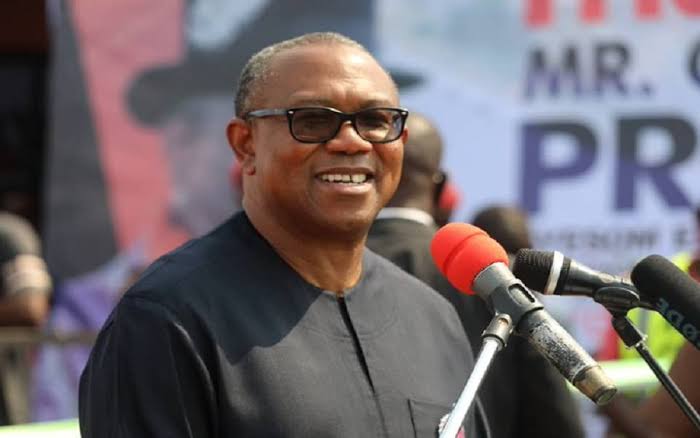
Peter Obi has formally stated his intention to run for president again in 2027.
On the surface, it sounds like continuity.
In reality, it reopens unresolved questions about structure, party viability, and the shifting balance of power in Nigerian politics, questions that are now sharper than they were in 2023.
This declaration does not happen in a vacuum. It lands at a moment when political gravity is visibly tilting in one direction.



The broader political environment : Governors are defecting in droves to the ruling APC. This matters more than social media sentiment ever will. In Nigeria, governors are not just elected officials; they are political machines, controlling local structures, patronage networks, mobilization capacity, and often the tone of electoral outcomes in their states. Every defection strengthens the incumbent ecosystem and shrinks the competitive space.
Meanwhile, the traditional opposition platform, the PDP, is functionally hollowed out in many states. Internal fractures, leadership crises, and defections have left it struggling to act like a national opposition, let alone a serious vehicle for a presidential comeback. In practical terms, PDP is no longer a dependable fallback option at any level.
This is where Obi’s declaration becomes complicated.
Labour Party, the platform that carried him in 2023 is still plagued by leadership disputes, weak institutional depth, and inconsistent discipline.
The core question is no longer whether Labour Party can win an election, but whether it can even stay coherent long enough to incubate one. Movements can mobilize enthusiasm; parties must survive stress. Labour has yet to prove the latter.
Then there is the ADC coalition talk. The much-discussed coalition remains ideologically fluid and strategically ambiguous. There is no guarantee it will align behind Obi, and even less assurance that its internal actors would subordinate their ambitions to his candidacy. Coalitions in Nigeria tend to collapse under ego, deep pockets and personality, not ideology.
Put simply, Obi has declared for 2027 without a clearly viable, battle-tested political vehicle. That is not a moral failure, but it is a strategic flaw.
For Obi supporters, the declaration should end romanticism and begin realism. The language of “movement” must now translate into the language of structure.
Early declaration means there is time, but time cuts both ways. It increases scrutiny. Supporters can no longer blame last-minute logistics or surprise incumbency. Questions about party discipline, alliance-building, regional outreach, and elite negotiation are now unavoidable.
If supporters respond only with enthusiasm and not with demands for institutional seriousness at the party and organizational level, they will repeat the same cycle, it will be a matter of immense passion without power.
Then there is the voter bloc. For undecided and swing voters, Obi’s announcement reframes him as a long-term political actor rather than a one-cycle protest option.
However, the. confirmation invites harder questions:
Can he assemble a national coalition in a landscape increasingly dominated by the incumbent and the APC?
Can he operate effectively within Nigeria’s party-centered electoral reality rather than around it?
Can he convert moral clarity into governing leverage?
Voters will now judge trajectory, not symbolism.
And for Obi’s campaign, the most difficult challenge awaits. Declaring early removes excuses.
It creates runway for fundraising, negotiations, reconciliation with political elites, and party stabilization, or party replacement.
But it also exposes weaknesses early. Every unresolved party crisis, every failed alliance, every public contradiction will be read as evidence of capacity or the lack of it.
In a system where incumbency is reinforced regularly by defections and institutional capture, strategy, not sentiment, will decide outcomes.
For Obi, his winability remains shaky. His 2027 declaration is bold, but boldness is not the same as readiness.
The political map is tightening, not opening.
APC is consolidating power. PDP is fading as a national counterweight and opposition. ADC is uncertain. Labour is unstable.
An early declaration creates opportunity only if it is matched with ruthless clarity about party, power, and coalition politics.
Otherwise, time will not be an advantage, it will simply make the limitations more visible.
2027 will not be won by belief and conviction alone.
It will be won by structure, alliances, and hard political decisions that many supporters still resist confronting.
The time to show workings is now.
By Chioma Amaryllis Ahaghotu