Posterity will be the ultimate judge of Buhari’s time in power, by Folabi Ogunleye
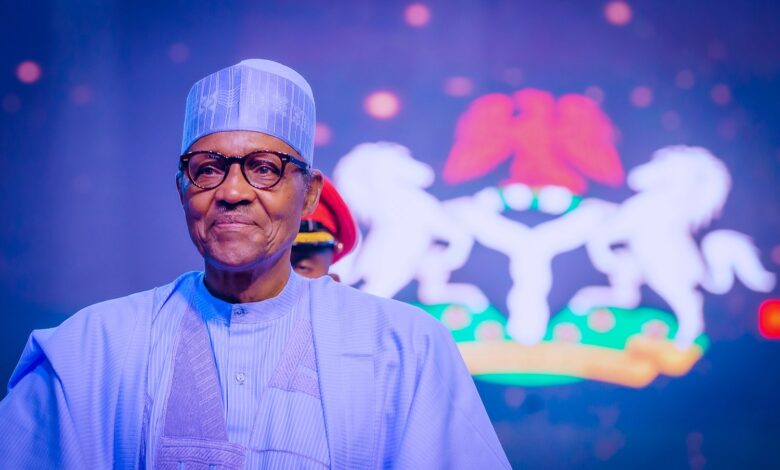
For the longest time, I resented the abrogation of our 2nd Republic in 1984 by the Buhari-Idiagbon military regime, because I felt that the interruption [yet, again] set back the pace of our democratic growth in Nigeria. Had our democracy not been interrupted again and again, it would have learned to walk earlier than it did, after crawling for a while.
Nevertheless, I have often had cause to wonder and ponder: Perhaps, had the Buhari-Idiagbon rulership not been cut short by the very same approach that heralded its arrival on the scene of Nigerian leadership, the regime might have succeeded – or not – at installing a new era of order and probity for the long run in Nigeria.
The objective conclusion is that the Buhari-Idiagbon coup of 1984 ended up being a negative, because it caused Nigeria to remain under military stranglehold until 1999, when fate forced the military to relinquish its hold on the country and return us to democratic governance.
However, decades later, although WE WANT NO FURTHER COUPS IN NIGERIA, people like me now look beyond the error of the Buhari-Idiagbon (mis)adventure, believing that it was a sincere[?] attempt to sanitize our polity – one that was borne of revolutionary vision, which was attempted without the bloodshed of military pustches.


This is especially noteworthy given that the face of that regime, Muhammadu Buhari, transformed completely into that of an unabashed democrat who submitted himself fully to the best of democratic ideals in his expressions as well as in his actions, both as candidate for president, and later as president.
Muhammadu Buhari’s biggest challenge as a civilian leader was that he was not a politician in the most practical sense as it applies to governing a diverse, complex society like Nigeria. He was a little too aloof to politicking, preferring the hands-off approach to leadership and general political engagement than going in deep in it.
The price of President Buhari’s approach to leadership was that it left opportunists under his watch, in and around his cabinet and in his offices, running circles around him, undermining his authority as president and commander-in-chief, whereas a Nigerian leader needed to be hands-on politically, and fully engaged politically.
But, because of the massive voting bloc that he commanded in his region, and his iconic image as a disciplined spartan leader, we the locked-out Nigerians – the Nigerians who most closely resembled the progressivism for which the likes of the late Obafemi Awolowo stood for – desperately needed a man like Muhammadu Buhari to arrest the dominance of the entrenched political powers that existed before his second coming as a leader.
It is for this reason that aligning with Buhari and his Congress for Progressive Change, CPC, in February of 2013 was a political masterstroke by Asiwaju Bola Ahmed Tinubu and his All Progressives Congress, APC. It liberated our political playfield in Nigeria for the better future, and we are all better off for it today.
Unfortunately, the civilian Buhari Administration rose to power at a time when the economic fortunes of Nigeria was on the cusp of a major meltdown. This situation was compounded when an international pandemic sent waves of economic tsunami across the world.
Nigeria is still digging out from that economic disaster. But it could have been a lot worse had Nigeria’s affairs been left in the hands of those who ran the show prior to the ongoing political dispensation, where Buhari was once the ‘Moses’ that heralded President Tinubu’s arrival at the helms.
The Muhammadu Buhari leadership was a mixed bag. Some of us harbor a soft spot for him in spite of his imperfections in power. Others, too, habor resentment for the same man’s leadership. But that is life. It is what it is. We should not begrudge one another of our feelings in this regard. Posterity is the ultimate judge of his time as a leader but the final verdict is for the gods to decide.