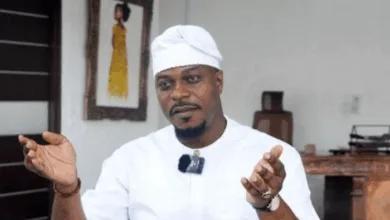
Reflections on the Ibadan political summit and the state of opposition — by Demola Adetunji
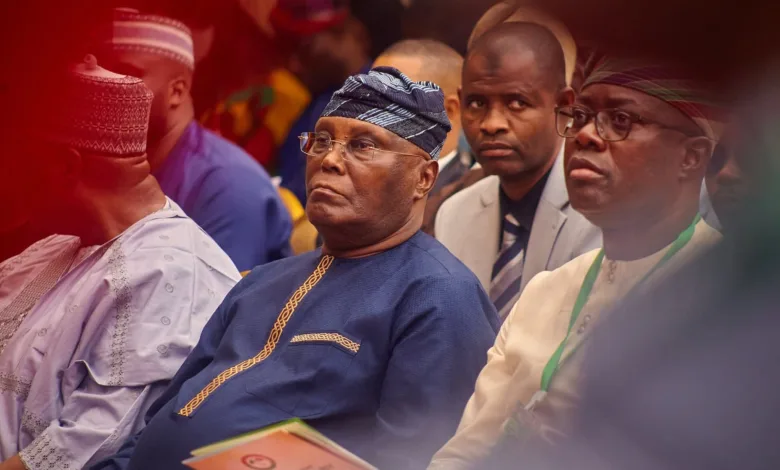
I had initially resolved not to comment on the 2027 elections until the electoral umpire officially declared the commencement of political activities. However, the gathering in Ibadan yesterday compelled me to reconsider that position.
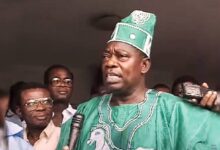
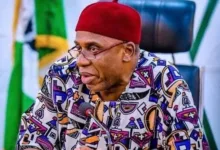
For the first time since the 2023 general elections, we witnessed various political organisations coming together in what appeared to be a concerted effort to challenge the incumbent government. In principle, this is the beauty of democracy. If anything, more conventions of this nature should be encouraged before the next general elections so that Nigerians can assess alternatives and choose viable options from the available political spectrum.
However, after listening to speaker after speaker for nearly five hours, I became deeply disillusioned. These political leaders, who accused the current government of having failed Nigeria, offered nothing tangible to demonstrate how they would rescue the nation from its present challenges. This raises a fundamental question: were they gathered for meaningful political engagement, or was the event simply an intellectual jamboree masquerading as an alternative government?
I expected the summit to clearly articulate what the opposition would do differently. The current administration consistently emphasizes reforms and institutional recalibration, particularly in the economic sector. It would have been reasonable for the Ibadan gathering to provide Nigerians with a concrete alternative economic roadmap.

Take fuel subsidy removal, for instance. Before this administration, Nigeria borrowed heavily to sustain fuel subsidies. The present government removed the subsidy, a decision I personally support and have long advocated for. Yet, none of the opposition figures addressed this critical policy. Would a future president from their fold reintroduce fuel subsidy? If so, how exactly would it be funded? Nigerians deserve clarity on these matters, considering how profoundly subsidy removal has affected households nationwide. Unfortunately, these questions were conspicuously absent from their communique.
This silence extended to several other critical national issues. One wonders whether this omission was deliberate or simply evidence of policy emptiness.
Turning to the six-point communique issued at the end of the summit, I must state that while setting an agenda for government is fundamental in any democracy, proposing reckless or legally indefensible demands amounts to political indolence.
The first demand called for the removal of the INEC Chairman on the grounds of mistrust. While trust in electoral institutions is essential, calling for the sack of a public official based on assumptions that he may not favour certain political interests is deeply troubling. Using INEC’s refusal to recognise a faction as justification for his removal is disingenuous. INEC did not initiate litigation, nor did it privatise any political party. As President Tinubu once remarked, some politicians are guilty of “privatising” party structures for personal benefit.
Besides, INEC is an institution with resident electoral commissioners across the country. To suggest that one individual can unilaterally manipulate national election outcomes reflects a disturbing misunderstanding of how the electoral system operates—especially from individuals who have previously held public office.
The second demand was for the National Assembly to amend the Electoral Act, a position ironically championed by a former electoral officer who, in 2023, famously misinterpreted constitutional provisions regarding Abuja’s status—an interpretation later dismissed by the Supreme Court.
More embarrassing was the silence of serving senators and members of the House of Representatives present at the summit—lawmakers who were part of the passage of the very Electoral Act now being condemned. The Act was passed overwhelmingly. Why was no objection raised during the legislative process? Either these lawmakers were ignorant of the contents of the law they passed, or they are now supporting a narrative that delegitimises their own legislative conduct. Either way, it reflects poorly on them.
The third point warned against Nigeria sliding into a one-party state. Frankly, this argument defies logic. How can a country hosting a summit of over fourteen political parties, openly criticising government and issuing demands, be described as a one-party state? A genuine one-party state would not permit such gatherings in the first place.
In conclusion, the Ibadan summit exposed a deeply troubling reality about Nigeria’s opposition. It revealed a coalition that is fundamentally weak, intellectually hollow, and structurally incompetent. The individuals present displayed a worrying lack of political integrity and seriousness of purpose.
I remain unconvinced that this group can “rescue Nigeria” as they claim. A sailor who wrecked a ship cannot credibly present himself as its saviour.