Three years on: Nigeria, the reckoning, and the road to a trillion-dollar economy — by Olabode Opeseitan
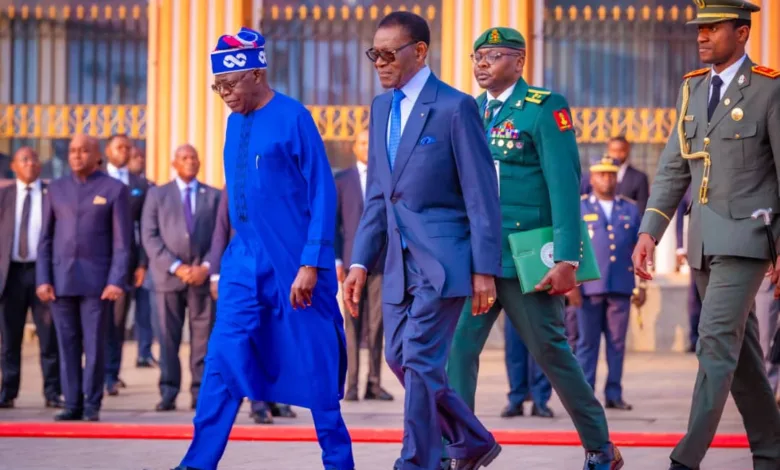
I recently came across a LinkedIn post featuring a throwback photograph of President Bola Ahmed Tinubu signing the nomination form for Professor Yemi Osinbajo ahead of the 2015 election. The photograph was unremarkable in itself. What stopped me cold were the comments beneath it.
The contributors were not street-corner agitators. They were educated professionals: engineers, finance managers, operations specialists, MBA holders, even a PhD. Credentialled men and women who have passed examinations, written dissertations, and mastered the language of expertise. Yet the loudest voices among them were not reasoning. They were reacting. Not analysing. Emoting. Not interrogating facts. Wielding pain.
And pain, I understand. The cost of living is real. The hunger is real. The pressure on families is real. But pain without context is not analysis. It is cacophony dressed in outrage. And a nation that cannot think clearly about its own condition cannot govern its own future.
Let me be abundantly clear: this is not a universal indictment of educated Nigerians. Most economists and financial analysts who have studied the numbers understand exactly what is happening and why.
Development experts, fiscal policy professionals, and institutional observers, domestic and international, largely agree on the diagnosis and the direction. And among ordinary Nigerians who have directly felt the impact of this rebuilding, a different story is emerging: millions of students who have received interest-free loans for the first time in their family’s history, young engineers equipped with skills that were previously inaccessible, farmers who now plant in two seasons instead of one. These are not statistics to them. These are changed lives. The voices that concern us here are a specific kind: the lettered commentator who has the tools to analyse but chooses instead to misdiagnose, trading intellectual rigour for emotional applause.
So let us think clearly. Let us ask the honest questions that anger tends to drown out.
Where was Nigeria three years ago? What has actually changed? Where are we heading? And what is the fastest route to the $1 trillion economy that President Bola Tinubu has set as his target?
The Inheritance: A Dead Economy
When Tinubu assumed office on May 29, 2023, he did not inherit a struggling economy. He inherited a corpse dressed up as a living.
The numbers tell the story with ruthless clarity. Nigeria was running on a fuel subsidy regime that had become a criminal enterprise, consuming over four trillion naira annually, enriching a tiny cabal, and producing nothing for the majority but postponed repercussions. Multiple exchange rates had turned the country into a playground for arbitrage, with the official rate and the parallel market existing in parallel universes, both draining the treasury and strangling productive enterprise. The NNPC, the country’s single largest source of revenue, was remitting nothing to the federation account. Zero. At least 27 states were borrowing to pay salaries. Debt service had consumed nearly every naira of government revenue. And to keep the system from seizing entirely, multiple credible reports indicated that up to 30 trillion naira had been printed into circulation, a ticking inflationary bomb left, primed, at the doorstep of the incoming administration.
Charles Soludo, former Governor of the Central Bank of Nigeria and one of the most respected financial minds on the African continent, did not mince words: Tinubu inherited a dead economy.
This is not a political verdict. It is a forensic one.
So, before any intelligent person opens their mouth to assess this government, they must first answer this question honestly: is it even physically possible for the deep, structural rot of five decades to evaporate in three years? And if not, if we agree the rot was real and the damage was systemic, then the only serious question is: what has been done? Is it working? And is the trajectory right?
The answers are more instructive than the anger.
What Three Years Have Actually Produced:
Macroeconomic Credibility, Restored from the Grave
The removal of the fuel subsidy and the unification of the exchange rate were not just policy decisions. They were acts of political courage of the rarest kind, taken on the very first day, before the new President had even settled into the seat. Painful? Profoundly. Necessary? Absolutely. For the first time in years, Nigeria’s fiscal architecture began to breathe.
The results are measurable. External reserves have climbed to $48.5 billion, one of the highest in over a decade. Both Fitch and S&P upgraded Nigeria’s sovereign credit rating from B- to B, citing improved policy direction, stronger fiscal discipline, and restored investor confidence. These are the cold, independent verdicts of institutions whose business it is to follow money, not sentiment.
The World Bank’s Managing Director of Operations, Anna Bjerde, led a high-level delegation to the State House, Abuja in February 2026 and delivered a verdict as plain as it was significant: “Nigeria is now frequently cited globally as an example of steady, credible reform leadership.” The IMF, rarely given to flattery, has similarly affirmed that Nigeria is on the right trajectory and that early structural changes are already yielding measurable results.
When the world’s two most powerful financial institutions say this about a country that three years ago could not account for its own oil revenues, that is a seismic shift in credibility.
Capital Is Voting with Its Feet
Capital does not lie. It does not issue press statements or attend political rallies. It simply goes where confidence lives.
Combined Foreign Direct Investment and Foreign Portfolio Investment surged from barely $2 billion in 2023 to almost $20 billion in 2025. That is not rhetoric. That is the market’s verdict on Nigeria’s direction, a tenfold multiplication of investor trust in less than three years.
Infrastructure Reawakening
The physical signals of transformation are everywhere, for those willing to look.
MSC Group, one of the world’s largest shipping conglomerates, signed a 45-year concession to build and operate a new container terminal at Snake Island, part of a $1 billion logistics investment programme. APM Terminals committed $600 million to modernise Apapa Port, for decades a symbol of Nigeria’s infrastructural dysfunction. Cargo throughput at Nigerian ports rose to 32.38 million metric tonnes in Q1 2026, an 11.6% increase. Outward container exports jumped by 67.6%. These are not projections. They are Q1 2026 figures.
NLNG Train 7, Nigeria’s single most significant ongoing gas infrastructure investment, is 92% complete. The OB3 gas pipeline, critical to domestic energy distribution, is nearing completion. Murtala Muhammed International Airport is undergoing its most comprehensive transformation in decades. The entire country, in effect, has become one vast construction site with infrastructure renewal projects advancing simultaneously at federal and subnational levels, at a scale Nigeria has not seen in a generation.
Energy: A Historic Structural Break
For the first time in sixty years, electricity generation, transmission, and distribution have been removed from the exclusive legislative list and placed on the concurrent list. States can now generate, transmit, and distribute their own power. This is not a small administrative reform. It is a constitutional revolution, the kind that rewires the architecture of a country.
Tinubu himself fought for this as Governor of Lagos between 1999 and 2007. He was blocked at every turn. Today, as President, he has made it law.
Oil production has also risen. Crude theft and bunkering, a multi-billion-dollar haemorrhage, have been substantially reduced. Local refining capacity is expanding, with petrol imports declining by 42% in 2025.
From One Harvest to Two
Nigeria has transitioned from a one-season to a dual-season agricultural nation. Thousands of hectares are now under dry-season cultivation. Mechanised farming has expanded with thousands of tractors deployed and agro-processing hubs established across the country. For a nation where food insecurity has been a generational crisis, this is not incremental progress. It is a structural transformation of the food supply chain.
Investing in the Next Generation
The NELFUND student loan scheme is already one of the most consequential social policies in Nigeria’s post-independence history. As of the latest verified data from NELFUND’s official dashboard: 1.5 million students have benefited, 282.2 billion naira has been disbursed, and 250 billion naira was budgeted this year to construct modern student hostels nationwide.
Over one million young Nigerians are currently enrolled in vocational skills programmes. 160,000 engineers were trained in 2025 alone. University graduates are being equipped not just with degrees, but with the tools to create jobs, not just seek them.
Health and Security: A Floor Being Built
Over 21.7 million Nigerians now have health insurance, up from 16.8 million as of mid-2023, while the Basic Health Care Provision Fund support over 2.67 million beneficiaries with subsidized care. More than 60,000 medical personnel have been trained. Bandit networks are being systematically dismantled, with international partners, including the United States military, providing intelligence and operational support.
What Remains Unfinished
Honesty demands we name what is not yet done.
Inflation remains high, though it is now trending downward. Power supply is still painfully inadequate, even as the structural reforms that will eventually fix it are now, for the first time, in place. Security threats persist mainly in the North-West and North-East. The cost of living remains brutal for millions of families.
These are real. They are not dismissed here. But there is a critical distinction that the angry commentariat consistently ignores: these are the pains of a country in transition to economic rebirth, not the symptoms of a country in decline. The difference between those two conditions is everything.
The $1 Trillion Economy: Dream or Destination?
President Tinubu has set a clear target, a $1 trillion Nigerian economy. At Nigeria’s current GDP of approximately $377 billion (nominal), this means roughly tripling the size of the economy.
Is it achievable? Yes. Is the current path the fastest route? Only if execution accelerates.
The fastest route runs through four corridors: energy, agriculture, manufacturing, and digital infrastructure. Nigeria cannot industrialise without power. It cannot feed itself, or export its way to wealth, without transforming its agricultural value chain from subsistence to commercial scale. It cannot generate mass employment without a manufacturing sector. And it cannot leapfrog into the global economy of the 21st century without a serious, state-backed digital infrastructure that turns its 241 million people into a market and a workforce for the knowledge economy.
The constitutional change on electricity is the single most important unlock. Once states can power themselves, everything else, investment, manufacturing, jobs, follows. The question is speed. The infrastructure of reform has been assembled. The missing ingredient is now execution at scale and at pace.
The Lee Kuan Yew Parallel
History is not without precedent for exactly this kind of pain-before-progress arc. In fact, the most celebrated reform story in modern history required nearly a decade before ordinary people felt real change.
Though Lee Kuan Yew became Prime Minister in 1959, Singapore’s real economic takeoff only became visible in the early 1970s, about a decade into his leadership. The early years were dominated by high unemployment, housing shortages, industrial underdevelopment, and political instability. Yew used that painful period to lay the foundations that the public could not yet see: industrialisation plans, anti-corruption measures, civil service reforms, and the early architecture of foreign investment policy. As he laboured to rebuild his country, a public that could not feel immediate economic relief, much like we are witnessing in Nigeria today, started grumbling.
He was not celebrated. He was condemned. Critics called him a dictator, an autocrat who ruled by top-down decree. Left-wing politicians and pro-communist factions branded him a traitor and a sellout. Marginalised groups called him an oppressor. He was accused of micromanaging the private lives of ordinary citizens, a charge he acknowledged openly, and without apology: “I am accused often of interfering in the private lives of citizens.” In his own words from Hard Truths to Keep Singapore Going: “I did some sharp and hard things to get things right. Maybe some people disapproved of it. Too harsh, but a lot was at stake and I wanted the place to succeed, that’s all.” And on the question of popularity, he was equally unsparing: “I have never been over-concerned or obsessed with opinion polls or popularity polls. I think a leader who is, is a weak leader.”
History vindicated him. Hard choices rarely feel pleasant in the moment. Their value becomes clear only when the results mature. Singapore today is the global benchmark for national transformation. Its citizens have transitioned from condemning Lee Kuan Yew to naming institutions after him, a reminder of what transformation, fully realised, looks like.
Nigeria is walking that same corridor. And the world has begun to notice. The World Bank’s Managing Director of Operations said it plainly: “Nigeria is now a global reference for steady, credible reform leadership.”
A Final Word to the Educated Commentariat
It is easy to shout. It is harder to think.
It is easy to complain. It is harder to analyse.
It is easy to weaponise hardship. It is harder to understand reform.
The hunger is real. The cost of living is real. The frustration is legitimate. But a diagnosis that stops at the symptom without asking about the disease, and the cure, is not analysis. It is intellectual exhibitionism. And playing to the gallery, however passionate, does not build nations.
Consider what has actually happened. The removal of the fuel subsidy caused pain. The elimination of multiple exchange rates deepened the cost of living crisis. The rationalisation of government spending tightened belts that were already tight. The liberalisation of the naira exposed decades of artificial pricing. Every one of these measures hurt. Every one of them was necessary. And every one of them is already producing structural results that Nigeria has not seen in a generation.
In three years, Nigeria has moved from borrowing to pay salaries, subsidising petrol for the benefit of smugglers, and defending an artificial naira from free-fall, to deploying generated revenue, returns on investment, and raised facilities to renew decaying infrastructure and invest in the critical sectors of the economy. The walking corpse is now a sprinting, confident economy, still bruised, still tested, but moving in a direction that history will recognise.
Those criticising Tinubu today will praise him tomorrow. You cannot make an omelette without breaking eggs. The pain of today is the architecture of tomorrow’s gain. Nigeria is not where it should be. But it is no longer where it was, and the distance between those two points is the measure of a government that chose the hard right over the easy wrong.
Debate with facts, not vacuity.With context, not convenience. With vision, not vitriol.
Because nations are not built by emotion. They are built by courage, sacrifice, and the discipline, rare and precious, to stay the course.