Tinubu should respond aptly to World Bank’s poverty report, by Yemi Adebowale
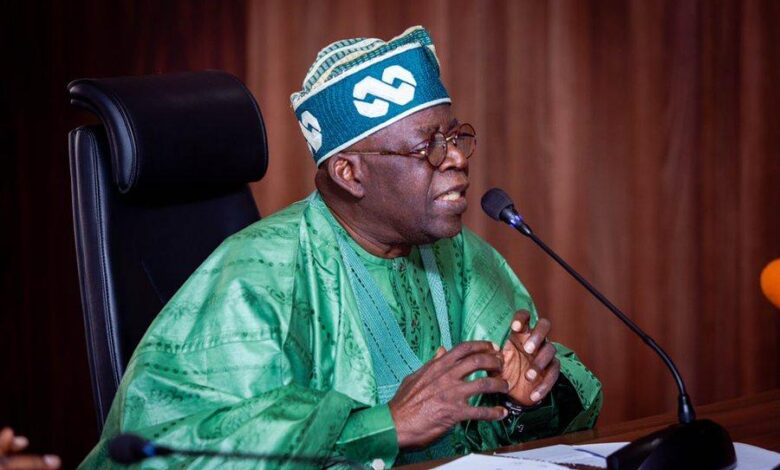
The latest World Bank “country assessment” of Nigeria, whose report was released early last October, is though-provoking. I have read it thrice. Honestly, it was a damning report on President Bola Tinubu’s much-celebrated economic reforms. It was a classy World Bank speaking truth to power. The report clearly painted a picture of a government whose economic reforms are having very little positive impact on the lives of majority of its people; a government whose reforms have pauperised millions of its citizens; a government that is confused about what to do to turn around the negative impact of its reforms on its people.
Now, under Tinubu, an estimated 139 million people live in poverty in beloved Nigeria. Seven years back, it was around 87 million people living in poverty. Similarly, early in 2025, Nigeria was ranked as the 12th poorest country in the world by Gross Domestic Product (GDP) per capita. This is according to data from the International Monetary Fund (IMF). The report places Nigeria’s GDP per capita at $807, positioning it among the bottom 15 of the 50 countries assessed. This grade highlights the economic inequality in a country that remains one of Africa’s largest economies by GDP.
The World Bank poverty report recognized that Tinubu’s economic reforms – removal of fuel subsidy, floating of the Naira, exchange rate unification and electricity tariffs increase – have produced some stabilisation gains, but said the gains had been eroded because many households are struggling with weak purchasing power. Yes, millions of citizens are facing severe hardship. Lots of families are evidently grappling with rising food prices and stagnant earnings, no thanks to the reforms. Tinubu’s reforms have not translated into better conditions at the family level. This is the truth that must be told. There is a disconnect between the economic reforms and the realities on the ground in millions of homes. According to the World Bank report, poor households are spending up to 70 percent of their income on food.
I was expecting a fitting response to the World Bank assessment from the Tinubu government, with at least a pledge to work harder towards eliminating the loopholes identified. It did not happen. This is three weeks after the report. What we have been getting are statements by some of Tinubu’s aides downplaying the report. They have been punching holes in the report with weird statistics: Nigeria’s GDP is on the rise. Inflation is falling. Naira is now stable. External reserves are on the rise. They pretend to be unaware that these lovely statistics have not reduced the pains of citizens. Economic gains are not just about lovely statistics. They are more about their positive impacts on the citizens. Successful reforms must reduce the economic burden of citizens. President Tinubu ought to be mortified by rising poverty in Nigeria amid his reforms.
A truly people-oriented government must be seen responding aptly to shameful reports like this recent one from the World Bank. For example, food inflation is still very high at 16.87 percent in September. This government needs to come up with a more pragmatic strategy for tackling food inflation. It is a calamity that requires a more creative policy intervention. Results of previous interventions have been abysmal. This is why millions of Nigerians still go to bed without meals. They wake up, not sure of breakfast. For me, taming terrorism is the best strategy for boosting food production and improving food security. The Tinubu government must work very hard on this. Many still can’t access their farms in Borno, Zamfara, Katsina, Plateau, Niger and Sokoto states. All terrorists must be crushed for farmers to produce more food.
The government must tackle inflation generally. Social protection coverage for the vulnerable must equally be pragmatic. I always advocate for the institutionalised social security system for Nigeria. Enough of knee-jerk social protection programmes. Let’s have easy to access benefits and benefit offices in all our local government areas. This is the true meaning of social security.
In order to reduce the growing poverty in our land, public financial management systems must be strengthened by the Tinubu government as recommended in the World Bank report. This is to ensure that every kobo spent delivers quantifiable development. Then, more funds must be redirected towards food production, housing, roads, health, education, and social protection.
The long and the short of the World Bank report is that there is serious hunger in our land because of the Tinubu economic reforms. Government’s steps to cushion the negative effect of the reforms are not having the desired impact. These reforms have deepened poverty and inequality in this country. This is the challenge that must be tackled fittingly. Giving palliatives is not the answer to the high prices of food, school fees, transportation, housing, healthcare and other things in this country. This is the reality the Tinubu government must face.