Tinubu’s second term: A question of equity, political sacrifice, national stability — by Yusuf Ali
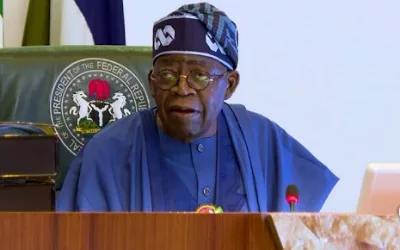
The recent assertion by Bayo Onanuga, Special Adviser to President Bola Ahmed Tinubu on Information and Strategy, that the President is poised to complete an eight-year tenure—just as his predecessor Muhammadu Buhari did—has stirred considerable debate across social media, particularly from voices in Northern Nigeria.
However, beyond the noise of online criticism lies a deeper question of fairness, political history, and national balance.
To be fair, the North has just concluded an uninterrupted eight-year presidency under Buhari from 2015 to 2023. That reality is not in dispute. What is often overlooked, however, is the pivotal role Tinubu himself played—not only in the historic formation of the All Progressives Congress (APC), but also in ensuring the emergence and eventual victory of Buhari.
Tinubu’s political trajectory reveals a consistent pattern of sacrifice and strategic support for Northern presidential aspirations. Before his own successful bid in 2023, he backed key Northern candidates across different electoral cycles. In 2007, he supported Atiku Abubakar under the Action Congress (AC). In 2011, he threw his weight behind Nuhu Ribadu under the Action Congress of Nigeria (ACN). These were not symbolic gestures—they were calculated political investments aimed at national cohesion and power rotation.

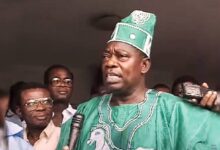
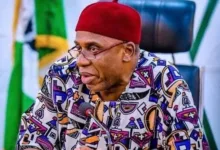
More significantly, Tinubu’s role in the 2013 merger that birthed the APC reshaped Nigeria’s political landscape. Without that merger—and without his strategic alignment—the Buhari presidency may never have materialized. In essence, Tinubu was not just a supporter; he was a kingmaker who consistently prioritized broader national interests over personal ambition.
It is against this backdrop that the current agitation against his potential eight-year tenure must be critically examined.
If Nigeria is to maintain a semblance of political fairness and stability, then the principle of rotational equity must not be selectively applied. The South, having waited through eight years of Northern leadership, deserves the same uninterrupted opportunity to lead. Anything short of this risks undermining trust, deepening regional divisions, and destabilizing the fragile political balance the country strives to maintain.
This is not merely about Tinubu as an individual—it is about honoring an unwritten but deeply respected political understanding that has guided Nigeria’s democratic evolution: that power should rotate fairly between North and South.
For the sake of continuity, national unity, and enduring peace, fairness must prevail over sentiment. And fairness, in this context, demands that the South—under President Tinubu—be allowed to complete its full tenure.
Nigeria’s stability depends not just on who leads, but on how justly the system treats all its parts.
Yusuf Ali, Media Aide to Governor Mai Mala Buni CON wrote in Damaturu