What Bovi got wrong about the January 15, 1966 coup, by Reno Omokri
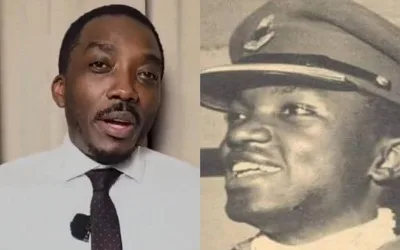
Yesterday, I watched a video by the comedian Kris Asimonye Ugboma, AKA Bovi, detailing the events of January 15, 1966.
I commend him for his narrative. However, there was one detail which he inadvertently misstated, and which ought to be corrected lest it pass into history, as some Nigerians have a propensity to substitute myth for fact.
Contrary to popular wisdom, Major Chukwuma Nzeogwu was not the mastermind of the coup which today bears his name.
In reality, the so-called Nzeogwu coup was masterminded by Major Emmanuel Ifeajuna.
Many Nigerians do not know that Nzeogwu wrote letters, which may be termed as an uncompleted manuscript, while in detention at Aba Prison, detailing some of the events of that infamous day. The letters were mostly to his best friend, who would later become a Nigerian military Head of State. Out of respect for him, I shall not mention his name.
Major Emmanuel Ifeajuna also left behind an unpublished manuscript about the coup, which fell into the hands of the security services.
The reason the coup is called the Nzeogwu coup is precisely the same reason the April 22, 1990 coup was called the Orkar Coup: they made the coup broadcast.
In truth, Major Emmanuel Ifeajuna conceived of the January 15, 1966 coup and recruited Major Chukwuma Nzeogwu, while Lieutenant Colonel Anthony Nyiam was the initiator and planner of the April 22, 1990 coup, and merely recruited Major Gideon Orkar.
Nzeogwu was a latecomer to the coup. Major Don Okafor was the co-planner with Ifeajuna. The Special Branch investigation into the failed coup suggests that Major Chris Anuforo recruited Nzeogwu into the plot.
Anuforo was best friends with Nzeogwu, and they both attended the same secondary school, Saint John’s College in Kaduna, and remained close-knit at the Royal Military Academy Sandhurst.
Also, the coup was not masterminded by or for Chief Awolowo as some persons claim. That was an afterthought after the coup attempt by those who wanted to divert blame for it and present it as a pan-Nigerian affair.
Ifeajuna was from Onitsha, along with Nnamdi Azikiwe, and was described by some as Chief Azikiwe’s cousin (although the Special Branch did not establish if there was really a blood relationship) and was a frequent visitor to Azikiwe’s home.
It is inconceivable that a close ally of Chief Azikiwe would plan a coup and then hand over power to his mortal political opponent.
Moreover, nobody was sent to Calabar Prison during or after the coup.
Chief Awolowo remained in jail until Colonel Gowon freed him from Calabar prison on August 2, 1966. Chief Awolowo was thereafter flown to Lagos, where he was received by Lt. Colonel Murtala Muhammed and personally driven by Murtala to Dodan Barracks to meet with Colonel Gowon.
It was considered strange by the British Special Branch officers that Azikiwe went on a Caribbean cruise for his leave and, very conveniently, refused to return to Nigeria after it. His ADC, Orho Obada, who later rose to the rank of Major General, kept asking Chief Azikiwe when they would return to Nigeria, as his leave was over. He eventually abandoned Chief Azikiwe in Haiti and returned to Nigeria.
But those saying Azikiwe was implicated in the coup are wrong. It was conjecture. Nobody really knows, as Emmanuel Ifeajuna was himself executed by Lt. Colonel Ojukwu on September 25, 1967, on allegations that he plotted to overthrow the Biafran government led by Ojukwu, and he never implicated Chief Azikiwe, nor did any of the documents seized by the Special Branch show any foreknowledge by Azikiwe.
But that suspicion became even more heightened when Haiti provided support for Biafra when war broke out.
- Omokri. Gospeller. Deep Thinker. #TableShaker. #1 Bestselling author of Facts Versus Fiction: The True Story of the Jonathan Years. Hodophile. Hollywood Magazine Humanitarian of the Year, 2019. Business Insider Influencer of the Year, 2022. 21st Most Talked About Person in Africa, 2024.