What Hungary’s democratic revolution must teach Nigeria — by Kio Amachree
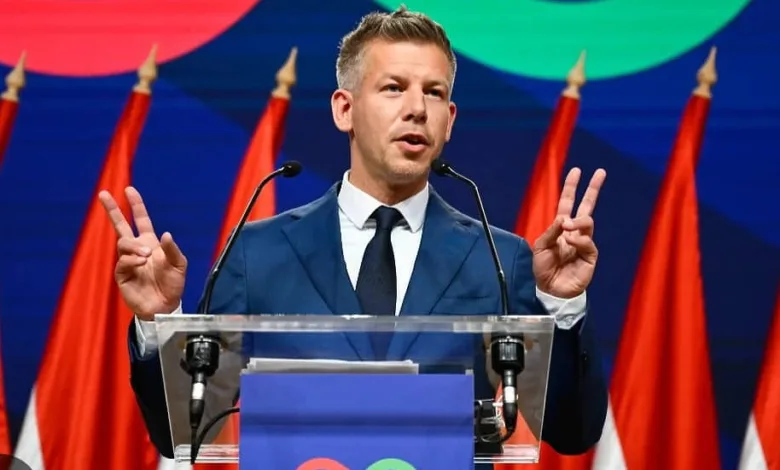
On Sunday, April 12, 2026, something happened on the banks of the Danube River in Budapest that every Nigerian — from the creeks of the Niger Delta to the streets of Kano — should study with the seriousness it deserves. Viktor Orbán, one of the most powerful and entrenched authoritarian leaders in the Western world, was swept from office in a landslide that shocked his supporters, humiliated his international backers, and proved once again that organised people, united around a vision of dignity and accountability, can topple even the most deeply fortified political machine.
The celebrations in Budapest were not merely Hungarian. They were a message to every democracy being hollowed out from within — including ours.
The Fall of Orbán: A Masterclass in People Power
After sixteen uninterrupted years in power, Viktor Orbán — whose government had ratcheted up control of public institutions, the judiciary and the media — conceded defeat to Péter Magyar’s centre-right Tisza Party, which was projected to win 138 seats in the 199-seat legislature, enough for a supermajority.
At 76.5%, the election recorded a significant increase in voter turnout compared to 2022, setting the highest participation since free elections were held in 1990 — described by observers as Hungary’s most consequential result since the fall of communism in 1989.
What made this victory possible was not a miracle. It was organisation. Magyar brought together Orbán’s critics, ranging from voters on the far left to those on the right who had become disgruntled with the Prime Minister — uniting them around the themes of fighting corruption, restoring judicial independence, and reclaiming Hungary’s place in the community of democratic nations.
And here is the part that should interest Nigerians most directly.

US Vice President JD Vance flew to Budapest in the days before the election in an attempt to reverse his ailing ally’s poor poll ratings. Putin had also voiced support for Orbán. Trump himself called into a Fidesz rally. The full weight of the MAGA international network was deployed in Orbán’s defence. Trump and Vance have not yet commented on Orbán’s defeat. They have egg on their faces — and the people of Hungary could not care less.
If a rigged media environment, a rewritten constitution, sixteen years of consolidated power, the backing of the American Vice President and the Russian President could not save Viktor Orbán from organised, peaceful democratic accountability, then Bola Ahmed Tinubu, Seyi Tinubu, and Gilbert Chagoury have no permanent shelter either.
What ₦13 Trillion Could Have Bought
Let us be precise about what this administration has cost Nigeria.
In the sixteen years preceding Tinubu’s presidency, Nigeria spent ₦13.7 trillion financing the fuel subsidy regime. That is an extraordinary sum — and the corruption embedded within that system was real and well-documented. No serious analyst disputes that the subsidy regime required fundamental reform.
But the question Nigerians were promised an answer to was: where did the savings go?
The removal of the fuel subsidy had widespread consequences, increasing the cost of education, food, transportation and healthcare. There was also a threefold increase in electricity tariffs for some consumers, and the supply of electricity has not increased.
Read that again. Electricity tariffs tripled. Electricity supply did not improve by a single kilowatt. Fuel prices more than doubled overnight. Food became a luxury for millions. And the man who ordered all of this calls it a “Renewed Hope Agenda.”
Tinubu told Nigerians that the subsidy money would be redirected to infrastructure and public welfare. What followed was darkness — literal and metaphorical. The jacking of electricity tariffs was not a reform. It was a weapon of social control, designed to exhaust the population, to keep them too burdened with survival to think about accountability. A people fighting power cuts, transport costs and food inflation have no bandwidth left for revolution. That is not an accident. That is a strategy.
The North is Burning. Rivers State is Bleeding.
This is Not Incompetence — It is Architecture.
The escalating insecurity across Nigeria’s northern states is being presented as a governance failure. It is not. Sustained, strategic destabilisation of a divided polity is one of the oldest tools of authoritarian consolidation. When citizens fear their neighbours more than their government, the government wins.
The Rivers State crisis follows an identical logic. What has been portrayed as a political dispute between Abuja and Port Harcourt is, in reality, a calculated dismantling of any viable opposition governance structure. A state that functions, that demonstrates what accountable leadership looks like, is a threat to a federal administration built on the opposite premise. The emergency administration imposed on Rivers State was not about peace. It was about elimination.
Tinubu has not merely governed badly. He has systematically dismantled the architecture of electoral competition itself — manipulating state institutions, weaponising the judiciary, and ensuring that the 2027 electoral cycle arrives with the opposition already on the back foot.
This is the Orbán playbook. It worked for sixteen years in Hungary. The Hungarian people eventually said: enough.
The Opposition Nigeria Needs — And Does Not Yet Have
What distinguished Péter Magyar from every failed Hungarian opposition figure before him was not charisma alone. He described the vote as a referendum — a choice between East or West, propaganda or honest public discourse, corruption or clean public life.  He built a coalition that was ideologically broad, morally coherent, and structurally disciplined.
Nigeria’s opposition is none of these things. It is fractured by ethnic calculation, paralysed by personal ambition, and too often compromised by the same money networks that sustain the administration it claims to oppose. The Labour Party’s moment has passed without being seized. The PDP remains a shadow of its former dysfunction. Peter Obi has loyal supporters but no organised movement.
What Nigeria needs, and what Budapest has just demonstrated is possible, is a unified civic front — not merely a political party — that speaks to the dispossessed Yoruba trader, the frightened Igbo entrepreneur, the angry Hausa youth, and the Niger Delta fisherman whose waters have been poisoned for sixty years. A front that makes the 2027 election not about tribe or religion but about the simple, universal question that Magyar put to his people: What kind of country do we want to live in?
A Final Word to the Diaspora
Orbán’s defeat was not achieved by Hungarians living abroad watching from a distance. It was achieved by Hungarians who voted, who organised, who knocked on doors, who refused to be intimidated by a state apparatus that rewrote the constitution to protect itself.
The Nigerian diaspora — 161,000 voices on social media platforms, hundreds of thousands more watching quietly — has a role to play that goes beyond commentary. We must fund credible legal challenges. We must amplify the voices of domestic activists who face risks we do not. We must support investigative journalism. We must ensure that the FBI and DEA files ordered released by Judge Beryl Howell reach every newsroom, every parliament, every international institution that has the power to act on what they contain.
Budapest celebrated on Sunday. The crowd chanted: truth prevailed over lies. Nigeria’s moment is coming. But only if we build it.
- Amachree is President of Worldview International, a political commentator, and a Swedish-Nigerian civic activist. He writes in his personal capacity.