When everyone is political, by Oluwadare Ayeni
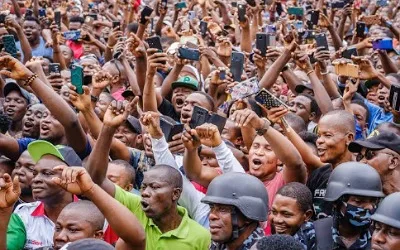
Democracy is often praised as the best system of government because it allows citizens to decide how they are governed and who governs them. The English philosopher Jeremy Bentham once said that democracy ensures “the greatest happiness for the greatest number.” Socrates, on his part, warned that when good people refuse to participate in politics, they end up being ruled by fools.
Both thinkers captured the essence of civic responsibility. Yet, in Nigeria today, every institution, from the church and the mosque to the media, the judiciary, and even the legislature, seems to have become political. Democracy thrives only when power is balanced, when institutions are independent, and when truth is not for sale. Sadly, our national life tells a different story. Political partisanship has crept into every corner of society, turning once-neutral platforms into battlegrounds of loyalty. The 2023 presidential election made this clearer than ever.
When the pulpit became political
Before the 2023 election, religious houses became campaign grounds. Pastor Paul Enenche of Dunamis International Gospel Centre openly endorsed Peter Obi, describing him as a man of “integrity, authenticity, and humility.” His sermon, in which he warned Nigerians not to vote for “expired products,” went viral and was widely seen as a veiled campaign for the Labour Party candidate. In contrast, some Christian leaders under the Clerics Congress of Nigeria and Rivers Pastors Unite for Tinubu held prayer rallies and made public declarations of support for Bola Tinubu, describing him as competent and divinely chosen.

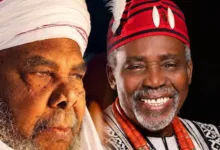


The same trend played out in the Muslim community. In Kaduna, the Al-Amaanah Global Islamic Foundation hosted a major event titled The Role of the Ummah in National Rebirth through the 2023 Presidential Election, which ended with an endorsement of Tinubu. In Lagos, the Ikorodu Muslim Community, led by the Grand Chief Imam of Ogijo Central Mosque, Alhaji Suleiman Olayemi Olajugba, also prayed openly for Tinubu’s victory. At the National Mosque in Abuja, a group known as the Concerned Yoruba Muslim Scholars in Nigeria did the same.
When religious institutions take sides so openly, worshippers are placed under emotional and moral pressure to vote along those lines. The pulpit, meant to guide conscience, becomes a political platform. The result is dangerous. It deepens division and erodes the trust people once had in their spiritual leaders.
Media and the collapse of objectivity
The Nigerian media, once celebrated as the conscience of the nation, has also lost much of its objectivity. During the 2023 election, media houses openly displayed political preferences, with Arise TV and TVC becoming the clearest examples. Arise TV was widely seen as sympathetic to Peter Obi. The station frequently aired his speeches, policy critiques, and interviews, often positioning him as a voice of integrity against corrupt leadership. It gave Obi significant airtime and extensive coverage of his campaign rallies. Tinubu’s campaign, however, accused the station of bias and even objected to Arise using Tinubu’s image in a town hall debate advertisement without consent.
Controversy deepened when a report surfaced alleging that Peter Obi supported Arise TV anchor Rufai Oseni during his father’s funeral, a claim both men denied. Still, the story fed the perception that some journalists were emotionally invested in particular candidates.
On the other hand, TVC, which has ownership links to Bola Tinubu, was accused of acting as the mouthpiece of the ruling All Progressives Congress (APC). Programmes such as Journalists’ Hangout often featured commentators who defended government policies and dismissed opposition voices. Reports critical of Tinubu’s administration were sometimes downplayed or framed as opposition propaganda. This polarisation of the media has dire consequences. When journalists become partisans, they lose their ability to ask tough questions. When news becomes filtered through loyalty, truth suffers. Citizens no longer turn to television for facts; they turn to confirm what they already believe. In such an atmosphere, accountability dies quietly. The media’s duty is to hold the powerful to account, not to act as their mouthpiece. Once objectivity collapses, so does good governance.
The judiciary and legislature: When silence serves power
The judiciary and the legislature, two critical pillars of democracy, have not been spared. Many court rulings on election petitions have been greeted with deep suspicion. Public confidence in the judiciary has sharply declined as citizens increasingly believe that justice can be influenced by proximity to power.
The controversy surrounding the construction of the Presidential/VIP Quarters for senior judicial officers in Abuja is a recent example. While the project has been officially presented as a welfare initiative to improve the living conditions of judges, critics argue that it blurs the line between administrative support and political influence. Many Nigerians perceive it as a subtle attempt to win the loyalty of the judiciary through comfort and convenience, especially at a time when the courts are central to election-related disputes. Images of the President personally commissioning these luxury quarters for judges raised questions about timing and motive. To the ordinary citizen, it appeared as though public resources were being used strategically to shape judicial objectivity.
Similarly, the approval of the suspension of Governor Siminalayi Fubara by the National Assembly represents another troubling height of political interference and subjectivity. The decision, widely condemned as unconstitutional, suggests how deeply partisanship has penetrated the country’s institutions. The National Assembly, which should stand as an impartial arbiter, seemed to have played too far into the hands of political actors in Rivers State. Such actions diminish legislative credibility and reinforce the growing belief that power, not principle, determines what happens in Nigeria’s democratic space.
In a democracy, judicial and legislative independence must not only exist, but they must be seen to exist. When welfare initiatives and political sanctions are wielded as tools of influence, governance becomes a game of allegiance rather than accountability. When the arms of government lose independence, democracy becomes an illusion, a performance where the actors are already chosen, and the audience is powerless.
The way forward
If democracy must work in Nigeria, every institution must return to its rightful place. Religious leaders should focus on building moral character, not political alliances. The media must rediscover its courage and remember that truth, not partisanship, is its mandate. Judges must serve justice without fear or favour. Legislators must represent the people, not their political godfathers. Most importantly, citizens themselves must think independently. A Christian should be free to vote for a Muslim if competence demands it; a Muslim should be free to vote for a Christian if vision requires it. Democracy was never designed to make everyone partisan; it was designed to make everyone responsible.
If we continue down this path where every voice is political, we risk losing the soul of our nation. When religion preaches division, when the media speaks for power, and when truth becomes negotiable, democracy dies silently. And as Socrates warned long ago, when good people stay silent, they will one day wake up to find that fools have taken over, not because the fools were smarter, but because the wise refused to act.
Oluwadare Ayeni
Associate Professor of African Democratic Studies and Public Governance Department of Public Administration
Obafemi Awolowo University
WhatsApp only: +2348074500000