When government blinks: Makinde, Amotekun and Nigeria’s kidnapping crisis — by Oluwadare Ayeni

On May 16, 2026, armed bandits descended on three schools in Oriire Local Government Area of Oyo State, carting away 18 primary school pupils, seven secondary school students, and seven teachers from the Ahoro Esinele community. Within 48 hours, one teacher, later identified as a mathematics instructor, had been beheaded, his killing circulated in a video designed to communicate not just brutality, but leverage. The state’s response was swift, but it was not the response that mattered most. What mattered was the signal embedded in Governor Seyi Makinde’s public statement when he told journalists: “Whatever their demands may be, we are ready to listen and address the ones we can as a state government.” That sentence, spoken with the best of humanitarian intentions, may prove to be one of the most consequential policy communications in the recent security history of Nigeria’s South-West.
To understand why, one must resist the temptation to evaluate Makinde’s posture purely on moral grounds and instead examine it through the cold logic of incentive structures. Kidnapping, particularly mass abduction of schoolchildren, is not a spontaneous act of desperation. It is an organised enterprise with a cost model, a risk calculus, and a returns expectation. Criminal networks invest in intelligence, they identify soft targets, study community routines, and select locations where terrain gives them an operational advantage. The Oriire attack showed all the hallmarks of a pre-planned operation: the simultaneous assault on multiple schools, the planting of Improvised Explosive Devices along likely rescue routes, and the almost immediate production and circulation of hostage videos. These are not the actions of opportunists. They are the actions of an industry. And industries respond to price signals.
When a sitting governor publicly announces that the government is prepared to engage with abductors’ demands, that announcement functions as a price signal in the kidnapping market. It tells every criminal network operating within reach of Oyo State, and those watching from further afield, that the product they are holding has generated the desired response. The government has blinked. The ransom negotiation, whether it involves money, the release of suspects, community concessions, or informal agreements, has been initiated by the state itself, not coerced through back channels. That is an extraordinary market development. It validates the business model and, more dangerously, it confirms that schools in the South-West are high-yield targets that produce rapid state capitulation.
There is a structural dynamic at play here that predates Makinde and extends well beyond Oyo State. Nigeria’s tragic experiment with negotiating mass school abductions began in earnest after the Chibok abductions of 2014. Over the years that followed, repeated negotiations, some overt, some conducted through intermediaries, established a pattern that criminal actors studied and replicated. The Chibok model demonstrated that abducting schoolchildren created a specific kind of political pressure that ordinary criminality could not generate: it attracted international attention, paralysed government institutions, and forced administrations to prioritise release over prosecution. The lesson was absorbed. Subsequent school abductions in Zamfara, Kankara, Kagara and elsewhere followed the same template because the template worked. What is now unfolding in Oyo represents the southward migration of that model, applied by groups, as Makinde himself acknowledged, that have been displaced from the North-West and North-East by intensified military pressure and are probing new operational territories.
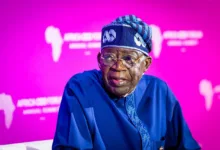

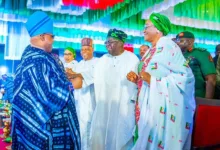
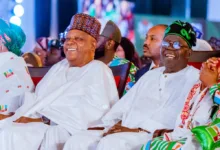
But there is a dimension to this crisis that demands a far more uncomfortable interrogation, one that moves beyond security architecture and into the territory of political ambition. Just two days before the Oriire abductions, on May 14, 2026, Governor Makinde stood at the historic Mapo Hall in Ibadan and formally declared his intention to contest the 2027 presidential election, running under the Allied Peoples Movement platform in alliance with his faction of the Peoples Democratic Party. He positioned himself as the candidate of a “Reset Nigeria Movement,” a man capable of rebuilding public trust and delivering measurable progress for Nigerians. The contrast between that declaration and what unfolded two days later in Oriire is not merely ironic, it is analytically devastating. A presidential aspirant who cannot prevent bandits from driving into three schools simultaneously in his own state, planting IEDs on rescue routes, beheading a teacher, and walking away with 32 captives, must now answer a question that no amount of campaign rhetoric can dissolve: what does the governance model he is selling to Nigeria actually look like in practice?
The answer, on the evidence of his own response to the crisis, appears to be a model in which the state negotiates with criminals. And if that is the governance instinct Makinde brings to a governorship, the logical extrapolation to a presidency is not reassuring, it is alarming. Nigeria’s banditry and kidnapping economy is not a regional phenomenon contained to the North. It is a national industry sustained by weak deterrence, porous borders, and, critically, the demonstrated willingness of governments at every level to reach for dialogue before accountability. A president who has demonstrated, while still a governor, that his default response to mass abduction is to open channels with the abductors rather than impose a cost on them, is a president who would preside over a kidnapping economy that is not merely sustained but structurally expanded. The bandits, watching Oriire, are not simply watching a governor. They are watching an audition for a much bigger office. And the audition, from their perspective, has gone extremely well.
Against this backdrop, the role and performance of the Western Nigeria Security Network, Amotekun , deserves its own frank reckoning. Created in 2020 as a regional security answer to the specific threat of herdsmen violence, kidnapping, and rural banditry in the South-West, Amotekun was sold to the public as the institutional embodiment of the region’s capacity to defend itself. In theory, it was meant to be the intelligence layer closest to the forest, the first responder quickest to intercept threats in terrain that conventional security forces struggle to navigate. In Oriire, it failed at every level that matters. Not only did Amotekun operatives fail to prevent a broad-daylight coordinated assault on three schools during school hours, but when they subsequently participated in the rescue operation, they encountered IEDs that had been pre-positioned by the abductors, suggesting that the bandits had been in the area long enough to prepare defensive booby traps without detection. At least two Amotekun operatives were confirmed injured, with one reported in critical condition. The Amotekun commandant acknowledged that his personnel were “combing forests and suspected hideouts,” which is another way of saying they had no prior intelligence, no pre-emptive presence, and no actionable situational awareness before the attack happened. For an outfit whose entire justification rests on local knowledge and community embeddedness, that is not a tactical failure, it is a foundational one. Amotekun did not fail in Oriire because it was outgunned. It failed because it was absent from the intelligence cycle entirely.
It is precisely this failure that makes the most politically charged question of this entire episode so urgent and so revealing: why has Makinde not picked up the phone and called Sunday Igboho? The question will make the governor’s aides bristle, and that reaction is itself instructive. Igboho, born Sunday Adeyemo, now a returned figure who spent nearly five years in exile after the DSS raided his Ibadan home in 2021, returned to Nigeria in January 2026 after President Tinubu approved his removal from the government’s wanted list. He wasted no time. By February, he had publicly declared readiness to collaborate with the Federal Government to flush out terrorists from South-West forests. By May 19, three days into the Oriire crisis, he had issued a formal statement expressing readiness to deploy his proposed Iru Ekun Security Network, a specialised outfit designed specifically to confront banditry and kidnapping in South-West forests, and declared that his men were “battle-ready” to storm those forests and flush out the criminals. The only thing stopping him, he said, was the absence of official government approval. He was explicitly waiting for the South-West governors, including Makinde, to give the word.
That word has not come. And the silence from Government House, Ibadan, is not administrative; it is political. Makinde and Igboho have a complicated and thoroughly documented history. Igboho helped deliver Oke-Ogun votes to Makinde in the 2019 gubernatorial election, a debt Makinde never publicly acknowledged. Their relationship soured decisively in January 2021 when Igboho issued his famous eviction ultimatum to Fulani herdsmen in Igangan, Ibarapa, and Makinde responded not with engagement but with a directive to the state police commissioner to arrest and treat Igboho as a criminal. Igboho, for his part, publicly accused Makinde of betraying the Yoruba people’s security interests in order to protect political arrangements with northern power blocs. That rupture never healed. And so what we have now, in the middle of a live hostage crisis involving 32 children and teachers in a forest in Oriire, is a governor who is willing to negotiate with their abductors but unwilling to consult a man who has specifically organised a combat-ready security network to confront exactly this kind of threat, in exactly this kind of terrain, because doing so would require him to bury a personal and political grievance, acknowledge a debt, and grant legitimacy to a figure he once sought to criminalise. That calculation, ego and political legacy weighed against the safety of schoolchildren, is the most damning indictment of Makinde’s leadership in this entire episode.
The governor’s openness to dialogue with the abductors, while understandable from the perspective of a man dealing with the anguish of 32 children and seven teachers in captivity, creates several compounding risks that extend far beyond the immediate crisis. The first is the problem of moral hazard. In insurance economics, moral hazard describes the tendency of a protected party to take on greater risk because they do not bear the full cost of that risk. In the kidnapping economy, a government that signals it will negotiate reduces the risk to the kidnapper. The downside of mass abduction, the likelihood of a purely punitive response, shrinks, while the upside, a negotiated settlement, expands. The rational actor in this environment does not reduce criminal activity; they increase it. More abductions follow because the expected return has improved.
The second risk is the inflation of hostage value. By associating school abductions with immediate gubernatorial engagement, this incident has effectively raised the market price of schoolchildren and teachers as hostages in the South-West. Future abductors will not demand less because they watched what happened in Oriire. They will demand more, and they will target schools because schools have been demonstrated to produce the fastest and most public government response. This is the perverse economics of negotiation in a context where the rule of law cannot guarantee deterrence: every concession drives up the cost of the next incident. Scaled to a presidency, this logic becomes catastrophic. A President Makinde operating from the same instinct that produced the Oriire response would be presiding over a kidnapping market whose price floor has been set, and set by him, at the level of open state capitulation.
The third, and perhaps most structurally damaging, implication concerns the coordination problem created for security forces. Makinde’s public statement was made while tactical operations , involving soldiers, Amotekun Corps operatives, local hunters and police, were actively underway. The same briefing that announced openness to negotiation also confirmed that six suspects had been arrested and that rescue teams had encountered IEDs in the field. Running a kinetic rescue operation simultaneously with a public negotiation posture is not merely logistically awkward; it is strategically incoherent. It signals to the abductors that they can sit tight, because the state will eventually talk. It reduces the urgency that would otherwise compel them to release hostages to avoid capture. And it places security operatives in the field in a politically ambiguous position, are they conducting a rescue or providing cover for a deal?
None of this is to suggest that Makinde had better options that he simply failed to take. The humanitarian reality , thirty-two children, some of them nursing infants, demands that any responsible leader exhaust every possible avenue for their return. The governor is not wrong to want these people home. What is worth interrogating is the decision to make that posture public, and the absence of any structural framework for managing the downstream consequences of that signal. A state that negotiates in private while maintaining a firm public posture of non-engagement preserves at least some deterrent credibility. A state that announces its willingness to negotiate on camera, before terms have even been proposed, surrenders its negotiating leverage and its deterrent signal simultaneously. For a man who has just told Nigerians he is qualified, in his own words, “overqualified”, to lead the nation, the optics are not incidental. They are the record.
The broader context is equally sobering. President Bola Tinubu condemned the attack, ordered a technology-driven rescue mission led by the Inspector-General of Police, and renewed his call for state policing, an argument that has merit on its own terms but that in this moment reads more as deflection than strategy. Surveillance aircraft that Oyo procured from China were being assembled in Lagos, with an operational date projected for the end of June. The abduction happened on May 16. The planes are not yet flying. The situation room has been activated, the press briefings have been held, and yet the children remain in the forest. All of this points to a security architecture that is reactive by design, dependent on crisis management rather than prevention, and therefore permanently vulnerable to the exact scenario that played out in Oriire. That this is the architecture of a man campaigning to reset Nigeria should give every Nigerian voter reason to pause.
The kidnapping economy in Nigeria survives and expands not primarily because criminals are unusually bold, but because the institutional response to kidnapping consistently produces outcomes that reward boldness. Ransom is paid, demands are met in one form or another, Amotekun gets injured pursuing trails that should never have gone cold in the first place, and the prosecutorial follow-through that might deter future attacks remains weak. Each cycle reinforces the next. Meanwhile, a man who built his reputation confronting exactly these bandits in exactly these forests is sitting in Ibadan waiting for a phone call that political pride will not allow Makinde to make. What Makinde said in Ibadan on May 18 will be heard in the forests of Kwara, in the borderlands near Benin Republic, and by every criminal network calculating where to strike next. But it will also be heard in every state capital, by every political analyst, and by every Nigerian citizen trying to determine what kind of presidency a Makinde administration would represent. The children must be rescued. But the manner of their rescue will write the terms of the next abduction. That is the cold, uncomfortable arithmetic of the kidnapping economy, and it does not pause for presidential campaigns, political grudges, or gubernatorial press briefings.
Oluwadare Ayeni, PhD