How expanding the Nigerian Army to 12 divisions could redefine Nigeria’s security architecture — by Yusuf Ali
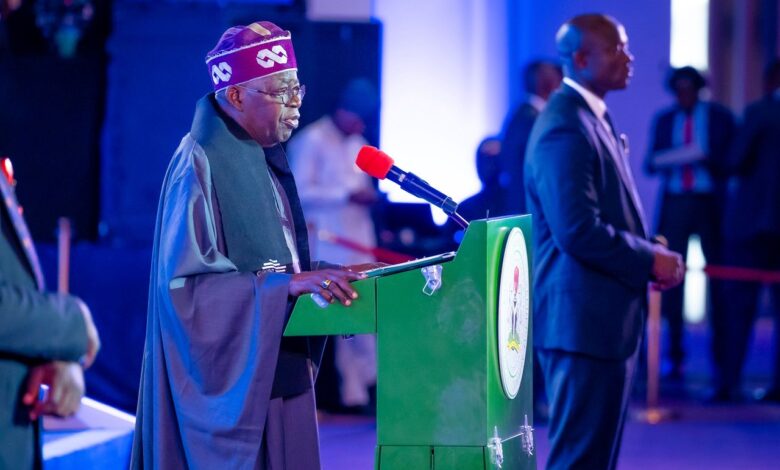
President Bola Ahmed Tinubu has taken what many security analysts may regard as one of the boldest defence policy decisions in Nigeria’s recent history with the approval of a comprehensive expansion of the Nigerian Army from eight to twelve divisions, alongside the recruitment of 28,000 additional personnel.
The decision is more than a routine military restructuring. It represents a strategic recalibration of Nigeria’s security architecture at a time when the country continues to confront terrorism, banditry, kidnapping, communal conflicts, pipeline vandalism, and other emerging security threats across different regions.
For decades, the Nigerian Army has shouldered increasing operational responsibilities with a force structure that many experts considered overstretched. Tinubu’s approval directly addresses this challenge by creating additional operational commands capable of responding more swiftly and effectively to security emergencies.
The expanded structure introduces four new divisions headquartered in Makurdi, Ilorin, Jalingo and Benin City, bringing the total number of Army divisions to twelve strategically distributed across the federation.



Under the new arrangement:
1 Division, Kaduna, will oversee Kaduna, Kano, Katsina and Jigawa States.
2 Division, Ibadan, will cover Oyo, Osun, Ekiti and Ondo States.
3 Division, Jos, will supervise Plateau, Bauchi and Gombe States.
5 Division, Makurdi, will coordinate Benue, Nasarawa and Kogi States.
6 Division, Port Harcourt, will oversee Rivers, Akwa Ibom and Cross River States.
7 Division, Maiduguri, will continue operations in Borno and Yobe States.
8 Division, Sokoto, will cover Sokoto, Kebbi and Zamfara States.
9 Division, Ilorin, will supervise Kwara and Niger States.
10 Division, Jalingo, will oversee Taraba and Adamawa States.
81 Division, Lagos, will cover Lagos and Ogun States.
82 Division, Enugu, will coordinate Enugu, Anambra, Abia, Ebonyi and Imo States.
83 Division, Benin City, will oversee Edo, Delta and Bayelsa States.
The significance of this reorganisation extends beyond administrative convenience. By decentralising command structures, the Army will be able to make operational decisions faster, deploy troops more efficiently, and improve coordination during emergencies.
The creation of additional divisions is expected to strengthen border security, improve intelligence coordination, enhance the protection of critical national infrastructure, and significantly boost counter-insurgency operations in volatile regions.
Equally important is the approval for the recruitment of 28,000 additional soldiers. Modern warfare depends not only on sophisticated equipment but also on sufficient manpower. Increasing troop strength will ease operational pressure on existing personnel, improve troop rotation, enhance morale, and sustain prolonged military operations where necessary.
This latest decision builds on President Tinubu’s broader commitment to modernising Nigeria’s Armed Forces through increased investment in military hardware, operational logistics, troop welfare, training, and combat readiness.
The implementation strategy also reflects careful planning. The first phase, expected to be completed by September 2026, will establish the 5, 9 and 10 Divisions while reorganising existing formations. The second phase, scheduled for completion by December 2026, will establish the 83 Division and conclude the nationwide restructuring.
Beyond expanding military capacity, the initiative signals a long-term national security strategy designed to position the Nigerian Army to respond effectively to both conventional and asymmetric threats.
President Tinubu’s commendation of the Chief of Army Staff, Lieutenant General Waidi Ibrahim Shuaibu, and the officers and soldiers of the Nigerian Army underscores the administration’s confidence in the professionalism and dedication of the Armed Forces.
As Nigeria continues to navigate complex security challenges, this far-reaching military reform stands as a defining policy initiative that could reshape the nation’s defence architecture for years to come.
If successfully implemented, the expansion of the Nigerian Army to twelve divisions may well be remembered as one of President Tinubu’s most consequential security reforms—one that strengthens national defence, enhances operational efficiency, and reinforces the Armed Forces’ capacity to safeguard Nigeria’s sovereignty, territorial integrity, and the lives and property of all Nigerians.
Yusuf Ali Media Aide to Governor Mai Mala Buni CON wrote in from Damaturu, Yobe State