Tribute to the late Ambassador Dele Cole — by Ambassador Sola Enikanolaiye
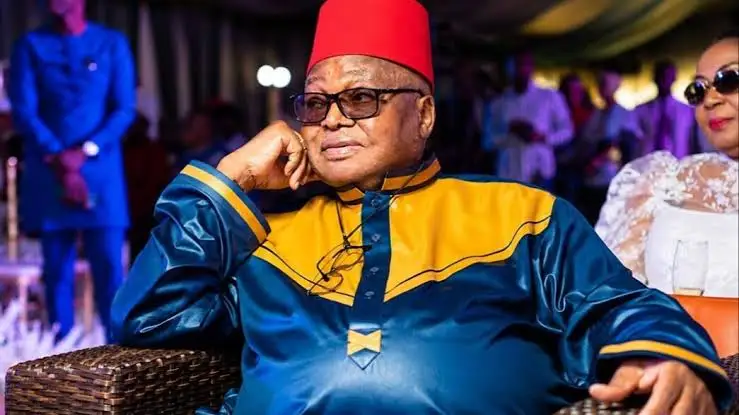
The news of the passing of Ambassador (Dr) Patrick Dele Cole on October 17, 2026, came as a rude shock.
Even though no human being lives forever, his demise at a ripe age has demonstrated that, like all mortals, we are born to live and ultimately die.
As the English writer Ernest Hemingway said, death breaks even those it cannot kill, no matter how strong they may be at their breaking points.
Ambassador Cole was one such personality: strong, ebullient, joyful, resourceful, brilliant, cerebral, hardworking, patriotic, detribalised and self-sacrificing. He was a Nigerian of honour and distinction by every definition of those terms.
I first met Ambassador Dele Cole in November 1999, following the inception of the new civilian administration of President Olusegun Obasanjo.
I was working in my office at the Ministry of Foreign Affairs, Wuse Zone 3, Abuja, when a mutual friend and distinguished colleague of blessed memory, Ambassador Gordon Harry Bristol, came to announce that the revered ambassador was waiting to see me in the office of his friend, Ambassador Ayo Azikiwe, who was then Director of the African Affairs Department of the ministry.
Ambassador Cole was a titan in his own right, aside from his family history as the son of Nigeria’s first indigenous president and governor-general.
Without a clue as to why I was being summoned, I went to the office. As I walked in and introduced myself to the director and the huge, imposing personality sitting across from him, Ambassador Azikiwe asked whether I had an elder brother in the ministry named Enikanolaiye.
I answered in the negative. He told me he had already heard so much about the name and wondered whether I was the person who had been so highly spoken of and recommended.
I was just a counsellor, a mid-ranking diplomat, at the time.
He then asked whether I would be willing to work with him as one of the special assistants he was recruiting for his new office as Special Adviser to the President on International Relations (SAIR).
Of course, my response was predictable. I said that, as a loyal civil servant, I had no choice but to comply if so directed.
The following day, a letter was sent requesting that three of us—myself, John Alhassan Gana and Bristol—be deployed to the Office of the SAIR as special assistants. Both Gana and Bristol, like me, later attained the rank of permanent secretary and ambassador, respectively.
The leadership of the Ministry of Foreign Affairs was reluctant to release some of its best officers, complaining about “poaching” by the State House following the earlier deployment of four colleagues to the office of the Chief of Staff to President Olusegun Obasanjo.
Nevertheless, the ministry agreed to release the three of us.
We received our posting letters the following day and proceeded to report as directed.
Ambassador Cole had yet to be allocated an office in the State House Presidential Villa. He was working from his suite at the Nicon Hilton Hotel, now Transcorp Hilton.
We would report for work at 8 a.m. and close, most times, at 9 p.m. daily.
He subsequently moved to the study of the president at the State House residence, where we worked until we were expelled on “security grounds”.
I used to see very industrious and brilliant Nigerians, such as Senator Liyel Imoke, Ad’Obe Obe and Tope Shonubi, around Dele Cole, doing one thing or another for the president.
We eventually decided to move to the main office and share space with our four diplomatic colleagues who had already been deployed to the Office of the Chief of Staff, the late Major General Abdullahi Mohammed.
As close colleagues, sharing an office and working tools with them came easily and naturally. Before long, however, we were expelled once again.
A new office was eventually allocated to the SAIR. It was called the White House and was located directly opposite the gate of the Banquet Hall.
Our boss, however, retained his main office inside the Villa, which ensured that he maintained direct and close access to President Obasanjo.
We, the three musketeers from the Ministry of Foreign Affairs, were later joined by two women as special assistants: Rita Abebe and Ibierra Akpana.
A distinguished career and an analytical mind
Dr Cole came to his new office with an impressive academic and professional pedigree, having earned degrees in New Zealand and the United Kingdom, including at Cambridge.
He had distinguished himself in the media, working with the Daily Times and the flagship Guardian newspaper, as well as serving in the Cabinet Office, the seat of the Federal Government in Lagos.
His tenure as Nigeria’s ambassador to Brazil capped a public service career that gave him deep and rare insights into the inner workings of government and its relationship with the public. These experiences also prepared him for an active political life.
Unbeknown to us, Dr Cole’s office had earned a reputation as an effective, efficient and deeply analytical resource centre. It was a one-stop office that would subject memos and letters intended for the president to rigorous scrutiny, not only those from the Ministry of Foreign Affairs but also those from other ministries, departments and agencies, acting on the specific directives of the president.
That was vintage PDC, as he was popularly called. He inspired us and gave us the latitude to think outside the house, not just outside the box, challenging conventional wisdom and prevailing views on Nigeria’s relations with the rest of the world.
We would offer alternative proposals that the president found difficult to fault.
President Obasanjo would literally minute every paper to his SAIR with the instruction: “Dele Cole. Draft a response for me.”
I must admit that even our parent ministry was not pleased with us. Its officials believed we had unwittingly created a parallel structure in the Office of the SAIR that had effectively taken over the statutory functions of foreign policy formulation and advice.
To us, this was an overstatement.
I recall one particular incident when we were asked to comment on a proposal to construct a national stadium at its present location in Abuja.
We argued against the proposed site, particularly because of the anticipated traffic congestion along the Airport Road-Lugbe axis and, above all, the prohibitive cost of construction.
Ambassador Cole later told us how livid President Obasanjo had been with the memo and that he had asked him to withdraw it.
In an interview with ThisDay newspaper some years ago, President Obasanjo was asked about the role of PDC in the Villa.
The president replied that the question was not what Dele Cole was doing at the Villa, but what he did not do there. He described PDC as his “specialist adviser”, rather than merely an ordinary special adviser.
Ambassador Cole was President Obasanjo’s right-hand man at virtually every occasion, function and trip, both at home and abroad.
In his own tribute to PDC, former President Obasanjo described the late ambassador as “one of Nigeria’s finest intellectual pillars, a trusted ally whose counsel shaped pivotal moments in our nation’s history; an indispensable linchpin of our foreign policy machinery … who worked tirelessly behind the scenes to repair Nigeria’s broken diplomatic ties”.
Behind the scenes were the three musketeers.
Similarly, President Bola Ahmed Tinubu eulogised Dele Cole, describing his life as a testament to the value of experience, principled engagement and commitment to the public good.
He simply gave his best.
The voice of dissent in government
I also recall how he brought into government his dear friend and colleague in the media, Dr Stanley Macebuh, who was appointed to a newly created position of Senior Special Assistant, known as “Discomfort Detail”.
In that capacity, Dr Macebuh’s brief was to tell the president everything he did not want to hear, including negative criticism, wrong decisions, unfavourable media coverage and public reactions to government policies, especially those that did not sit well with Nigerians but which the president might otherwise prefer not to hear.
For this and other reasons of which I was not privy, it was not long before Dr Macebuh was dismissed.
Relations between President Obasanjo and Ambassador Cole soon deteriorated over allegations of abuse of access and privilege. The president eventually asked him to step down, regrettably.
Dr Cole called us to his office to explain the circumstances surrounding his departure and asked us never to disclose the details of what the president had privately told him.
We were devastated by the sudden turn of events involving a titan who had devoted so much energy to serving the president.
I understand that the two eventually reconciled in later years, which was a welcome development.
His contributions to Africa and Nigeria’s foreign policy
While in active service, I also recall how the president assigned us the task of working closely with colleagues from South Africa, Algeria and, later, Senegal and Egypt to develop the New Partnership for Africa’s Development (NEPAD), from the initial draft of President Thabo Mbeki’s African Renaissance agenda.
Ambassador Cole understood his principal’s thinking on virtually every subject. This enabled him to provide the strategic leadership and direction we needed during our engagements.
These included early-morning breakfast briefings and directives from President Obasanjo at the Villa, meetings with President Mbeki in Pretoria and engagements with President Abdelaziz Bouteflika in Algiers.
The process also involved the merger of Senegalese President Abdoulaye Wade’s Omega Plan with the repeatedly revised NEPAD document. The initiative and its flagship African Peer Review Mechanism were formally adopted in Abuja.
Placing the Nigerian diaspora on President Obasanjo’s foreign policy agenda owed much to PDC, perhaps more than to anyone else inside or outside government.
He also successfully coordinated Nigeria’s preparations for the United Nations Millennium Summit in 2000, which led to the adoption of the Millennium Development Goals (MDGs) by the UN General Assembly in New York.
Such were the outstanding roles, personality and remarkable contributions of Ambassador (Dr) Patrick Dele Cole to our national development, to which I bear personal witness.
A remarkable personality
He was simply a great man: urbane, civil and convivial, an intellectual behemoth who suffered no fools gladly and took no prisoners, especially when it came to intellectual rigour and the sheer logic of arguments and positions.
Yet, he was soft-spoken, with a deep, authoritative baritone voice. He was persuasive and disarming, with an infectious and captivating presence that was difficult to ignore.
He was full of life, seamlessly combining work with pleasure in a mutually reinforcing manner.
He enjoyed his big Cuban cigars alongside vintage red wines or cognac, which he sipped and savoured in an alluring manner, yet remaining sober, intellectually alert and upbeat.
His dress sense was admirable, often featuring a bowler hat reminiscent of his Niger Delta origins in Rivers State.
He was also a quintessential family man. As his aides, we became close to his late wife, Mamma Munna, and some of his older children, especially Tonye and Seun.
Farewell to a distinguished Nigerian
We extend our condolences to the family as we share in your grief at this difficult time.
I urge you to take solace in the fact that this media juggernaut, iconic diplomat, intellectual connoisseur and consummate politician lived a full life of extraordinary impact.
No matter how advanced in age our loved ones may be, we never want to part with them, as though we will all live together forever.
If there were no coming into being and passing away, the regeneration of life would become impossible.
May his soul find peace in the bosom of our Lord.
Adieu, Ambassador (Dr) Patrick Dele Cole (1940-2026). PDC, rest on.
Ambassador Sola Enikanolaiye, fdc Honourable Minister of State for Foreign Affairs Abuja 26 October 2026