Tinubu’s fairy tales on Nigeria’s latest borrowing plan — by Yemi Adebowale
I have spent quality time perusing the $21.7 billion supplementary external borrowing plan (2026-2027) submitted recently to the National Assembly by the federal government. It combines $20.52 billion and €1.045 billion, totaling $21.7 billion. Honestly, it is scandalous. The external borrowing is for largely embarrassing things; things government need not borrow money for or get entangled in. I am still struggling to understand how the loans will impact on the masses of the people. Previous loans by the federal and sub-national governments in beloved Nigeria have failed to do this. Well, I will come back to this later.
As things stand, the federal government will have the largest chunk of the 2026-2027external borrowings. This comes to a massive $16.9 billion. Only $4.8 billion of the $21.7 billion is for subnational governments and agencies, with $3.3 billion going directly to states and $1.45 billion channeled through agencies and development finance institutions including the Bank of Industry, Development Bank of Nigeria, Transmission Company of Nigeria, and electricity distribution companies.
The plan covers 46 projects across 11 sectors, with 29 on concessional or blended terms. Transportation led with $10.6 billion, including sections of the Lagos–Calabar highway, Sokoto–Badagry highway and the Kano–Kaduna Metro Rail. Ten flagship projects accounted for 58 per cent of the total, at $12.5 billion. The social sectors, agriculture, energy, social protection, climate, and education will gulp $4 billion of the external loans. The Trans-Sahara Superhighway, electricity grid upgrades, and the modernisation of key commercial ports in Lagos, will also benefit from the loans.
The sub-nation governments also listed a number of embarrassing projects to be funded with the loan. Of the expected $21.7 billion, about $7.9 billion will come from multilateral and bilateral development partners, led by the World Bank with $5 billion. The remaining 11 lender groups include regional development finance institutions, export credit agencies, and commercial banks.


The Minister of Finance and Coordinating Minister of the Economy, Taiwo Oyedele, was quick to tell Nigerians that the masses of the people will reap bountifully from the planed borrowing. He declared: “I’m pleased and excited to inform you that actually this does not qualify as borrowing. This qualifies as investment… the plan will generate returns well in excess of its cost, now, these amounts, about $10.6bn out of it, are for investment in transportation infrastructures.”
So, the ongoing Lagos–Calabar highway, Sokoto–Badagry highway and the Kano–Kaduna Metro Rail will generate returns well in excess of its cost? Nigeria’s finance minister must be joking. Oyedele is very good with telling tales by moonlight. Transportation infrastructure hardly generate appropriate revenue in Nigeria. I doubt if the famed Lagos-Ibadan Expressway generated up to 1% of its cost, after years of tolling it. At a point, it was privatized. Toll gates on this road were eventually dismantled by the Obasanjo civilian government. Oyedele needs to consult history book on this.
Perhaps, Oyedele is not looking at the cash returns, but the multiplier effect of these transportation infrastructures on the economy in terms of cutting the cost of logistics. A big dream, no doubt. But they must be completed before this big dream is actualized. The Lagos–Calabar highway is scheduled for completion by 2031. I can’t see this happening with the way the project is dragging. I pray it does not become another abandoned project by the time Tinubu ends his tenure.
Also, the Sokoto–Badagry highway and the Kano–Kaduna Metro Rail are looking like pipe dreams. More money may not change things. The Nigerian factor is always at play. If these transportation infrastructures are really as viable as presented by Oyedele, they ought to have been private sector- driven. That is the standard in decent climes.
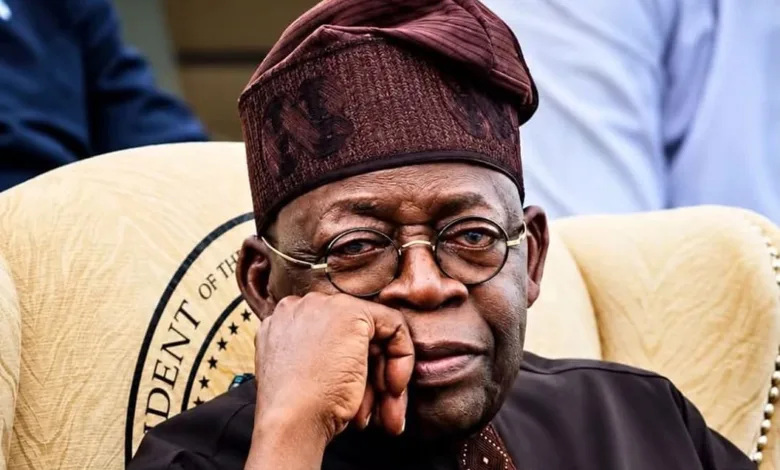
Few days after Oyedele’s defence of the borrowing plan, his boss, President Bola Tinubu issued an official response to critics of the proposal. In an essay, titled, “From reforms to delivery: Our infrastructure investment and growth strategy,” the president wrote: “The real question is not how much we borrow, but what we build, what value we create, and what future we leave behind. The Lagos-Calabar Coastal Highway is expected to cut logistics costs along its corridor by 15 to 20 per cent. It could add up to two per cent to Nigeria’s GDP through expanded trade, tourism, and industrial activity.”
Mr. President, in my opinion, these are pipe dreams. In almost four years of your massive borrowing from abroad, are the masses of this country anywhere near your much talked about prosperity? It’s a big NO. What have you been building with the loans? What have you been creating? Certainly, they are having very little effect on the people. Anytime the Tinubu comes up with borrowing plans, I get very angry. This country’s economy is already in a mess with loans. What the federal government is currently spending on debt servicing is higher than its revenue. So, why more loans? Messy! The whole scenario is muddled.
Debt statistics of the federal government are petrifying. At the end of the second quarter of 2026, the Debt Management Office of Nigeria put the total debt stock of the federal government at N152.77 trillion. Then, for external debt alone, as of the second quarter ending June 30, 2026, the external debt of the federal government stood at ₦65.77 trillion, which is approximately $47.69 billion if converted using CBN’s official exchange rate of ₦1,379.1842 per US dollar as of June 30, 2026.
The Tinubu government cares less about debt burdens. That was why it recently entered a complex $5 billion Financing Arrangement with the First Abu Dhabi Bank (FAB) in the United Arab Emirates. It says the funds are meant to support its 2026 federal budget, finance infrastructure projects and refinance expensive existing debt. Nigeria has already drawn down an initial tranche of $1.5 billion, pledging approximately $6.65 billion worth of Nigerian Naira government bonds as security (roughly $1.33 in collateral for every $1 borrowed). It pays a floating interest rate tied to global benchmarks plus approximately 4%.
The International Monetary Fund (IMF) and Fitch Ratings have cautioned Nigeria against the UAE deal, citing a lack of transparency, structural complexity, and hidden risks. The Margin Call Risks are frightening. For example, If the market value of the pledged Naira bonds drops significantly or the Naira weakens further, FAB can issue a margin call requiring Nigeria to immediately post extra dollar cash or collateral, which could pressure Nigeria’s forex.
President Tinubu says he is building, creating value and building a future for this country with foreign loans. That was part of what he said while defending the $21.7 billion supplementary external borrowing plan. Preposterous! I just laughed. Massive borrowings by the Tinubu government (just like his precursors) have failed to improve lives in Nigeria.
After all these years of taking foreign loans, poverty levels remain exceptionally high in Nigeria, affecting roughly 63% of the population — an estimated 139 to 140 million people. According to the World Poverty Clock, Nigeria is home to the second largest number of poor people in the world, with over 130 million citizens living below national or international poverty lines. Massive borrowings, largely foreign loans, have not done this country any good. This is the truth that must be told.
It did not come as a surprise when beloved Nigeria was again poorly ranked in the 2025 United Nations Population Fund (UNFPA) report on global life expectancy. Nigeria was ranked the lowest globally (at the very bottom or 1st from the bottom depending on sorting order) in the United Nations Global Population and Health report for 2025, with an average life expectancy of 54.9 years. This is well below the global average of 73.7 years. Life expectancy rates are even higher in war-torn countries like Syria, Chad, South Sudan, Central African Republic, Afghanistan and Somalia, than in Nigeria. Shameful.
Next is this ugly one from the 2026 Global Multidimensional Poverty Index. It states that beloved Nigeria recorded the world’s largest increase in the number of people living in multidimensional poverty, with an additional 17.9 million Nigerians falling into poverty between 2021 and 2024. The report, published last month by the United Nations Development Programme and the Oxford Poverty and Human Development Initiative, showed that Nigeria experienced a reversal in poverty reduction after recording improvements between 2018 and 2021. Reprehensible!
So, my dear President Tinubu, where are the gains of these massive foreign loans? This is the big question still begging for answer. Today, I leave with the words of former President Olusegun Obasanjo on your binge-borrowings: “For anybody to say debt is no leprosy, is absolute nonsense. Debt is worse than leprosy. Because leprosy destroys only one person. Debt destroys generations.”
–Adebowale is former Editor of Thisday Newspaper on Saturday