Pentecostalism: The myth of voluntary Giving — by Bamidele Johnson
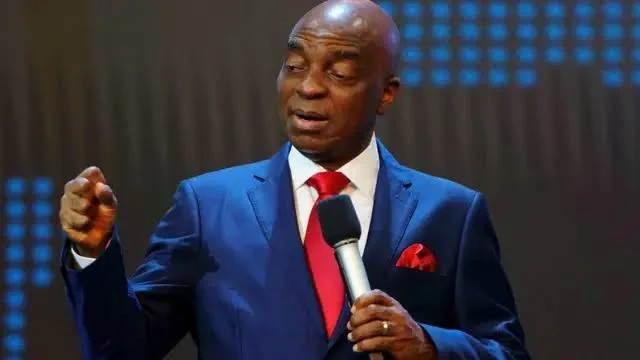
I woke up early on Saturday to a mash-up artist’s video of E.A. Adeboye, David Oyedepo, David Ibieyomie, Arome Osayi and that out-and-out desperado called Korede Komaiya. Aside from Adeboye, whose famous drawl and humble arrogance dupe people into taking him as the kindly grandfather next door, the others sounded like Louis Gossett Jr. in An Officer and a Gentleman and Morgan Freeman in Lean on Me, barking orders, dispensing threats and demanding unquestioning compliance. The subject was tithe which, in Pentecostal circles, bends the mind like a cocktail of loud, colos and baki. Preachers are tithe junkies.
Like the junkies they are, they would do anything to have their fix. They threatened, guilt-tripped, lied and wheedled to ensure that their followers keep the till ringing. Watching them gave me instructive illustrations of how power extracts compliance without necessarily resorting to physical violence.
That is the genius of coercive power. It does not always need to announce itself with violence. Sometimes, the threat is already so deeply embedded in the consciousness of its target that explicit violence becomes needless, as fear does all the work. The person complies, sometimes willingly and even gratefully, without recognising that the circumstances surrounding the decision have severely compromised the freedom to refuse.
This brings me to one of the most disingenuous arguments in contemporary Pentecostal Christianity whenever questions are raised about how financially extractive the church has become. The defence is familiar and is delivered like a party line. Nobody forces you to pay tithe, nobody forces you to give offerings, nobody forces you to sow seeds, make special donations, redeem pledges or contribute to one financial project or another. Everything is voluntary. If you do not want to pay, nobody will hold a gun to your head.



It is an argument that sounds neat and convincing until it is subjected to even the most elementary examination. It deliberately reduces coercion to physical compulsion, as though the only way to force someone to part with money is to threaten them with violence. The truth is that coercion does not always wear the face of a gunman. It can wear a safari suit, as Adeboye does; a lab coat and naval officer’s shoes, as Oyedepo does; carry a Bible, mount a pulpit and lie in tongues. It can be exercised through fear, guilt, spiritual intimidation, threats of divine punishment and the calculated exploitation of followers’ vulnerabilities.
A person does not have to be physically restrained before their freedom of choice can be compromised. There is an interesting parallel between this arrangement and the way the mafia runs protection rackets. A mafia outfit approaches a shopkeeper, restaurant owner or businessman and offers protection. The offer may sound friendly enough, even reassuring. After all, who does not want his business protected against criminals, vandals and associated ndi ara? But there is usually an unspoken understanding that declining the offer could have consequences. The shopkeeper knows that his premises might be torched or his goods looted if he refuses to cooperate.
The mafia boss does not necessarily need to wave a gun or crowbar before securing compliance. His reputation, the fear he inspires and the consequences associated with refusing his offer are often sufficient. The shopkeeper pays, sometimes with a smile and the mafia collects its money. On the surface, it is a transaction between two consenting parties. Nobody physically dragged the shopkeeper to his cash to his till. Nobody held a pistol to his head while he counted the money. But only a fool would describe the payment as a voluntary exercise of free will.
The genius of the protection racket lies in its ability to turn fear into a regular source of income. The victim pays to avoid a danger that the organisation demanding payment may itself represent. The money is called protection, but the underlying transaction is the purchase of relief from an anticipated calamity. It is a beautifully ugly arrangement in which the source of the threat also presents itself as the solution.
Now consider the financial theology peddled by Pentecostal preachers. They warn their congregations about devourers, curses, closed heavens, financial stagnation, failed businesses and the consequences of robbing God. They insist that withholding tithe exposes believers to spiritual dangers and that obedience in giving positions them for divine protection, prosperity and supernatural favour. Having sufficiently advertised the dangers, they proceed to prescribe the financial remedy. Pay your tithe, give your offering, sow your seed, redeem your pledge and keep the money coming.
The difference, of course, is that the mafia threatens consequences it can physically inflict, while the preacher attributes the threatened consequences to divine displeasure. The preacher does not claim to be the source of the curse. He claims to be warning you about it. That distinction matters, but it does not dispose of the question of coercion. In both arrangements, fear makes payment appear necessary, while the authority demanding money also supplies the explanation for the danger that non-payment supposedly invites.
The mafia sells protection against danger. Pentecostal preachers sell the promise of divine protection against dangers they have taught their congregations to fear. One invokes broken bones and burnt shops. The other invokes the devourer, curses and the withdrawal of God’s favour. The instruments differ, but the psychological mechanism deserves scrutiny. After all the warnings, threats and frightening predictions, the preacher and his defenders have the audacity to announce that nobody is being forced to pay.
This is where the Pentecostal defence collapses. When a pastor tells a congregation that failure to pay tithe amounts to robbing God, he is not making a neutral suggestion about charitable giving. He is attaching a moral and spiritual penalty to the decision not to part with money. When he tells members that the devourer will consume their resources if they withhold their tithe, he is introducing fear into what is supposedly a voluntary financial transaction. When he declares that non-tithers are under a curse, he is threatening them with supernatural consequences. When he makes tithe a condition for financial breakthroughs, divine protection, answered prayers or access to certain blessings, what exactly is the nature of the choice being offered?
It is the choice between paying and risking God’s displeasure or paying and hoping to secure God’s favour. That is hardly the uncomplicated exercise of free will that Pentecostal apologists want us to believe it is. Indeed, the entire architecture of this financial theology is designed to make non-payment psychologically and spiritually expensive. Members are repeatedly told that their financial difficulties may be connected to their failure to tithe. A struggling business, a sick child, a promotion that has not come, a troubled marriage or an unexpected financial setback can all become opportunities to remind the faithful that they have neglected their financial obligations to God.
Pay attention to the ingenuity of this arrangement. If you pay and prosper, the church takes it as evidence that the tithe is working. If you pay and remain poor, you are told to exercise patience, increase your faith or examine whether you are giving cheerfully enough. If you do not pay and encounter difficulties, your misfortune becomes evidence of the consequences of disobedience. There is scarcely any circumstance in which the theology is allowed to fail.
It is a financial doctrine with all the advantages of a successful business and none of the inconveniences of a failed prediction. The preacher can claim credit for prosperity without accepting responsibility for poverty. The believer, meanwhile, bears the financial cost of obedience and the psychological burden of whatever happens afterwards.
This is beyond fundraising. It is the construction of a belief system in which the institution collecting the money also supplies the spiritual explanation for why you must surrender it. Members are told that they are free to give, but they are also told that their offerings determine the measure of their blessings. They are encouraged to give sacrificially, even when they can barely meet their household obligations. The familiar declaration that God loves a cheerful giver is deployed alongside sermons, testimonies and public exhortations that make giving an almost compulsory demonstration of faith.
There is also the curious business of seed sowing. A member who wants a child, a job, a marriage, a promotion, a visa, a contract or a financial breakthrough is sometimes encouraged to attach a monetary seed to the prayer request. The implication is difficult to miss. The money becomes an expression of faith and the anticipated blessing becomes the expected return. In some churches, the language is so transactional that one might reasonably wonder whether the congregation has gathered for worship or a spiritual investment seminar.
Then there are the endless financial projects. Building funds, harvest offerings, anniversary contributions, pastoral appreciation, special seed offerings, first-fruit offerings, thanksgiving offerings, welfare contributions, mission offerings and emergency appeals. There is always another reason to give, another financial target and another opportunity to demonstrate commitment through money.
Yet the moment anyone questions the scale, frequency or theology of these demands, the church retreats to the convenient defence that nobody is being forced. Take a congregation in which the pastor repeatedly declares that people who do not pay tithe are robbers, that God will punish financial disobedience and that those who withhold their money cannot expect divine intervention. A member who has internalised these teachings may feel compelled to pay even when doing so means borrowing money, neglecting essential household expenses or going without food.
The pastor may never explicitly instruct anyone to borrow. He may never threaten to expel anyone for non-payment. But he has created an environment in which the member associates financial sacrifice with spiritual safety and non-payment with divine danger. That is coercive influence, even if it does not fit every legal definition of coercion. The fact that the member walks voluntarily to the altar does not establish that the decision was made free of fear. A shopkeeper who pays protection money without being physically assaulted has not necessarily made a free choice either.
There is another dimension to this dishonesty. Pentecostal churches frequently operate within structures of enormous power imbalance. The pastor is presented as God’s anointed representative, a spiritual father, a prophet or the custodian of divine revelation. Members are encouraged to submit to spiritual authority and, in some cases, warned against questioning the man of God.
The instruction to give, therefore, is not coming from an ordinary individual asking for a donation. It is coming from someone invested with extraordinary spiritual authority. The member is not merely considering whether to support an organisation. He or she is navigating the fear of offending someone believed to have privileged access to God’s intentions. The power relationship matters. Pretending it does not is intellectual yahoo.
If giving is genuinely voluntary, why must it be accompanied by threats of curses, devourers, financial stagnation and spiritual consequences? Why must people be made to feel that they are robbing God when they decide to use their earnings to feed their children, pay school fees, settle rent, buy medication or support relatives?
There is something particularly grotesque about a wealthy preacher warning a struggling congregation that God will punish them for withholding money. The member who has difficulty paying rent is told that the solution to financial hardship is to surrender a portion of the little he has. The woman struggling to feed her children is encouraged to give sacrificially in expectation of a supernatural harvest. The unemployed young man is invited to sow a seed towards a job. When the promised breakthrough fails to arrive, the explanation is rarely that the financial doctrine may be defective. The fault is conveniently returned to the believer. His faith was insufficient. He gave grudgingly. He failed to redeem a pledge. There is always another spiritual obstacle and, quite possibly, another financial sacrifice.
A church that depends on the generosity of its members should have no difficulty explaining its financial needs, accounting for its income and expenditure, and allowing people to contribute according to their means and convictions. There is nothing inherently wrong with fundraising. Churches have bills to pay, charitable responsibilities to discharge and legitimate projects to finance.
The problem begins when fundraising is disguised as a divine command, when financial contributions are presented as conditions for supernatural favour and when religious authority is used to extract money from people who may already be struggling economically. Transparency should be as important as generosity. Accountability should be as sacred as giving. A pastor who demands financial sacrifice from members should be prepared to explain how the money is spent.
There is a remarkable asymmetry in some of these arrangements. The member is expected to account to God, through the pastor’s interpretation of scripture, for every tenth of his earnings. But the institution collecting the money may resist giving the member a similarly detailed account of how those earnings are spent. The believer’s financial obligations are presented as sacred and non-negotiable, while questions about the preacher’s financial stewardship can be dismissed as attacks on the anointed. Adeboye once said a rich member of his church who demanded to know how tithes were being used ended up with a misaligned pair of lips.
The fact that some members give willingly does not prove that the system is free of coercion. A person can sincerely believe in a teaching and still have been conditioned to accept it through years of repetition, fear and spiritual intimidation. The sincerity of the giver does not automatically validate the methods used to solicit the gift.
This is not an argument against generosity, charity or the financial support of religious institutions. It is an argument against the manipulation of faith for financial extraction. People should be free to support their churches, just as they should be free to withhold their money without being threatened with divine punishment. There is no way what is going on is voluntary giving. What it looks like and actually is, I am convinced, is coercion with religious vocabulary.