Nigeria’s poverty paradox: The poor may not be who we think — by Adewale Okoya
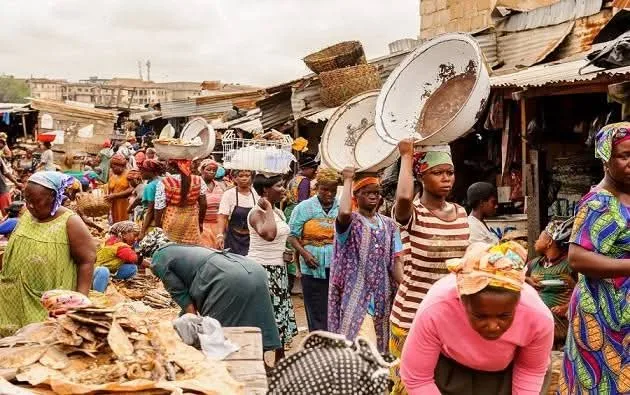
I have become increasingly uncomfortable with the way poverty is discussed in Nigeria. Every day, politicians, economists and public commentators remind us that millions of Nigerians are poor. They quote the World Bank, the National Bureau of Statistics and other institutions to support their claims. The impression is that almost everyone outside government and the wealthy elite is struggling to survive.
But is that the full story?
I do not dispute that poverty exists. What I question is the convenient assumption that the ordinary Nigerian is necessarily poor and that the removal of petrol subsidy has pushed nearly everyone into economic misery.
My argument is simple: the greatest victims of Nigeria’s present economic hardship may not be those working in the informal economy but salary earners whose incomes cannot keep pace with rising prices and the unemployed who depend on them.

Walk through our markets and streets. Observe the pepper seller, the foodstuff trader, the mechanic, the barber, the tailor, the Keke driver and the roadside shop owner. Many have adjusted to the new economic reality by increasing their prices. Some have raised their charges far beyond what increased operating costs would reasonably justify.
The commercial driver raises his fare when petrol becomes expensive. The mechanic increases his labour charges. The trader adjusts the price of foodstuffs. The barber reviews his rates. Each finds a way to transfer at least part of the economic burden to the next person. But who transfers the burden of inflation for the teacher, the civil servant, the bank employee or the junior office worker?
Nobody. Their salaries remain largely fixed while almost everyone selling goods or services to them continues to demand more money.
This is the inequality at the heart of Nigeria’s current economic experience: those who can adjust their prices have some protection against inflation, while those on fixed incomes must absorb it.
A familiar Yoruba saying captures this distinction: “Iṣẹ́ ọba, iṣẹ́ ẹnu; iṣẹ́ ara ẹni, iṣẹ́ owó.” Government employment feeds the mouth while personal business creates wealth. The saying is not universally true, but it reflects an economic reality that deserves attention.
A market woman may have no payslip or pension, yet she earns more than a university graduate working in an office. A roadside mechanic may own his workshop and several properties while the office worker who appears more prosperous struggles with rent, school fees and transport costs. We have confused formal employment with financial comfort and informal trading with poverty.
This is why I question the way poverty statistics are sometimes presented. The World Bank and other institutions use household surveys that include informal workers, but irregular earnings, undeclared income and household assets can be difficult to measure accurately. Their findings are valuable, but they should not end the discussion about how Nigerians actually live.
Consider what we see around us. New houses continue to rise. Vehicles are being purchased. Restaurants, lounges and drinking joints are expanding. Weddings, funerals and other owambe celebrations remain elaborate.
Where is the money coming from?
These activities do not prove that most Nigerians are prosperous. Wealth is unevenly distributed, and some spending is financed through borrowing. Nevertheless, they reveal economic activity and purchasing power that deserve closer examination.
The same questions arise in our markets. The difference between wholesale and retail prices can be astonishing. Transportation, rent and other expenses explain some of these differences, but there are cases where traders appear to exploit inflation to increase profit margins.
Subsidy removal has become the ready excuse for almost every price increase. Yet how often do prices fall when operating costs decline?
The recent complaints by some Nigerian traders about Chinese participation in retail commerce also show how fiercely commercial opportunities in this sector are being contested.
I am not suggesting that every trader is thriving. Some businesses have collapsed, while others struggle with low sales and rising costs. Increased turnover does not automatically mean increased profit.
But neither should we assume that every person operating outside formal employment belongs among the poorest Nigerians.
The successful market trader, the struggling hawker, the unemployed graduate and the poorly paid civil servant face very different economic realities. Yet politicians routinely place them all under the convenient label of the suffering masses.
The opposition invokes poverty statistics to condemn government policies, while government supporters sometimes point to busy markets as evidence that economic reforms are working. Both positions can obscure the real question: who is gaining, who is losing and who is merely surviving?
None of this excuses government from its responsibilities.
The Nigerian household practically operates as a local government. It provides its own water, generates electricity, pays for security, finances education and struggles to obtain healthcare. Many families resort to self-medication because proper medical treatment is unaffordable. This is unacceptable.
The removal of petrol subsidy should have been accompanied by stronger measures to protect vulnerable households. Reliable electricity, affordable transport, accessible healthcare and effective social protection would reduce the burden on millions of Nigerians.
Government must not mistake the resilience of citizens for an excuse to abandon its responsibilities.
But we must also confront the practice of transferring every increase in business costs to consumers, sometimes with excessive profit margins disguised as unavoidable consequences of government policy.
The salary earner is particularly vulnerable. He cannot review his salary every morning, but the people selling goods and services to him can review their prices whenever circumstances permit. The unemployed relatives who depend on him suffer alongside him.
That is why I believe the financial pressure on Nigeria’s formal working class deserves far greater attention than it currently receives.
The question is not whether poverty exists. It certainly does. The question is whether we have correctly identified those bearing the greatest burden of recent economic changes.
A person without a payslip is not necessarily poor. A person receiving a monthly salary is not necessarily comfortable. And a person who has adjusted to inflation is not necessarily suffering as much as someone whose income remains fixed.
My position is not that Nigerians are generally rich or that subsidy removal has produced widespread prosperity. It is that the familiar picture of a uniformly impoverished population may conceal a significant shift in economic pressure between those who can adjust their earnings and those who cannot.
We need better evidence about household incomes, business profits, purchasing power and living standards. We should be asking who is protecting their income, who is making additional profit and who is losing the ability to meet basic needs.
Until we answer these questions, politicians will continue to shout about poverty, commentators will continue to quote statistics, and the real differences among Nigerians will remain hidden behind the convenient expression, the suffering masses.
Perhaps Nigeria’s most overlooked economic victim is not the trader who can change his prices tomorrow but the worker whose salary must survive yesterday’s prices, today’s increases and tomorrow’s uncertainty.
That is the poverty debate I believe we should be having.