Borrowing to build: Why the cry over FG’s loans misses the point — by Okoi Obono-Obla
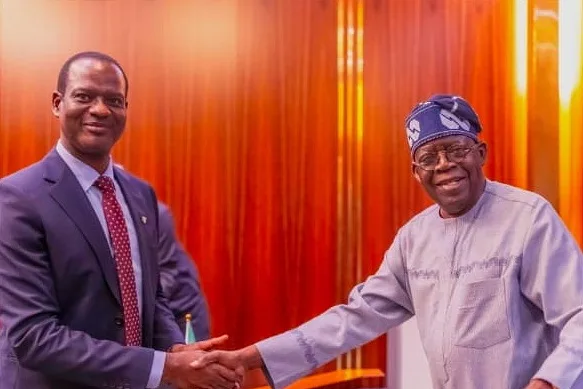
There has been unnecessary hue and cry, and indeed very uninformed commentaries concerning the borrowing by President Bola Ahmed Tinubu’s administration, to the extent that some commentators have derisively dismissed and tagged the administration as a metaphor for a chronic debtor.
This reductionism is intellectually lazy and economically illiterate.
No serious economy in the world runs without borrowing. The question is never whether a government borrows. The question is: for what purpose, on what terms, and to what end?
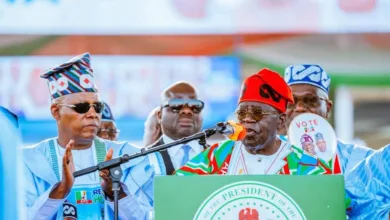
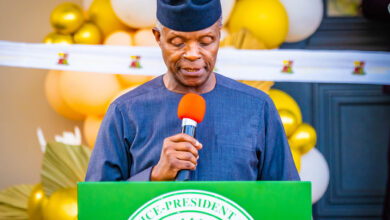
President Tinubu answered that question clearly yesterday in his essay, “From reforms to delivery: Our infrastructure investment and growth strategy.” His words should put the debate to rest: “The real question is not how much we borrow, but what we build, what value we create and what future we leave behind.”

For decades, Nigeria borrowed wrongly. We borrowed to fund consumption, to bridge fiscal gaps, to pay subsidies that enriched a few, and to service recurrent expenditure. That model is what produced debt without development.
What this administration is doing is fundamentally different. It is deliberately shifting borrowing from short-term fiscal pressure to long-term productive assets. The $21.7 billion financing framework currently before the Senate is not salary money. About $10.6 billion of it is earmarked for transport infrastructure – the Lagos-Calabar Coastal Highway, the Sokoto-Badagry Superhighway, the Trans-Sahara Superhighway, and the Kano-Kaduna rail. The balance is for energy grid upgrades, modernisation of our commercial ports, health, agriculture, and digital infrastructure.
These infrastructure upgrades, which are one of the major focuses of the administration, are a fundamental imperative if Nigeria is to achieve its target of building a $1 trillion economy by 2030. We cannot build a $1 trillion economy with infrastructure designed for an economy a fraction of that size.
Critics must also read the fine print. This is a five-year framework, not cash collected at once. $7.9 billion will come from multilateral and bilateral lenders, including a $5 billion World Bank facility. Concessional rates are as low as 2%, and even the commercial component at 7.8% compares favourably to our last Eurobond. More importantly, we are matching long-term assets with long-term financing.
Borrowing to build schools, roads, and power for future generations is not prodigality. It is inter-generational responsibility.