The recourse to an aching stomach — by Bolaji Adebiyi
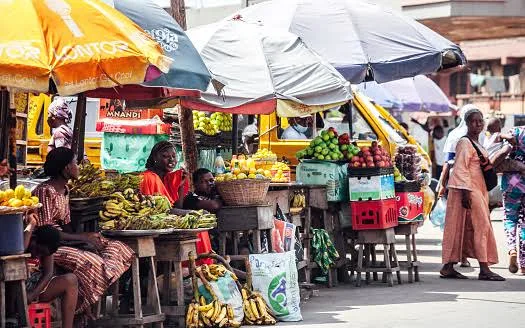
Bolaji Adebiyi examines the possibility of the high cost of living swaying the voters
Ali Bello sells bread and fried eggs beneath the expansive Kawo Bridge in Kaduna, the North’s regional capital. Depending on the time of day and their pocket, his customers wash down their meal with either water or tea. With that clientele, he cannot earn enough to feed his family. Married to a petty trader and with three children, Ali has had a hard life.
“Times are tough,” he said. “Customers have declined because they say they don’t have money. Sometimes they buy only bread and eat it with just tea,” the bread seller said, his voice laced with helplessness, adding, “This regime has been hard for us.”
Ali’s experience mirrors that of many ordinary citizens facing the country’s harsh living conditions, driven by the high prices of food and other essentials. “I think the government needs to do something about this or else…,” he said. Or else what? “It may be in trouble when we vote in January,” the father of three said firmly.



The Kaduna bread seller may be right, as opposition politicians are making a mountain out of the country’s high cost of living, which has left many households struggling. The African Democratic Congress presidential candidate, Atiku Abubakar, and his National Democratic Congress counterpart, Peter Obi, have capitalised on this, making it the centrepiece of their campaign.
This is expected in electioneering, as opposition politicians seek to make political capital from the incumbent’s policy shortcomings. For instance, Atiku has been vocal about the high cost of living, promising to restore the petrol subsidy, which many Nigerians have identified as the root cause of high food and other essential prices.
Although President Bola Tinubu and his All Progressives Congress have acknowledged the dire situation, explaining it as the corollary of the economic reforms, which are necessary to stabilise the economy and attract the desired investments needed for sustainable development and inclusive growth, Atiku and Obi insist that the ruling party’s mismanagement of the reforms is responsible for the people’s suffering.
Interestingly, while President Tinubu cites internationally recognised indices showing that the economy has been pulled out of the doldrums and stabilised as evidence of his achievements and support for his second-term bid, Atiku and Obi argue that indices will not fill people’s stomachs. The opposition’s persistent reference to the stomach aims to appeal to people’s lived experience, hoping to incite them against the ruling party at the poll. However, this expectation may be misplaced, given the nation’s electoral history.
Opposition politicians pose the rhetorical question: Is your life better than it was in 2023? For many people, the answer is clearly no. The figures support that response. Following the 2023 reforms, petrol prices surged from N198 per litre to an initial N400, then to N700, and now hover around N1,450. The Naira plummeted from N460 (official) and N760 (parallel) to almost N1,900, but has since stabilised around N1,350. Together, these two factors pushed inflation from 22.41% to 33.24%. Inflation has since decelerated to 15.91% after the National Bureau of Statistics rebased the Consumer Price Index.
The impact on the market households patronise is real, as essential food prices have risen significantly. A kilogram of beans rose from N630 to N1,345; tomatoes from N498 to N1,5661; white garri from N371 to N802; and 50 kg of rice from N41,000 to N68,000. Cooking gas rose from N9,000 to N22,000. These increases average between 100% and 250%, well above the 133.3% minimum wage increase from N30,000 to N70,000.
It is this quantum leap in prices, combined with low purchasing power, that has reduced the standard of living for the people Atiku and company hope to mobilise to push Tinubu out of office. Interestingly, the President’s body language suggests he is unperturbed, while his minders exude confidence that the 16 January 2027 presidential contest will be a walk in the park. The nation’s recent electoral history may bear out the President.
While the harsh cost of living could be weaponised against an incumbent, framing it as the main issue in the electioneering might not achieve the desired result of winning at the poll. Other issues might undermine the opposition’s ability to unseat the incumbent. Indeed, if the cost of living and a claim that the incumbent has underperformed alone could do the trick, it is doubtful whether President Muhammadu Buhari would have won the 2019 re-election.
Elected in 2015 on a platform of fighting corruption, reviving the economy, and securing the country, Buhari came with great promise. His predecessor, President Goodluck Jonathan, had been overwhelmed by a coalition of opposition parties that dubbed him clueless and incapable of managing the declining economy and the rising insecurity ravaging the country’s North-East. At the centre of this coalition and the massive propaganda that swept Jonathan out of power was Tinubu, who coordinated the political strategy.
However, four years later, Buhari’s stewardship was widely suspect. On the opposing side was Atiku, who flew the flag of the Peoples Democratic Party. He argued that the incumbent had failed on all fronts. The PDP candidate didn’t exaggerate the President’s poor record. Buhari inherited an economy with appreciable indicators. Inflation was 9.01%, and the Naira was paired with the US Dollar at N193. The GDP rate was about 7%. Within 11 months, the economy entered a recession, the first in 32 years, and it would do so again during his first tenure.
By 2019, when Buhari returned to the ballot, inflation stood at 11.9%; the Naira had depreciated to N361.40/$, while GDP growth remained at 2.55%. Petrol prices rose from N87 to N145/litre. Food prices followed the inflationary trend, with 50kg of rice selling for N19,500, up from N10,000.
Insecurity, which had been a problem in the North-East, had spread to the North-Central and North-West, encompassing banditry, kidnapping for ransom, and widespread violent clashes between herders and farmers.
Atiku, Buhari’s erstwhile ally in the APC, sought to use this abysmal four-year record against his former collaborator in the 2019 election. The outcome showed that the electorate were not swayed by his appeal to their aching stomachs, as he was comprehensively defeated, scoring 11,262,978 votes to the incumbent’s 15,191,847. The figures showed that Buhari attracted 55.56% of the votes to Atiku’s 44.2%, clinching victory in four of the nation’s six geopolitical zones.
Will Atiku’s strategy work this time? Only time will tell.
Adebiyi, a Fellow of the Nigerian Guild of Editors, writes from Abuja.