Christine Lagarde: A case study in breaking glass ceilings — by Kelechi Deca
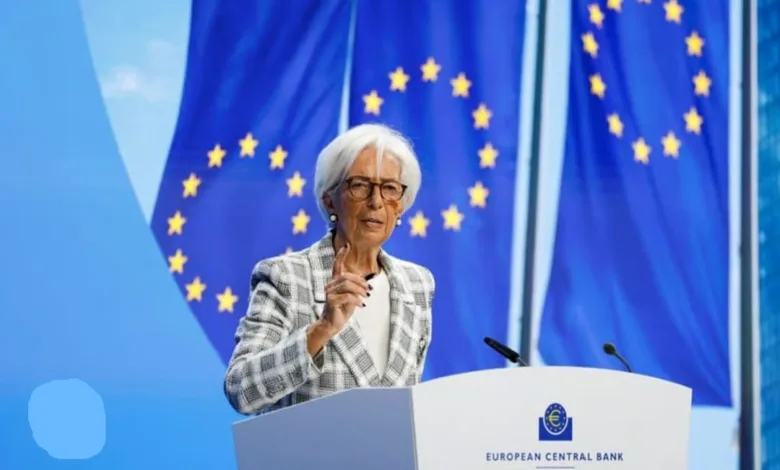
I met her last week and wanted to book for a quick interview, but she said her schedule was tight, and that she was not in a “media chat” mood. I didn’t know something was cooking. This woman needs studying like a course in a classroom.
And she did it with the poise of a synchronized champion swimmer she once was. Her career is a sequence of “firsts” that reshaped the institutions she led, each exit timed with a dramatic sense of when the curtain should fall.
She first shattered the corporate ceiling at Baker & McKenzie, becoming the first woman to chair its Global Executive Committee in 1999 and in 2007, she became the first woman to serve as Finance Minister of France, and invariably the first woman to be a Finance Minister of a G7 country, steering France through the financial crisis .
Then came the crisis in Washington that saw the IMF Managing Director resigning and making for her to climb into the shoes in 2011. She was elected the first woman Managing Director of the International Monetary Fund, navigating the Eurozone debt crisis and winning a second term .




Her exit from the IMF was characteristically decisive. In September 2019, she resigned abruptly to take the helm of the European Central Bank, becoming once again, the first woman president of that institution.
Now, in 2026, she has done it again. Lagarde announced she will leave the ECB in February 2027, nine months early, not for another post, but to reclaim her voice.
In her announcement, she noted that “I cannot be neutral,” signaling a return to the political fray as France heads toward elections.
Whether leaving a law firm, a government, or a central bank, Lagarde exits on her own terms, always in motion, always first.
She doesn’t want her career to rob her of the right to speak her mind on issues. So the career has to go so she can own herself.