A compelling case for Tinubu’s second term — by Patrick Obahiagbon
Students of American political history would be consensus ad idem with me that it was the “New Deal” of President Franklin Delano Roosevelt (FDR) of the United States of America (USA)1933 to 1945, that recalibrated the American political economy, redefined the relationship between the government and the masses of the people, and indeed , actualized the programmes of the welfare state as theorized by the nobel winning John Maynard Keynes. Government spending, job creation, policies for old-age pensions, unemployment insurance, insurance for widows and orphans as provided in the USA Social security Act of 1935 were the defining elements of the New Deal of President Franklin Delano Roosevelt.
Indeed, FRD reportedly thought outside the box, and implemented these far- reaching economic reforms, which took the USA out of the world economic depression of the 1930s through to the end of the Second World War.
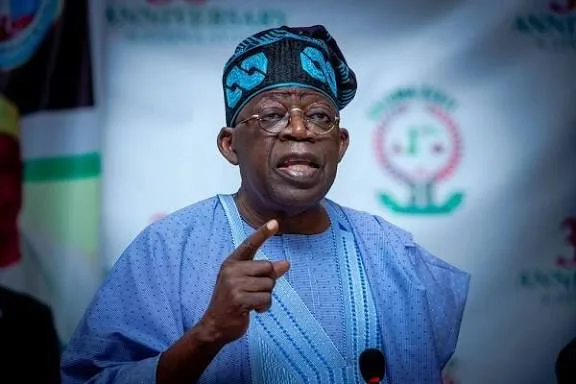
Then the boom of the successive years followed. Today, the economy of the USA leads the rest of the World’ s economies with 32.6 trillion dollars Gross Domestic Product ( GDP). Just like FDR, the irreplaceable and irrepressible President Bola Ahmed Tinubu is taking Nigeria on the path of a New Deal. PBAT’s Renewed Hope Agenda is redefining Nigeria’s political economy, and particularly putting the economy on the trajectory of recovery. PBAT is firming up the Nigerian economy for production, and eventual industrialization. In this great leap, there must be pains. Excruciating pains, only comparable to a woman in the labour ward. But laughter, and celebration comes when the baby is delivered. Nonetheless, what looks like the “shock doctrine” of the late Professor Milton Friedman of the famous Chicago School of Economics in the USA, is taking its toll on the Nigerian peoples.
This is understandable as the economy is undergoing structural and fundamental retooling. Only a man or woman, with a scientific mind- set , a surgeon, who is not conned by sentiments for the patient can carry out a surgery to remove a cancerous tumor in a patient. Such is the work which PBAT is working on as it relates to the Nigerian economy today.


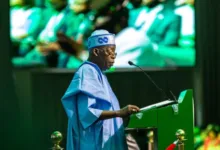
He weaned himself of sentiments anchoraging on namby pambyism. He extricated himself from the phantasmagoria of political hocus pocus and ambidextrous populism. With a lion’ s heart and a mind of steel, he initiated a cascade of salubrious sweeping reforms in the economy from day one of his administration on May 29 , 2023. For well over three years now, PBAT has demonstrated that he is not a happenstance President, who is not prepared for leadership. The philosophy, ideology and direction of his administration is not nebulous or evasive or deceptively ignis fatuss as some former leaders did. We can look back, taking the policy thrust and direction of the PBAT administration in the last three years into consideration, and make bold to contend that the giant leap of PBAT should be allowed to flower and blossom in the next four years to put the country on the recovery path, and building a true, production oriented capitalist economy with a robust welfarist package which will enable the citizenry to unleash their productive energy which Nigeria has in abundance.
But the welfare state cannot come from vociferous political office seekers, with a warped sense of the politics of narcissism and epicureanism that doesn’t take into consideration the existential condition in today’s Nigeria. To build the modern welfare state, there must be production in the economy, coming from the sweat and labour of the citizens, who are yearning for a truly production-based economy. An economy that moves away from its current rentier orientation to unleash the citizens’ productive energy with the goal to produce for export and domestic consumption. This is a constant for PBAT and his team.It is not about pampering anybody. It is not about bragging about buying and selling goods which are not produced in the country.It is about harvesting the available resources and tools in the local space, and using them to turn things around for the betterment of the Nigerian peoples. The people in turn have been very supportive of PBAT’s efforts at repositioning the country ‘s economy. They identify with the direction PBAT is taking the country.
They appreciate the government’s sincerity and commitment to the New Deal. The elites, apart from the politically exposed who are on the other side of the political divide, appreciate PBAT’s pertinacious determination to take the country from the woods.It is not for jokes or mere political pilgrimage that some discerning and very industrious State Governors left their dormant and atrophying parties to join the All Progressive Congress((APC) and throw their political weights behind PBAT and his administration. The political shift of these governors and some others who decided to remain in their parties but openly declare support for PBAT’s re-election is the defining element of the new politics in Nigeria today. With PBAT fixing Nigeria today, there is a new definition of realpolitik in the country
It is about service. It is about social change. It is about developing the country, and delivering the deliverables. PBAT,s politics is not the politics of primitive accumulation and political mollycoddleism. His politics is on the positive anchor. It has no time for pettiness, sadistic bickering, and elite delusional jiggery- pokery. Rather, PBAT pushes the envelope of service, consensus-building and national cohesion. Since the Fourth Republic began in 1999, a leader who knows what the problems are, and took the bull by the horns to confront the problems headlong emerged in PBAT. At the time PBAT assumed office, Nigeria was reportedly printing Naira notes to pay salaries and wages. One Governor who was in the opposition, shouted himself hoarse about the trend. Payment of salaries, and other recurrent expenditures were difficult for the Federal Government at the time.
Public debt was on the increase, debt servicing was phlegmatic . The country was sliding into Golgotha as external debts were hardly serviced. PBAT came on board and reversed the unpalatable turn of events. Today, while foreign capital, flow into the country as aid, grants, loans, FDI, etc, the PBAT administration is not defaulting on debt servicing. Public finance is on better pedestals as debts are serviced as at when due. Local and foreign contractors are paid regularly.
The good standing of the country’s finance has endeared investors, who are bringing in more funds and investments into the country’s economy as domestic investments are soaring. Creditors are willing to grant more facilities to the country for infrastructural development with the external reserve growing to over 55 Billion Dollars from about Five Billion Dollars where the PBAT administration met it in 2023. Those who know will tell you that access to external credit facilities is not as easy as nay-sayers want us to believe. A country must be credit- worthy to attract external facilities. PBAT has placed Nigeria on that path of economic correctness for the country to gain international recognition and acceptance. The exchange rate of the Naira to the Dollar has remained stable at 1,300 Naira to the Dollar for quite some time now. To bring the exchange rate lower has been difficult because of our import- led consumerist economic orientation.
•Obahiagbon was leader, Edo State House of Assembly, a former member of the House of Reps, and is the Executive Director, Strategy and Commercial of the Niger Delta Power Holding Company (NDPHC).