IEA: Nigeria’s LNG deliveries hit six-year high amid Middle East crisis
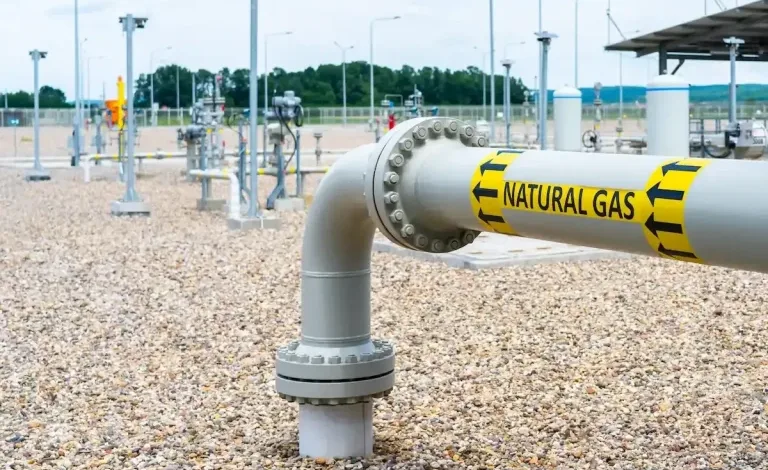
The International Energy Agency (IEA) says Nigeria’s liquefied natural gas (LNG) deliveries rose by around 30 per cent year-on-year between January and October to their highest level since 2020.
According to the IEA Global Gas Security Review 2026, released on Tuesday, Nigeria supplied additional LNG to international markets following the escalation of the Middle East crisis and the closure of the Strait of Hormuz.
“LNG deliveries rose by around 30% y-o-y between January and October to their highest level since 2020, supported by improved feedgas availability and greater prioritisation of supply to the liquefaction complex,” the IEA said.
The agency said Nigeria is sub-Saharan Africa’s largest gas-consuming country, with demand expected to increase by around two per cent year-on-year in 2026.



“Demand is led by power generation, followed by fertiliser and petrochemical production, industrial heat and the oil and gas sector,” the agency said.
“Transport use is expanding from a low base, supported by the government’s vehicle-conversion programme and investment in compressed natural gas refuelling infrastructure.
“Upstream availability improved in 2026 amid fewer pipeline disruptions and regulatory measures to unlock supply.”
The agency said gas supplied to Nigeria’s domestic market increased during the first half of 2026 but met only about 65 per cent of producers’ domestic supply obligations, reflecting persistent infrastructure, payment and market constraints.
“Better feedgas availability lifted utilisation at Nigeria LNG’s six-train liquefaction complex above 80%. Train 7 entered pre-commissioning in 2026, with start-up targeted for the end of 2027, subject to sufficient feedgas,” the report said.
“Once in operation, it would raise nameplate capacity from 22 Mtpa to 30 Mtpa.”
According to the report, Africa’s gas demand is met predominantly through domestic production.
“Algeria and Nigeria are self-supplied, while Egypt combines declining output with pipeline gas and growing LNG imports. Several smaller coastal markets receive LNG or pipeline imports, but limited regasification capacity and fragmented networks restrict access,” the report said.
“A sizeable share of African production is exported because export infrastructure is often better developed than domestic transport and distribution.
“The Middle East crisis has affected African gas consumption unevenly. In largely self-supplied markets, including Algeria and Nigeria, domestic production limited exposure to disrupted LNG imports.”
The agency said the crisis also redirected part of Africa’s available LNG supply to international markets without significantly affecting demand in the region’s largely self-supplied markets.
“For LNG-importing systems, particularly Egypt, the main impact has been higher supply costs and greater exposure to international cargo availability rather than weaker underlying demand,” the report further said.
“Egypt increased LNG and pipeline imports to sustain record power-sector consumption despite declining domestic production, deepening its structural import dependence.”
LOW EUROPEAN GAS RESERVES COULD PROLONG GLOBAL MARKET TIGHTNESS INTO 2027
The IEA said Europe is entering the 2026-2027 winter heating season with its lowest natural gas storage levels since 2013, a development that could prolong tight conditions in global gas markets well into 2027.
According to the report, the low inventories will increase Europe’s reliance on global LNG supplies to meet peak seasonal demand, leaving the region vulnerable to colder-than-expected weather and supply disruptions.
The agency said the effective halt of LNG flows through the Strait of Hormuz reduced loadings from Qatar and the United Arab Emirates by more than 60 billion cubic metres between March and October 2026, pushing Asian and European gas prices to their highest levels since the 2022-2023 supply crisis.
The report said global gas markets had become more interconnected over the past decade, but the disruption in the Strait of Hormuz had tested their resilience.
The IEA projected that global LNG supply would fall by three per cent, or almost 20 billion cubic metres, in 2026, while gas demand was expected to decline by around 1.5 per cent, or close to 65 billion cubic metres.
According to the report, the decline reflects lower consumption in the Middle East, reduced industrial demand in Europe and a shift to coal-fired power generation in parts of Asia.
Credit: The Cable