Adebayo Tsunami: From Obi’s inner circle to PDP’s old guard, political heavyweights joining SDP movement – by Adedayo Olalekan
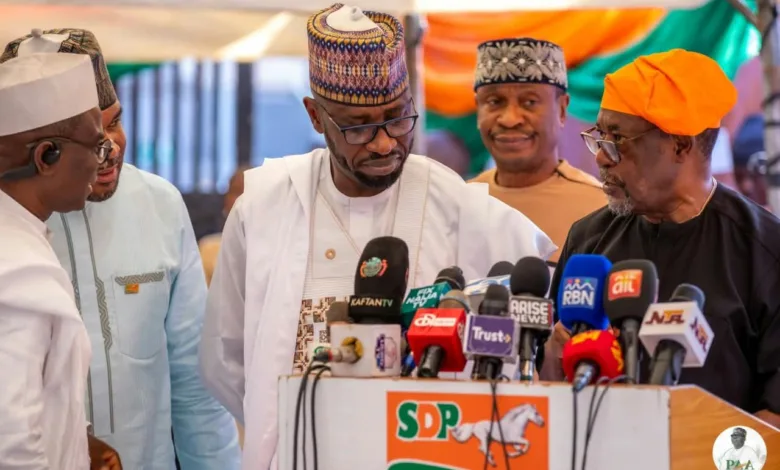
From Usman Bugaje to Isa El-Buba and Yunusa Tanko, a growing convergence of political experience, grassroots mobilisation and ideological conviction could be setting the stage for an unexpected electoral upset.
There is a point in every election cycle when political calculations begin to change. It is usually the moment when individuals who once occupied different political camps begin to converge around a candidate they consider capable of offering a different direction. That moment may be approaching in the political journey of Prince Adewole Adebayo.
What is increasingly becoming interesting about Adebayo’s 2027 presidential ambition is not simply the growing visibility of his campaign, but the calibre and political backgrounds of some of the people now associating with his project.
Three developments, in particular, deserve attention: the emergence of Dr Usman Bugaje as his running mate, Prophet Isa El-Buba’s decision to support his presidential ambition, and the recent appointment of Dr Yunusa Tanko, former National Coordinator of the Obidient Movement, as National Coordinator of the SDP Presidential Campaign Council.
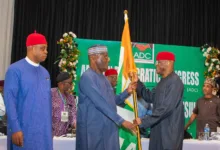
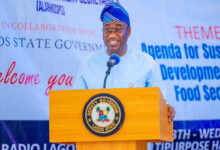
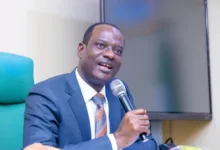
These are not ordinary political developments. They involve individuals with different political constituencies, networks, ideological persuasions and mobilisation experiences. Their convergence around Adebayo presents an interesting narrative about the changing dynamics of opposition politics in Nigeria.
From different political roads to one destination
Perhaps the most consequential of these developments is the emergence of Dr Usman Bugaje as Adebayo’s running mate. Bugaje is not a political newcomer. A former member of the House of Representatives, an experienced political voice and a figure with considerable standing in Northern Nigeria, he brings intellectual depth, political experience and regional reach to the ticket.
His political journey, including his previous association with the PDP, makes his present decision to run alongside Adebayo particularly significant.
Bugaje’s decision is also worth examining beyond the usual politics of sharing tickets. He has openly explained why he accepted the responsibility, emphasising the need to promote ideas, younger leadership and a different approach to governance. He has also praised Adebayo’s consistency and commitment to the SDP.
In a political environment where politicians frequently move from one platform to another in search of personal advantage, Bugaje’s explanation suggests that the Adebayo project is seeking to establish itself around ideas and a particular vision of national renewal.
Then comes Prophet Isa El-Buba, whose political influence should not be underestimated.
El-Buba was an influential figure in the movement that mobilised support for Peter Obi during the 2023 presidential election. His involvement in the Obi movement gave him visibility among Nigerians who wanted an alternative to the established political order.
His subsequent endorsement of Adebayo represents an interesting political development. In June 2026, he publicly declared support for Adebayo, having previously been associated with Obi’s presidential ambition. He subsequently reinforced that position, explaining that his support followed his examination of Adebayo’s policy blueprint, Farewell to Poverty and Insecurity.
The significance goes beyond the endorsement of another politician. It suggests that some individuals who were instrumental in building the enthusiasm behind the 2023 alternative-politics movement are now willing to explore a different political destination.
For Adebayo, this could mean access to networks of political mobilisation that were previously associated with another presidential candidate.
But perhaps the development that has generated the freshest political conversation is the arrival of Dr Yunusa Tanko.
Until recently, Tanko was one of the prominent figures associated with Peter Obi’s political movement. As former National Coordinator of the Obidient Movement and Obi’s Political Adviser for Northern Nigeria, he occupied positions that gave him considerable experience in grassroots mobilisation, political communication and the organisation of political support.
On November 11, 2026, Tanko was unveiled as the National Coordinator of the SDP Presidential Campaign Council.
He confirmed that he had resigned his position as Obi’s political adviser on October 30 before accepting the new appointment. He also acknowledged his previous relationship with Obi and explained that his political relationship with Adebayo predated the latest development.
This is particularly significant because Tanko is not simply another defector or political enthusiast. He understands the organisational architecture of a movement that generated extraordinary political enthusiasm in 2023.
His experience could prove valuable in helping Adebayo build a campaign that moves beyond political speeches and elite endorsements into structured grassroots mobilisation.
In other words, Adebayo may be gaining more than prominent political personalities; he may be acquiring the organisational experience and networks required to translate political sympathy into electoral participation.
The convergence of the elite and the ordinary Nigerian
What makes these developments particularly interesting is the different constituencies represented by the three individuals.
Bugaje brings political experience, intellectual engagement and Northern political connections.
El-Buba brings religious influence, public persuasion and a history of political mobilisation.
Tanko brings the experience of coordinating a mass political movement and connecting political leadership with grassroots supporters.
Together, they represent three different but potentially complementary dimensions of electoral politics.
This is where Adebayo’s political calculation could become interesting.
Nigeria’s presidential elections are rarely won by endorsements alone. They require a combination of political organisation, regional acceptance, credible messaging, financial capacity, grassroots mobilisation and the ability to convince ordinary voters that a candidate understands their daily struggles.
The challenge before Adebayo is to convert the growing collection of political personalities around him into a coherent national movement.
There is, however, a potentially important opening.
For years, Nigerian politics has been dominated by familiar political establishments, powerful personalities and alliances built around electoral calculations. Yet the frustration of ordinary Nigerians over insecurity, unemployment, poverty, the cost of living and the apparent failure of governance has created an appetite for alternatives.
Adebayo appears determined to occupy that political space.
His Farewell to Poverty and Insecurity blueprint, with its emphasis on economic productivity, security, education, healthcare and institutional accountability, provides the policy foundation around which he hopes to build that alternative.
The argument is that Nigerians should not merely be asked to vote for another politician; they should be offered a different governing philosophy.
That distinction could become important as the campaign intensifies.
Could Adebayo be preparing the biggest surprise of 2027?
There is a tendency among political analysts to assess presidential contenders through the traditional measurements of political strength: the number of governors behind them, the size of their financial war chests, the influence of established political godfathers and their control of party structures.
Those measurements remain important. But they do not always capture the mood of an electorate that is increasingly dissatisfied with the status quo.
The 2023 presidential election demonstrated that a politically energised electorate could challenge conventional expectations. The Obidient phenomenon, in particular, showed that political enthusiasm, citizen participation and grassroots mobilisation could reshape the national conversation.
Now, some of the individuals who played important roles in that political experience are finding themselves in Adebayo’s camp.
That is a development the established political order cannot afford to dismiss.
It would, however, be premature to conclude that the movement of these personalities automatically translates into the transfer of their former supporters. Political followers are not personal property, and voters ultimately make independent decisions.
But the experience, networks and credibility these individuals bring could give Adebayo a platform from which to build a much more formidable challenge.
There is also an important psychological dimension to these developments. When prominent political figures begin to associate with a candidate previously regarded as a relatively minor contender, it can change perceptions about that candidate’s viability. It encourages other politicians, political organisations and undecided voters to take a second look.
That is how political momentum can sometimes develop: first through a change in elite perception, then through wider public conversation, and eventually through grassroots acceptance.
Adebayo’s task is to ensure that the process does not stop at the first two stages.
The real test is still ahead
Of course, the road to the presidency is not paved with endorsements. Adebayo must demonstrate that his growing political coalition can withstand the pressures of an intensely competitive election.
He must consolidate the SDP’s organisational structures, deepen his appeal across the country’s geopolitical zones, resolve the distractions surrounding the party’s internal disputes and convince Nigerians that his proposed solutions are practical and deliverable.
The legal dispute over the SDP’s presidential nomination is particularly important and must be resolved to provide the campaign with the certainty it needs.
Nevertheless, the emerging political picture deserves attention.
A former PDP figure is now running alongside him. A prominent religious and political mobiliser who previously supported the Obi movement has endorsed him. A former coordinator of the Obidient Movement, with considerable experience in political mobilisation, has now taken charge of his presidential campaign coordination.
These developments may be coincidental to some observers. But viewed collectively, they suggest that Adebayo’s political project is attracting people from different backgrounds who see possibilities in his candidacy.
Perhaps the biggest mistake his opponents could make is to judge Adebayo solely by the political strength he possessed yesterday rather than the coalition he is attempting to assemble today.
The 2027 election may yet produce surprises. And if Adebayo succeeds in transforming these high-profile political realignments into a genuine national movement, the question may no longer be whether he can attract attention, but whether the established political order has adequately prepared for the challenge he could present.
For now, one thing is becoming increasingly difficult to ignore: the Adebayo campaign is generating conversations that its opponents would be unwise to dismiss.
The political train is gathering passengers. Whether it becomes the train that changes Nigeria’s 2027 electoral destination will ultimately be decided by the Nigerian electorate.
Olalekan, a public affairs analyst, writes from Lagos