Power equipment trapped for 20 years: Who will account for the waste? — by Adewale Okoya
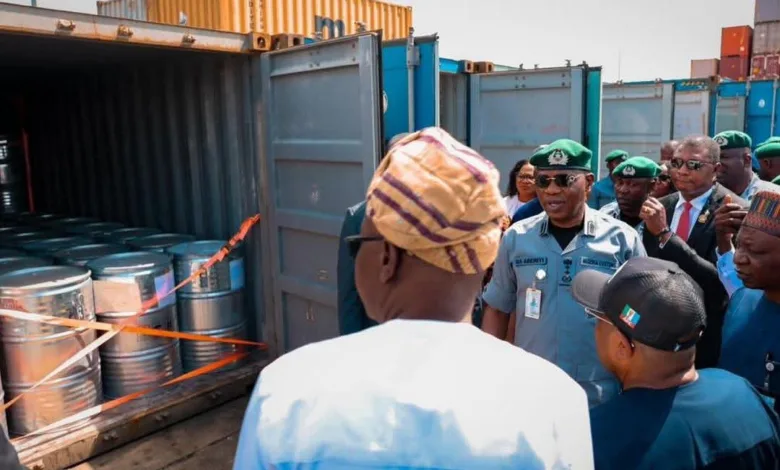
The release of 98 containers of electricity equipment reportedly stranded at Nigerian ports for up to 20 years is both welcome news and a damning indictment of successive governments. It is difficult to imagine a greater example of official negligence than a country suffering from chronic electricity shortages allowing expensive power equipment to rot at its ports while homes and businesses struggle for electricity.
President Bola Tinubu deserves credit for ordering the release of the equipment. But clearing the containers is only one part of the responsibility. Nigerians deserve to know who allowed this scandal to continue for two decades, how much public money was wasted and why successive administrations failed to resolve a problem that apparently required presidential intervention.
The story goes back to the administration of President Olusegun Obasanjo, which launched the National Integrated Power Project (NIPP) in 2004 to address Nigeria’s worsening electricity crisis. The programme involved building power stations and expanding transmission and distribution infrastructure. It was an ambitious intervention intended to rescue an electricity sector that had become a major obstacle to economic development.
Yet, the programme soon became the subject of bitter controversy. The widely reported $16 billion power expenditure became a symbol of alleged government waste, failed promises and questionable procurement practices. The figure was repeatedly presented in public debate as money squandered on electricity projects, although the distinction between budgeted funds, actual expenditure and completed projects was often lost in the political noise.
That distinction matters. The NIPP was not entirely a failed investment. Some power plants and other facilities were eventually completed. But the inability to deliver the expected improvement in electricity supply raised legitimate questions about planning, contract execution and financial oversight.
The controversy reached its height under President Umaru Musa Yar’Adua when the House of Representatives established an investigation panel headed by Ndudi Elumelu in 2008. The panel reported expenditure of about $13.28 billion between 1999 and 2007 and raised serious concerns about inflated contracts, questionable payments and poor project execution. It recommended investigations and the termination or review of several contracts.
But what became of those findings? The investigation generated headlines and political accusations without producing the level of accountability Nigerians expected. Worse still, the controversy coincided with a damaging interruption of the NIPP. Funding disputes, legal questions and changes in government priorities slowed projects, while imported equipment remained at the ports. An investigation intended to expose waste should never become another obstacle to completing essential infrastructure.
President Goodluck Jonathan subsequently revived the NIPP and completed several power plants. Yet electricity supply remained unreliable, partly because generation capacity was not matched by adequate transmission, distribution and gas infrastructure. The tragedy was that equipment needed to address some of these weaknesses was still trapped in the ports.
The administration of President Muhammadu Buhari cannot be accused of doing nothing. In 2018, the government announced that it had recovered more than 500 stranded containers of transmission equipment. The Transmission Company of Nigeria later reported recovering 775 of about 800 containers inherited by its management.
These efforts deserve recognition. However, they also raise fresh questions. How do the containers now being released relate to those recovered under Buhari? Were they different consignments? Why were hundreds still stranded? The government must provide a complete inventory rather than leave Nigerians to reconcile conflicting figures.
Now Tinubu has ordered another intervention. Customs officials have even acknowledged that some contractors imported equipment, abandoned it at the ports and failed to execute projects for which public money had been committed. This is a serious allegation that demands investigation, not merely public condemnation.
Why, then, is the government celebrating the release without announcing an equally determined effort to establish responsibility? Who awarded the affected contracts? Which contractors failed to clear the equipment? Which officials approved payments without ensuring delivery? Were Customs, port operators and supervising agencies helpless for 20 years, or did bureaucratic indifference contribute to the scandal?
The government must also disclose the original cost of the equipment, accumulated port charges, storage losses and estimated refurbishment expenses. An independent audit should establish which contractors and officials breached their obligations and recommend recovery of public funds or prosecution wherever the evidence justifies it.
Beyond punishment, Nigeria needs enforceable procurement safeguards. Contractors must face clear delivery deadlines, performance guarantees and penalties for abandonment. Government agencies should maintain a central register of imported public assets, with automatic warnings when consignments remain uncleared.
There is also the immediate question of the outstanding containers. Only 98 of more than 300 have received clearance approval. When will the remainder leave the ports? What is their condition, and how many can still be used? Nigerians deserve a published timetable for clearance, testing, installation and commissioning.
The release of these containers must not become another public relations victory that conceals a national scandal. The president has taken a necessary step towards recovering wasted infrastructure. He must now take the more important step of establishing who was responsible for the waste.
A government that rescues abandoned public assets without holding anyone accountable merely prepares the ground for the next scandal.