ADC: The price of impunity — by Adewale Okoya

I have always wondered why Nigeria’s political elite finds it so difficult to obey the law. These are people who understand the rules, have access to experienced lawyers and know the consequences of breaking them. Yet, they repeatedly behave as though the law is meant for ordinary citizens while the powerful can negotiate their way out of any trouble.
The latest crisis in the African Democratic Congress (ADC) brings this troubling attitude into focus. The party is battling a court decision that threatens its leadership and preparations for the 2027 general elections. Its leaders have blamed the ruling All Progressives Congress (APC) for their troubles, alleging political interference.
I do not dismiss the possibility of political manipulation. The ruling party must not use state institutions to weaken its opponents. But I find it convenient, even dishonest, to blame every opposition crisis on the APC without first examining the actions that created the problem.
The ADC has the right to appeal, and the judgment may yet be reversed. But the bigger question remains: why would a party led by some of Nigeria’s most experienced politicians expose itself to such a damaging legal battle?

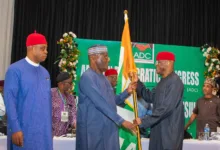


These are not political novices. They know the Electoral Act, understand party constitutions and have witnessed the destruction of political ambitions through defective nominations and unlawful internal arrangements. Yet, they appear to have assumed that political agreements and powerful personalities could settle whatever legal questions might arise.
That assumption reflects a deeper Nigerian problem: the belief that influence is more important than compliance with the law.
Our elite has perfected the art of treating laws as obstacles to be avoided rather than obligations to be respected. Procedures are ignored, rules are bent and institutions are pressured. When trouble comes, powerful friends are contacted, negotiations begin and political accommodation is expected.
Unless an offence is so obvious that it cannot be explained away, many believe there is always a way out.
This culture is particularly damaging in politics. Parties demand credible national elections but conduct questionable internal elections. They condemn electoral manipulation while disregarding their own constitutions. They insist on the rule of law when challenging opponents but denounce the judiciary when judgments go against them.
The hypocrisy is staggering.
What makes the ADC’s predicament more disturbing is that Nigeria’s political history is full of warnings.
In 2019, the Supreme Court nullified the APC’s victories in Zamfara State because of defects in the party’s primary elections. Candidates who had won at the polls lost their positions because their party failed to comply with the law.
In February 2020, the APC suffered another devastating blow in Bayelsa State. David Lyon had won the governorship election and was preparing for inauguration when the Supreme Court invalidated his election over discrepancies in his running mate’s documents.
The APC also lost the opportunity to field candidates in Rivers State in 2019 following bitter internal disputes and unlawful nomination processes.
These were painful lessons. Votes, campaign expenses, political investments and public expectations were wasted because politicians failed to put their houses in order.
One would have expected every political party to learn from these experiences. Instead, the same mistakes keep recurring.
Why?
Because many Nigerian politicians believe they are too powerful to suffer consequences. They assume that electoral strength can cure legal defects and that political pressure can achieve what proper compliance should have secured.
The APC understands this weakness because it has suffered from it. It also knows that in Nigerian politics, a careful examination of an opponent’s internal affairs may reveal enough procedural defects to support a legal challenge.
There is no need to manufacture every weakness when politicians have already created them through carelessness or arrogance.
Of course, the existence of a legal challenge does not automatically establish wrongdoing. Neither should every lawsuit against an opposition party be treated as proof of a government conspiracy. The courts must decide such matters on evidence and law, not political sentiment.
I am equally concerned about the tendency of politicians to threaten unrest whenever the courts deliver unfavourable judgments. Nigeria cannot become hostage to the ambitions of individuals who expect public disorder to achieve what they have failed to secure through lawful procedures.
The proper response to a questionable judgment is an appeal, not intimidation.
The judiciary itself must also accept responsibility. Our courts should not become playgrounds for politicians seeking to frustrate opponents through frivolous lawsuits, conflicting orders and endless procedural battles.
Judges must firmly reject abuse of court processes. The National Judicial Council should investigate credible cases of judicial misconduct and sanction judges who knowingly abuse their authority. Lawyers who deliberately promote vexatious litigation should also face professional discipline. Judicial independence must be protected, however; an unpopular judgment or the mere hearing of a weak case is not, by itself, misconduct.
Political disputes should be resolved promptly, especially when election timetables are involved. Justice that arrives after an election has been thrown into confusion can become another source of instability.
But the primary responsibility remains with political parties. Before conducting conventions, changing leadership or nominating candidates, they must ensure strict compliance with their constitutions and electoral laws. Independent legal scrutiny should be a routine safeguard, not an emergency response after litigation begins.
Nigerians must also stop defending wrongdoing simply because it benefits their preferred party. The rule of law cannot mean one thing when the APC is affected and another when the ADC is involved. The ADC should pursue its appeal and defend its rights. If the judgment is overturned, so be it. But its leaders should also examine how their party became vulnerable to such a serious challenge.
The APC, for its part, must remember that political advantage gained through legitimate legal processes is different from manipulating institutions to destroy opposition parties. The former is permissible; the latter is dangerous to democracy.
I believe Nigeria’s greatest problem is not the absence of laws. It is the arrogance of powerful people who believe those laws are negotiable. A political party seeking to govern Nigeria must first demonstrate that it can govern itself according to the rules.
The law should not become important only when it is used against an opponent. And political influence must never become a licence for impunity.