Iron, ash and second chances: The revival of Ajaokuta after 47 years — by Olabode Opeseitan
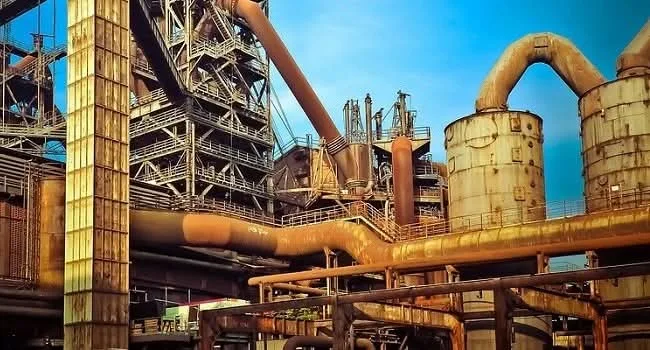
Imagine the other Nigeria. Suppose Ajaokuta had worked optimally across the 47 years since Shehu Shagari laid its foundation stone in 1979. Billets, rods, plates and rails would have flowed from Kogi to the construction sites of Lagos, the pipelines of the Niger Delta and the railways of the North.
Nigeria now spends about $4 billion a year on imported steel, roughly 70% of its needs, mostly from China, India and the UAE. Even allowing for imported inputs and other leakages, the savings would have been enormous. At today’s figures, a decade of partial or full self-sufficiency could have retained tens of billions of dollars within the Nigerian economy. That money would have steadied the naira, shielded reserves and funded the next factory. The plant was projected to support no fewer than 500,000 jobs upstream and downstream. If each job supported four people in a family, that is 2 million Nigerians lifted away from the poverty doom that has defined so many households. Around the plant would have grown a belt of foundries, fabricators, machine shops, haulage firms, training institutes and housing, each hiring in turn. These are estimates, not an audited account, but the direction is beyond dispute. A Nigeria with a working Ajaokuta would have been an industrial economy that builds, not a consumer economy that imports. It would have sold to its neighbours instead of begging others for dollars, and it would have been far harder for any shock in the oil price to unsettle it. Above all, it would have been a country with the confidence that comes from making things.
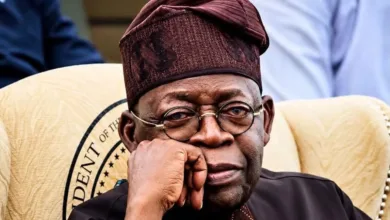
Three and a half years ago, President Bola Tinubu promised to revive Ajaokuta. Few listened. Decades of disappointment had taught Nigerians to hear the promises of politicians as a punchline, and the early record gave them little reason to think otherwise. As late as January, the media reported that the plant was still receiving capital despite its inactivity. That scepticism was reasonable, and it was earned. But something has shifted this year, quietly at first and then measurably. The revival is now in its middle chapter. It is not finished, but it has moved well beyond talk.
Ajaokuta’s Managing Director’s account of the last 18 months reads like a list of long-blocked doors being opened. The first door was gas, the absence of which had starved the plant’s power station for decades. In July, Ajaokuta signed a Gas Supply Agreement with NNPC Limited. The Managing Director described a 50 million standard cubic feet per day arrangement, with 5 million already flowing. The Ministry of Petroleum Resources (Gas), the Ministry of Steel Development and NNPC sealed a 20-year gas supply deal. The engineering workshop is already producing manhole covers, solar poles and telecommunications masts from molten iron. The Managing Director was honest enough to stress that this is not yet steel. The President has approved one of the first technical partners to make steel, and funding is under way. Within three to four months, the Managing Director expects the rolling mills to run and half of a 110-megawatt thermal plant to come on stream, which would largely end the power constraint for both Ajaokuta and Kogi State.
The revival is also widening beyond steel. In November 2025, the Ministries of Steel Development and Defence signed a memorandum, with DICON and Ajaokuta Steel as operating partners. The aim is to use the complex’s vast engineering workshops to make armoured vehicles, rifles, ammunition, helmets and ballistic vests at home. The logic is stark. A single precision-guided “smart” bomb for a Super Tucano aircraft costs roughly $55,000, and every such purchase sends foreign exchange abroad. NNPC has also signed an MoU with Ajaokuta to explore producing raw materials for the pipes needed by projects such as the African Atlantic Gas Pipeline. Demand is being lined up before the furnaces are fully lit, which is exactly what was missing in 1979.
The renewed momentum is extending beyond Ajaokuta itself. In August 2026, Premium Steel and Mines Limited committed $1.3 billion in private investment to revive the long-dormant Delta Steel Company at Ovwian-Aladja in Delta State. The significance lies not only in the size of the investment but in what it signals. For decades, Nigeria’s steel ambitions have depended largely on government action. The PSML commitment suggests that private capital is once again willing to wager on a Nigerian steel future. Delta Steel was conceived as a key link in the country’s industrial chain, and its revival would complement rather than compete with Ajaokuta. For the first time in a generation, public policy, industrial infrastructure and private investment appear to be moving in the same direction.
None of this is sentiment. It is how nations are built. Donald Trump, whatever one thinks of his politics, put the principle bluntly to steelworkers: “If you don’t have steel, you don’t have a country.” India’s Nehru held that without a strong industrial base the country would remain dependent on others, and he treated steel and heavy engineering as its backbone. South Korea founded POSCO 11 years before Ajaokuta was conceived, and its steel sector now earns more than $50 billion a year. Three leaders from three traditions reached the same conclusion. Steel is the quiet precondition of everything else, including bridges, railways, ships, pipelines, armour and skyscrapers. A nation that imports its steel imports its own foundations, and it allows someone else to set both the price and the timing.
That promise of revival only makes sense when set against the scale of what was lost. To understand why Ajaokuta still carries such emotional and political weight, one must return to where the story began.
In 1979, Shagari laid the foundation stone of what was meant to be Africa’s largest steel complex, on 24,000 hectares at Ajaokuta. It was designed for 3 million tonnes a year, rising to 5.2 million at full capacity. By 1994, the plant was estimated to be 98% complete in equipment installation, and 40 of its 43 planned units had been built. It stood within sight of the finish line, and then it stopped. Funding lapsed, policies shifted, contracts were contested and a concession ended in years of international arbitration. Nigeria had climbed almost the whole mountain and then sat down, immovably, within reach of the summit.
The bill for sitting down is staggering. Total investment is put at above $7 billion by the World Bank and above $10 billion by Premium Times. Running the idle plant cost ₦46.62 billion over the past decade. Salaries and allowances alone came to ₦38.9 billion between 2014 and 2024, even though not a single sheet of steel was produced. The 2026 budget gives Ajaokuta ₦6.69 billion, of which ₦6.04 billion, over 90%, is for personnel and only about ₦500 million is for capital expenditure. Nigeria has been paying for a furnace that does not burn. The workers are not the villains. As one economist put it, labour must be paid, and the failure lies with an employer who has no work to give.
The emotional cost is harder to count and perhaps heavier. Two generations of Kogi families watched the gates for work that never came. A caretaker at the site told one reporter he had been there since 1988. Engineers trained for a Nigerian steel age retired without ever seeing one. Graduates who might have become metallurgists became traders, drivers or emigrants instead. The moral wound is the deepest. Chinua Achebe called Ajaokuta a poster child of corruption and white-elephant projects in Africa, and a 2003 US Embassy cable alleged that it was used to award contracts to firms doing substandard work at inflated prices. No single government owns this failure. It was built by many hands across many administrations, and that is exactly why it is so difficult to forgive. A nation that cannot finish what it began teaches its young that nothing here is finished and nothing here is fair.
Tinubu deserves credit for his determination. He inherited the failures of every predecessor along with their ambitions, and he has recently urged the Steel Minister to intensify efforts and attract fresh investment. Credit is not the same as victory, though. Announced investment is not realised investment. The terms of any foreign partnership deserve close scrutiny, and the budget line remains dominated by salaries. Earlier governments also made promises and spent money, and the lesson is that promises alone do not light furnaces. A country that has waited this long can afford to hope, but it should hope with its eyes open.
The Managing Director’s target is that, on or before 2028, Ajaokuta should once again be shipping products across West Africa, as it once did to Côte d’Ivoire, Niger, Benin and Ghana. If that happens, the symbolism will matter as much as the tonnage. A plant that began as a monument to waste could end as proof that Nigerian institutions can finish what they start. The 47 lost years cannot be returned, and no honest account should pretend otherwise. But a rolling mill that turns, a furnace that holds its heat and a Kogi apprentice who draws a first real wage would begin to repay them.
After 47 years of waiting, the true product of Ajaokuta would not only be steel. It would be proof that Nigeria has learned, the hard way, how to be an effective finisher.