Diplomacy, national pride and the dangers of personal ego — by Solomon Dalung
There is a fundamental difference between representing a country and representing one’s personal temperament. Unfortunately, some people never understand where one ends and the other begins.
Let me state categorically that the lives of Nigerians in South Africa matter. The recurring xenophobic attacks, the loss of innocent lives, destruction of businesses and the hostility directed at fellow Africans are unacceptable. No responsible Nigerian should trivialise these experiences or expect our government to remain indifferent.
An ambassador has a responsibility to defend the interests, dignity and safety of the citizens he represents. He must speak when necessary, challenge injustice and demand accountability from his host government. Nobody is suggesting that diplomatic courtesy should become an excuse for abandoning Nigerians to their fate.
However, I find the argument that courage must necessarily come at the expense of diplomatic judgment rather curious.



Diplomacy is not cowardice. Neither is it silence. It is the art of confronting difficult issues in a manner that produces results rather than merely generates applause at home.
Nigeria’s historical contribution to the liberation of South Africa is undeniable. We stood with the people of South Africa when standing with them came at a considerable political and economic cost. That history deserves recognition and respect. But historical sacrifices do not give us a permanent entitlement to dictate how a sovereign nation conducts its affairs.
Our relationship with South Africa is bigger than the personalities occupying diplomatic offices. It involves trade, investment, continental cooperation, security and the shared responsibility of building a stronger African continent. These are precisely the reasons we need competent diplomatic engagement, particularly at a time when relations require careful attention.
The question, therefore, is not whether FFK should speak against xenophobia. Of course, he should. The question is whether his approach advances the safety of Nigerians in South Africa or unnecessarily complicates the diplomatic relationship through which that safety must be pursued.
There is a difference between confronting a problem and turning the confrontation into a personal performance.
An ambassador is not appointed to win arguments, settle personal scores or demand public applause. He is appointed to build relationships, protect national interests and secure tangible outcomes for the citizens whose interests he represents.
If previous diplomatic engagements have failed, we should demand measurable results, stronger bilateral mechanisms, accountability for perpetrators and concrete guarantees for the protection of Nigerians. We should not automatically conclude that abandoning diplomatic judgment is the missing solution.
Two sitting South African presidents have lost their positions through democratic processes. That is a reminder that South Africa is a sovereign country with its own institutions, political sensitivities and democratic processes. We must engage that reality with strategic intelligence, not historical entitlement or personal indignation.
What makes this episode particularly unfortunate is that Nigeria and South Africa have enough outstanding issues requiring serious diplomatic engagement. The last thing we need is an avoidable controversy at the very beginning of an ambassador’s assignment, especially when his primary responsibility should be rebuilding confidence and strengthening bilateral relations.
And there is another dimension to this conversation. Nigeria’s international image is not improved by appointing people who mistake personal aggression for national assertiveness. Neither is it improved by diplomats who spend more energy defending their public image than advancing the interests of the country.
A country’s ambassador carries the dignity of millions of citizens, not the ego of one individual.
We must also understand that speaking loudly is not the same as speaking effectively. An ambassador’s performance should ultimately be measured by the protection of Nigerians, the resolution of disputes, the strength of bilateral relations and the opportunities secured for his country.
The lives of Nigerians in South Africa matter far more than the public image of any ambassador.
If FFK’s critics are wrong to suggest that diplomacy requires silence in the face of injustice, those defending him must equally understand that diplomatic responsibility does not disappear simply because the issues at stake are emotional and consequential.
The real test of courage in diplomacy is not how much controversy one can generate, but how much national interest one can protect in the process.
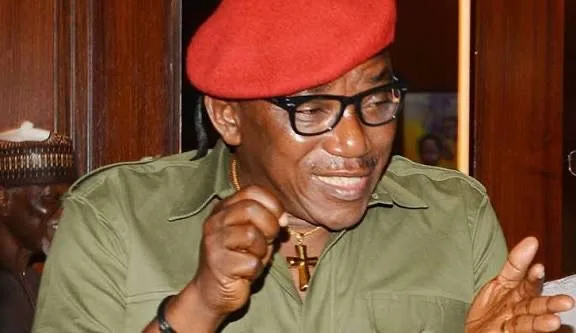
–Dalung is former Minister of Youth and Sports Development