Why the North stands firmly with Tinubu: Roads, security, and a 30-year bond of trust — by Olabode Opeseitan
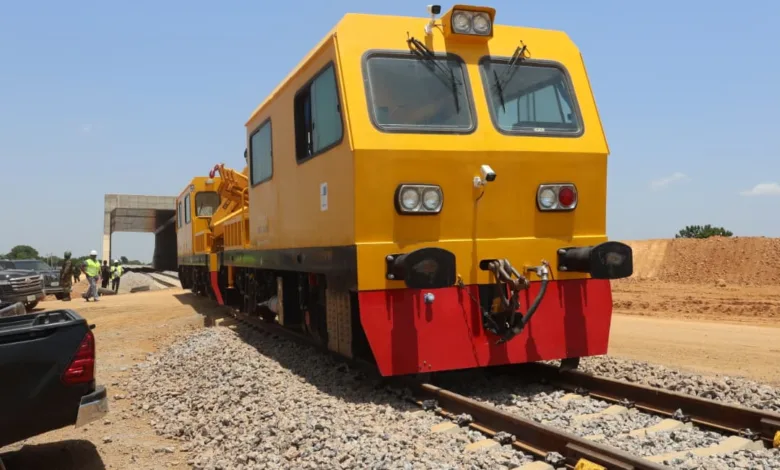
From student celebrations over education loans to trillion-naira highways, improved security, and cross-party endorsements, Northern Nigeria is rewarding a leader many believe has delivered tangible results while maintaining relationships built over decades.
In Northern Nigeria, political loyalty is rarely given on credit. It is earned through visible infrastructure, improved security, and leadership that people can directly connect to their daily lives. Today, the support President Bola Ahmed Tinubu enjoys across much of Northern Nigeria is difficult to ignore. It is not merely reflected in political rallies or elite endorsements. It is visible in conversations across communities, campuses, markets, and among many ordinary citizens who believe federal policies are beginning to make a difference.
Long before campaign posters went up, that sentiment was visible on mobile phones across campuses in Yobe, Gombe, Kano, and other Northern states, where students recorded themselves celebrating support received through the Nigerian Education Loan Fund (NELFUND). According to Finance Minister Taiwo Oyedele, participation in the scheme has been higher in Northern Nigeria than in the South, partly because of greater scepticism toward the programme in some southern states. As of November 2026, NELFUND Managing Director Akintunde Sawyerr reported that ₦375.28 billion had been disbursed since May 2024, supporting 1,675,474 student loans across 320 tertiary institutions nationwide. When government policy pays tuition directly and provides maintenance support to students, politics ceases to be an abstract debate and becomes a personal experience.
This relationship did not begin yesterday. Tinubu has spent more than three decades cultivating political relationships across Northern Nigeria, beginning in the SDP era alongside the late Shehu Musa Yar’Adua. Several prominent Northern leaders, including former President Muhammadu Buhari and Vice President Kashim Shettima, have publicly credited him with longstanding support for Northern political interests and leaders. Much of that support, his allies argue, was offered long before he became President and often outside the glare of television cameras.

By throwing its weight behind Tinubu over Atiku Abubakar and Peter Obi in 2023, many Northern political actors saw themselves as making a pragmatic choice rather than a sentimental one. The region’s electoral history contains several examples of voters backing candidates from outside their immediate ethnic or regional blocs. The June 12, 1993 election remains one of the most cited examples, when Moshood Kashimawo Olawale Abiola defeated Kano’s own Bashir Tofa in Kano State. For many observers, the lesson remains the same: Northern voters tend to reward political relationships, trust, and perceived competence more than appeals based solely on identity.
That grassroots goodwill is now being matched by organisation. In September and October this year, prominent Northern political figures launched Arewa for Asiwaju (A4A), a mobilisation platform dedicated to supporting Tinubu’s 2027 re-election bid. Spanning the 19 Northern states and the Federal Capital Territory, the movement is led by a 14-member Board of Trustees chaired by former Kano State Governor and former Minister of Education Ibrahim Shekarau, deputised by Ibrahim Geidam and Simon Lalong. Other notable members include Buba Marwa, Aliyu Wamakko, Atiku Bagudu, Isa Yuguda, Joshua Dariye, Jolly Nyame, Yahaya Bello, and Mohammed Badaru Abubakar, who serves as both Board Secretary and Director General, alongside Deputy National Coordinators Ibrahim Shema and Abdulrazaq Namdas. Supporters describe it as an experienced team of former governors, ministers, and lawmakers assembled to strengthen Tinubu’s re-election effort.
At a recent strategy meeting with Vice President Kashim Shettima, the movement outlined plans to expand its presence down to the ward level. Committees covering youth mobilisation, women, traditional institutions, religious groups, civil society engagement, finance, and research have been established. State offices are being opened across the region, anchored by the group’s national headquarters in Abuja. According to its leaders, the strategy for 2027 is simple: point to concrete outcomes rather than campaign promises.
Consider the contrast. In 2023, Tinubu campaigned largely on promised reforms and inherited national projects rather than a record of federal projects executed under his administration. Today, he has numerous projects to point to across the region. The political implications are obvious.
The infrastructure figures tell a story that supporters believe strengthens the administration’s case in Northern Nigeria. According to figures cited by Works Minister David Umahi, the Northern zones account for 52% of ongoing road construction and legacy projects nationwide, measured by metrics such as project length and distribution, compared to 48% in the Southern zones. From the 1,068-kilometre Sokoto-Badagry Superhighway and the Abuja-Kaduna-Kano Expressway to the Akwanga-Jos-Bauchi-Gombe road corridor and the Kaduna Western Bypass, the scale of ongoing construction is substantial.
The rail and energy sectors tell a similar story. The Kano-Maradi rail line has reportedly advanced to over 70% completion from roughly 5% in 2023. The Kaduna-Zaria-Kano rail project has reached approximately 90% completion. Kano and Kaduna metro rail projects valued at almost $2 billion are also progressing, while the AKK Gas Pipeline, according to NNPC officials, has reached approximately 95% completion. Healthcare infrastructure has benefited as well. Six of the country’s ten newly established federal cancer treatment centres are in Northern states, including Bauchi, Sokoto, Kaduna, Yobe, Plateau, and Kwara.
Equally important is security, an issue that sits at the heart of everyday life across much of Northern Nigeria. Here too, the administration has received acknowledgment from unexpected quarters. Bauchi State Governor Bala Mohammed, one of the country’s leading opposition figures, publicly thanked Tinubu for deploying an expanded military presence and approving two battalions in Alkaleri and Tafawa Balewa. According to the governor, the intervention enabled displaced residents to return to their communities and resume farming activities. Such praise from a leading opposition governor is significant because it suggests that the administration’s security interventions are receiving recognition beyond party lines.
For many governors across the North, support for Tinubu is therefore both politically beneficial and administratively practical. Former APC National Chairman Abdullahi Ganduje remains one of the President’s strongest allies, while Kaduna State Governor Uba Sani has become one of the most vocal advocates for the administration. Beyond party boundaries, several governors who are not members of the APC have maintained constructive relationships with the Federal Government, reflecting a broader recognition that cooperation often serves state interests better than perpetual confrontation.
The clearest explanation may lie in state finances. According to government officials, when Tinubu assumed office in May 2023, 27 states faced severe fiscal pressures and struggled to meet recurrent obligations. Through the removal of fuel subsidies and foreign exchange reforms, federal allocations to states increased substantially. Governors who once depended heavily on federal interventions and short-term borrowing to pay salaries are now paying workers more regularly, clearing legacy obligations, and finishing projects abandoned for decades.
At the same time, Tinubu has advanced policies that many governors interpret as strengthening federalism. The former Lagos State governor, who fought legal and political battles against the Federal Government over state powers while in office, has overseen reforms that allow states greater participation in electricity generation, transmission, and distribution. Discussions around state policing and broader constitutional reforms have further reinforced the perception among many state leaders that the administration is willing to devolve power.
Against that backdrop, Northern political leaders inevitably compare Tinubu with his rivals. Atiku Abubakar’s proposals regarding subsidy policy, for example, are viewed sceptically by many governors who remember the fiscal constraints that existed before recent reforms. Peter Obi, on the other hand, appears to many Northern political actors as a politician whose critics argue that he frequently changes his positions on key issues. Supporters of Obi strongly dispute that characterisation, but it remains a perception that some of his opponents continue to emphasise. His record as governor of Anambra State remains a subject of debate between admirers praising his fiscal management and critics, including his immediate predecessor and both of his successors, questioning his handover records and what they view as an exaggerated policy legacy.
Northern political leaders are ultimately making a comparative judgment. Whether one agrees with that judgment or not, many of them appear convinced that Tinubu’s record on infrastructure, fiscal reforms, security interventions, and federal-state relations provides a stronger basis for continued support than the alternatives currently before them. For those leaders and the constituencies they influence, the case is no longer being argued solely through campaign slogans. It is increasingly being argued through roads, railways, security deployments, student loans, state revenues, and the accumulated weight of political relationships built over more than three decades.

 Follow our WhatsApp Channel