Supporting Tinubu’s regime for actualization of regional government, by Kola Amzat
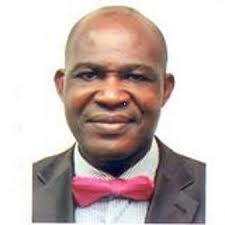
Of all presidents who had been privilege to lead Nigeria in its democratic journey, none was as audacious, decisive, uncompromising, unyielding, resolute, courageous and patriotic like the incumbent.
There exists no doubt that the president has knack for taking very tough and difficult decisions particularly, if he’s sufficiently convinced of the appropriateness of such, as well as the benefits to the generality of Nigerians.
Very convinced that petroleum subsidy was an oppressive tool been deployed to scam the country and her teeming population of several billions of Naira on monthly basis, Tinubu, got it removed without batting an eye.
Instructively, this was a desirable and very necessary decision which past leaders have been scared of. Vociferous voices of opposition members and deluge of propaganda sponsored by the oil barons to date with a view to reserve the decision have been ignored by the president.

On a related note, president ordered Tantita Security Services to return to deep sea for the purpose of battling crude-oil bunkerers to standstill, with a view to optimizing the nation’s OPEC quota, a national assignment that the security outfit has executed with aplomb.
In the same vein, the president thought it appropriate that the true position of Naira-domestic currency, would be determined if it’s subjected to the forces of demand and supply. Without much ado, the president mandated the Naira to be floated.
Nigerians are aware of the surgical operations on-going at NNPCL.
A few months ago, the key Agency of the federal government got transformed from a government owned-corporation to a limited liability company at the instance of the president, a move made in order to make the all-important Agency to be more responsive, productive, resourceful and, more importantly, to fulfil its optimal potential.
Other subsidiaries also got established off NNPC to take charge of the overall affairs in the petroleum sector.
The president also reconstituted the Board of NNPCL with a new team of tested and trusted professionals, with accomplished records in the oil sector.
Having observed colossal damage visited on the financial sector and economy as a whole by Godwin Emefiele’s CBN, the president in one fell swoop sacked the entire board, replaced them with Femi Cardozo lead new Board, with specific mandate to turn around the fortunes of the economy with a defined timeline, as well as to always ensure the harmonization of the monetary and fiscal policy, a desirable and necessary fiscal initiative that was lacking before Tinubu assumed office.
Suddenly, the president excavated Steven Orosanye’s report and ordered his full implementation, in a move purposed to cut the cost of governance. The report which was first issued in 2012, seeks to rationalize and reduce the numbers of departments and agencies of government. It takes a leader with tremendous courage to take this kind of decision.
In a move considered audacious, federal government at the instance of the president commenced the construction of Lagos-Calabar coastal highway, a 700km project estimated to cost N15trn ($11bn). The Coastal Highway connecting from Lagos State to Cross River State through eight states; and the Calabar-South East-North Central-Apo Abuja 477km Superhighway, connecting Calabar to Ebonyi, Benue, Kogi, and Nasarawa states and terminating at Apo in Abuja has been segmented into about eight sections, with the first phase that stretches 47.47 commencing from Lagos.
Meanwhile, the centerpiece of this Piece is the rife rumour of federal government intention to send an executive bill to national assembly on Regional Government, an initiative that will effect a radical change in the nation’s form of government.
There is no iota of doubt that if the bill passes through the expected tough test of national assembly and eventually get ASSENTED, the president would have succeeded in bequeathing unto the nation an incredible legacy that would eternally place him firmly in the hearts of millions of Nigeria.
In a very diverse nation as Nigeria with multiplicity in ethnicity and religion, the accrued benefits of regional government is manifold.
For decades, several political blocs, professionals, Civil Liberty Organizations and members of political class, as well as other stakeholders have been clamoring for true federalism. In essence, the stakeholders desire restructuring of the country in all the gamut.
The government that Nigeria runs today is peculiar only to country, with so much power concentrated at the federal level.
The country’s 1999 Constitution as amended contains of 68 items in the exclusive legislative list in which only the Federal Government of Nigeria allow to legislate.
Contained in the list are the police, prisons, stamp duties, taxation of incomes, regulation of tourist traffic, registration of business names, incorporation of companies, traffic on federal truck roads passing through states, trade, commerce census, education, electricity, railways etc.
The dominance of federal government give her the platform to control all aspects of Nigeria; a true unitary system of government.
Until this system foisted on the nation by the 1999 Constitution, a product of military government is sufficiently restructured and fine-tuned, the states would continue to be hindered in discharging their responsibility to the Nigerians at the grass roots.
This is the obnoxious system the president is attempting to change through the impending Regional administration.
Besides the exclusive list challenge, the present ethnics’ composition of some of the 36 states are faulty.
For instance, the Yorubas are dominant ethnic bloc in Kwara state and yet, the state is grouped in North Central. This is absurd and must be corrected in the new arrangement. There is no doubt that it would be very justified for the state to be in South-West region.
In Delta, the Itsekiris and Urhobos have long affinity with the Yorubas dated several decades ago. The constitution hasn’t be fair to them by grouping these blocs in Delta state.
In the same vein, the Yorubas in Edo and Kogi states should be aligned with their kinsmen in South West region in the new arrangement.
Predominantly, all ethnic blocs in all the South East states are Igbos. However, about 70-75% of Igbos in Rivers state deserved to be aligned with their brothers and sisters in South East region.
Even though, we are not oblivious of the fact that Igbos are adventurers, nonetheless, its travesty of justice for the constitution to continue to locate them in a region where they have no bearing whatsoever with the language, culture and norms & traditions.
In the North, everything about Kaduna state with respect to religion, tradition, cultures and norms largely align with what’s obtainable in Plateau, Benue and even, Nassarawa states. Nigerians need to interrogate the author and architects of 1999 why this state is grouped in North West.
Suffice to submit that, the opportunity of the impending new government arrangement must be used to correct the anomaly.
There appears to be a thin line of difference between Hausas and Fulanis, as two tribes largely dominate in all the Northern states.
But, nonetheless the new arrangement should be used to do a proper re-alignment and balancing, especially in the areas of land mass, cultures and traditions.
The regional is desirable because the people in government know what’s good for their people.
The regional leaders as part and parcel of the region are conversant with mentality, psyche and thinking of the people they govern with respect to education, infrastructures, socio-cultural and political aspirations. So, they are placed in position on how to address the challenges.
Of course, Regional administration will douse ethnic tension and perennial chaos, as well as clamour for self-determination.
Each region will be at liberty to grow at its pace, and all states will breathe the air of freedom with more resources and greater control at their disposal to attract foreign investors and domestic growth of the economy.
It’s an auspicious time to retool and try something noble to reinvent governance and make life meaningful and abundant for Nigerians.
This is why Nigerians must cooperate, support and collaborate with the president in his bid to actualize this lofty and laudable dream of regional administration.
Kola AMZAT (FCA, FCIB),
CEO, WKA Consulting Ltd,
09077509348.