The subsidy paradox: Atiku, Obi and the politics of convenient contradictions — by Kazeem Raji
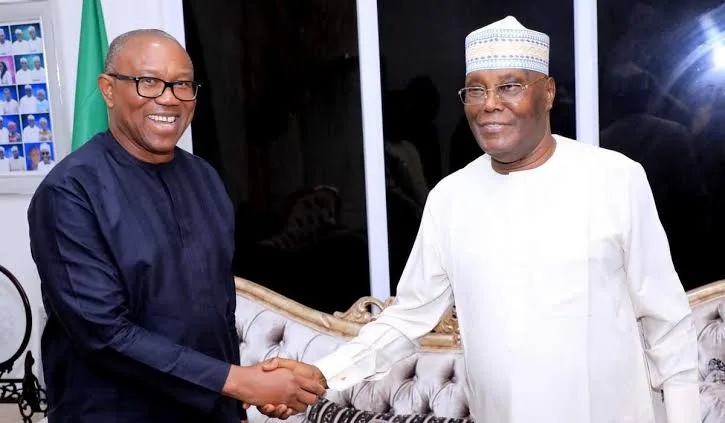
When yesterday’s economic liabilities become tomorrow’s electoral promises, Nigerians are entitled to demand explanations.
Nigeria’s fuel subsidy debate tests political consistency and economic judgment. Atiku Abubakar and Peter Obi previously advocated removal in unequivocal terms. Their later proposals to restore or retain subsidy raise a question: what changed in their reasoning, and what evidence supports their new positions?
Politicians may revise policies when evidence changes, but they must show that alternatives address the weaknesses they once condemned.
In November 2022, Atiku, speaking at the Lagos Business School, pledged to complete subsidy removal if elected president. He described the arrangement as fraudulent and promised removal within his first 100 days.
Obi was equally emphatic. At the Lagos Chamber of Commerce and Industry’s presidential economic forum on September 20, 2022, he said: “Subsidy is an organised crime; 50 percent of it is corruption, so it must be removed.”
On January 8, 2023, at Channels Television’s People’s Town Hall meeting, he added: “Subsidy – I’ve said it before – is organised crime and I will not allow it to stay a day longer.”
After President Bola Ahmed Tinubu announced removal on May 29, 2023, Obi reiterated his support on June 6, saying he had backed the policy since serving on former President Goodluck Jonathan’s Economic Management Team. Both men presented removal as necessary.
Yet on August 25, 2026, Atiku declared: “On the question of subsidy, my position has not changed and will not change: I will restore it!”
His spokesman called it temporary, linked to domestic refining and crude-oil production.
Obi’s position has also changed in formulation. At the 2026 Nigerian Bar Association conference, he argued that mismanagement of subsidy savings was not sufficient reason to reverse removal.
But in a BBC interview published on October 6, 2026, he said: “I’ll remove the corruption and retain the subsidy.” Asked whether he would restore it, he answered yes, arguing that corruption, rather than subsidy itself, was the fundamental problem.
Atiku proposes targeted production support, while Obi argues that subsidy can remain if corruption is eliminated. What would qualify for support, what would it cost, how would beneficiaries be identified, and what safeguards would prevent past abuses? Nigerians deserve detailed answers, not assurances.
For decades, petroleum subsidy imposed substantial costs on public finances. The International Monetary Fund has documented how payments reduced Federation Account revenue, drained resources that could strengthen foreign-exchange reserves, discouraged domestic refining and encouraged rent-seeking and smuggling.
Benefits were poorly targeted: richer households generally gained more because they consumed more fuel.
Subsidy competed with other obligations, as state governments struggled at times to pay salaries and accumulated arrears. Yet it would be simplistic to blame every unpaid salary, poor road or university strike solely on subsidy; weak revenue administration, corruption, debt, inadequate budgeting and governance failures also contributed.
Still, subsidy absorbed resources that could have supported schools, hospitals, roads and public services.
University strikes and inadequate funding repeatedly disrupted academic calendars. Subsidy removal cannot guarantee industrial harmony or properly funded universities, but ending a costly, poorly targeted programme creates an opportunity to finance public priorities more sustainably.
Recent figures illustrate the fiscal case for reform. The World Bank’s October 2026 Nigeria Development Update reportedly found that gross federation revenues rose by 69 per cent in real terms between 2023 and 2025, reflecting subsidy removal, foreign-exchange reforms and stronger revenue administration.
It also reported economic growth of 4.2 per cent in the first half of 2026, with higher revenues giving state governments more room for capital expenditure.
Reuters reported in August 2026 that the government estimated subsidy and foreign-exchange reforms generated ₦15.8 trillion in savings between June 2023 and December 2025.
These figures do not prove every naira has been spent effectively. The World Bank stresses that higher revenues must improve services and citizens’ lives. The reforms have widened fiscal space; converting it into infrastructure, regular salaries, stronger universities and healthcare remains a test of accountability.
Developments in global energy markets also matter. Before the US–Iran conflict began on February 28, 2026, petrol sold for about ₦830 per litre, varying by location. Crude prices surged during the conflict, pushing petrol prices higher.
When crude retreated towards pre-conflict levels in June, prices could have fallen, but the decline was not fully passed on. Renewed tensions exposed Nigeria’s vulnerability to global energy shocks.
These movements do not prove subsidy removal has failed, since global shocks also affected consumers; nor do falling crude prices prove deregulation guarantees affordability.
Nigeria’s external reserves reportedly exceeded $54 billion in September 2026, while foreign-exchange reforms and increased inflows contributed to improved market functioning. The naira also appreciated at times against the dollar.
Exchange rates reflect monetary policy, capital flows, oil receipts and foreign-exchange demand. A stronger currency cannot reverse accumulated living costs, though stability and stronger reserves can help the country withstand shocks.
The strongest argument for restoration is that Nigerians need immediate relief. Households face high transport costs, businesses struggle with energy expenses, and low-income citizens bear a disproportionate burden.
But relief must be sustainable. Targeted transfers, affordable public transport, support for productive enterprises, improved domestic energy supply and transparent assistance to vulnerable households deserve serious consideration. Subsidy must be compared with these alternatives for cost, reach and effectiveness.
Atiku and Obi must explain how their proposals would prevent the fiscal leakages, opaque accounting and market distortions associated with the old system. They should publish cost estimates, eligibility rules, audit safeguards, funding sources and exit strategies. Without such evidence, Nigerians are entitled to question whether promised relief would last.
Consistency does not mean refusing to revise policy; it means explaining the change, acknowledging earlier weaknesses and showing why the new approach is better.
Nigeria cannot treat reform as a slogan when convenient and a liability when politically uncomfortable. Neither artificially cheap petrol nor subsidy removal alone guarantees prosperity. The test is whether policy delivers affordable energy, sustainable public finances and measurable improvements in people’s lives. This is the direction the Tinubu administration says its reforms are intended to take.
Atiku and Obi have every right to propose alternatives. Nigerians have an equal right to demand evidence that those alternatives will solve the problems they once identified rather than recreate them under another name.
In this context, NNPC’s temporary petrol discount deserves consideration. By reducing its retail profit margin to lower pump prices, the Nigerian National Petroleum Company Limited has introduced interim relief intended to cushion consumers without necessarily requiring the Federal Government to resume direct subsidy payments.
Under the former system, public funds bridged the gap between petrol’s market cost and regulated price, creating major obligations and opportunities for abuse. A retail-margin concession means the retailer forgoes earnings rather than automatically charging the cost to public revenue.
If manageable, the concession could provide temporary relief while preserving market-based pricing. During price volatility, it may help households and businesses without recreating the old arrangement. It must, however, be transparent, sustainable and temporary.
Dr Kazeem Kolawole Raji is the Director General and Chief Executive Officer of the National Board for Technology Incubation and Chairman of the Forum of CEOs of Federal Parastatals.