Agbara Nla remake versus the outrage of isese adherents — by Paul Dada
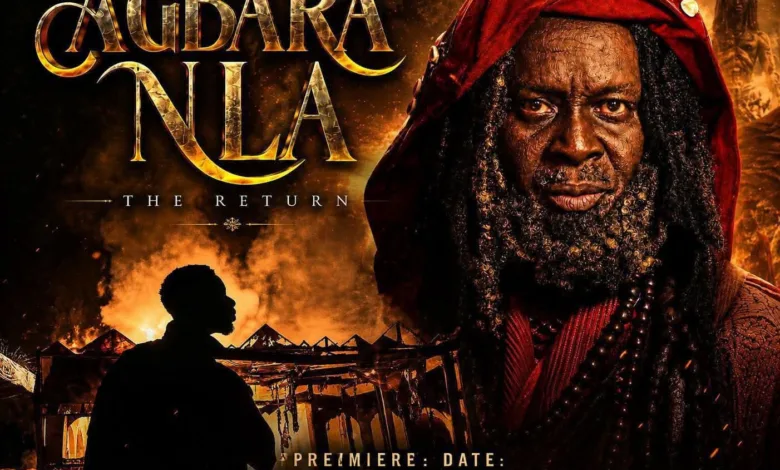
Let me say this from the outset. In many ways, I am not doctrinally aligned with Sir Mike Bamiloye. And I gave up the habit of watching Nigerian Christian films a long time ago. I am no longer an ardent follower of Mount Zion productions and similar films. In fact, I have no plans to watch the remake of the classic Agbara Nla, which is scheduled to premiere on 1 October.
That said, I find it rather ridiculous that Isese adherents( practitioners of the Yoruba traditional religion), are up in arms over Agbara Nla, which was first released in 1993. They argue that the film denigrates Yoruba culture.
I have read several robust and thoughtful responses on Facebook challenging what I consider the flawed arguments of the Isese advocates. From those responses, it has been clearly established that Mount Zion uses fictional names for evil deities and demons in its films. Characters such as Aro Meta, Ayamatanga and Olukundudu in Agbara Nla have no place in traditional Yoruba spirituality. Likewise, there is no Yoruba village called Muwonleru, the fictional setting of the film. Isawuru, the name of the traditional priest who later becomes an evangelist, is not an authentic Yoruba name either.
Critics of the outrage have also pointed out that Yoruba culture extends far beyond Yoruba spirituality and mythology. Culture encompasses the total way of life of a people, including language, cuisine, clothing, music, technology and social values. One of the defining characteristics of culture is that it is dynamic. It evolves over time rather than remaining static. Indeed, Agbara Nla celebrates many aspects of Yoruba culture. The costumes worn by several characters reflect the richness of Yoruba heritage, while the depth and beauty of the Yoruba language are powerfully showcased throughout the film.




That said, I do not think Christians need to bend over backwards trying to educate these traditionalists. Biblical Christianity is, by its very nature, an exclusive faith. It teaches that salvation is found only in Jesus Christ and that it is wrong to worship or revere any deity other than God.
From the standpoint of biblical Christianity, the worship of Sango, Obatala, Yemoja and every other deity associated with any religion or culture is regarded as idolatry and therefore sinful.
Consequently, even if Mount Zion or any other Christian organisation chooses to portray actual Yoruba deities such as Sango, Obatala, Oya or Ogun as demonic, it owes no apology for doing so.
According to Christian doctrine, anyone who worships a god other than Jehovah is an idolater in need of salvation. Christianity teaches that such a person must repent or face eternal condemnation. There is no theological middle ground between biblical Christianity and Isese.
Christianity is light, while Isese is darkness. That is the position of the Bible. Some people may find that uncomfortable, but it remains the Christian position.
Therefore, even if a Christian film depicts Sango being defeated in the name of Jesus, its creators have done nothing inconsistent with Christian belief.
Biblical Christianity and political correctness have never walked hand in hand.