Boko Haram’s Cameroonian commanders are extending the group’s reach
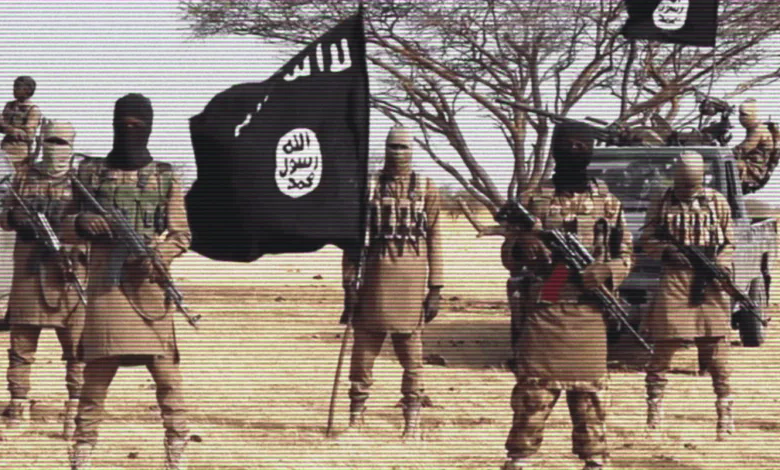
Boko Haram’s growing reliance on its Cameroonian leaders is fuelling attacks in Cameroon and strengthening the group’s resilience, writes Célestin Delanga in ISS Today.
Boko Haram is appointing an increasing number of Cameroonian fighters to senior positions, according to research by the Institute for Security Studies (ISS). These commanders play an active role in sustaining the group’s operations by providing access to local resources and intelligence on targets for attacks and extortion.
The trend follows a shift in the location of attacks by the extremist group’s two factions – Islamic State West Africa Province (ISWAP) and Jama’tu Ahlis Sunna Lidda’awati wal-Jihad (JAS). According to ACLED, Cameroon’s Far North region recorded the highest number of incidents in 2025 among the eight Lake Chad Basin regions affected by the insurgency.
These regions include Nigeria’s Borno, Adamawa and Yobe states; Chad’s Lac and Hadjer Lamis provinces; Cameroon’s Far North and North regions; and Niger’s Diffa region.



The high number of attacks in Cameroon’s Far North is linked to ISWAP’s strategy of territorial expansion. Cameroonian fighters are increasingly given leadership roles, enabling the group to target people and property within Cameroon.
These leaders influence decision-making and operations on the ground. Their familiarity with the local environment allows them to plan attacks, recruit fighters and coordinate logistical support.
ISS research indicates that Boko Haram carried out 714 reported attacks in 2025 under these leaders, with another 227 attacks recorded between January and June 2026.
Cameroon’s border regions remain strategically important to both ISWAP and JAS. Under pressure from sustained military offensives in Nigeria, including air strikes, the groups have increasingly sought refuge in remote areas along the Nigeria-Cameroon border.
From these locations, they loot nearby communities and launder proceeds from criminal activities. Livestock stolen in Nigeria is often sold in Cameroonian border markets, while cross-border trade provides easy access to food, clothing, medicines and fuel. Local fighters also serve as scouts, helping the groups secure resources and maintain operations.
Cameroonian commanders now occupy key operational roles within Boko Haram. At the strategic level, a special adviser on Cameroon works alongside JAS deputy leader Ali Ngulde. At the tactical level, at least five Cameroonian qaids (commanders) operate between Ngoshé and Sambisa in Nigeria, directing about 1,000 fighters in Mayo-Sava and Mayo-Tsanaga in Cameroon’s Far North.
Each qaid commands around 400 fighters. Their knowledge of local languages and terrain enables Boko Haram to conduct almost daily operations. They also appoint deputies from their home communities to lead smaller units of between 50 and 100 fighters during attacks on Cameroonian villages.
ISS also identified Abu Zara, a Cameroonian from Mayo-Sava, as the ISWAP commander tasked with establishing a new cell near Waza National Park. Researchers warn that this could increase the risk of territorial losses, threaten border corridors and trigger further population displacement.
To counter the growing threat, ISS recommends that Cameroon adopt a targeted strategy to demobilise key terrorist leaders by leveraging family and community networks. Such an approach could weaken Boko Haram’s influence and discourage recruitment.
Researchers say community members are often familiar with local fighters and maintain contact with them. They could help raise awareness, encourage defections and act as mediators, while a formal defection programme offering financial incentives and vocational training could support rehabilitation.
The report points to Nigeria’s Operation Sulhu, launched in 2019 by the State Security Service, as a model. The initiative seeks to persuade senior Boko Haram commanders to defect and has reportedly led to large-scale exits, weakened the group’s operational capacity and encouraged former fighters to enter rehabilitation camps.
ISS believes a similar programme could reduce Boko Haram’s violence in Cameroon, particularly because Cameroonian fighters remain fewer in number than their Nigerian counterparts. Nigerian commanders continue to dominate the leadership of both ISWAP and JAS and retain control over finances, supplies and the spoils of war.
The report notes that the conflict’s epicentre remains Borno State in north-eastern Nigeria, where most Boko Haram strongholds are located. Since Cameroon’s Far North lies on the periphery, targeting a small number of influential Cameroonian leaders could help sever the link between the insurgency’s centre and its expanding frontier.
ISS also recommends that Cameroon’s military and intelligence agencies intensify efforts to dismantle the group’s leadership structure while overhauling the country’s existing disarmament, demobilisation and reintegration programme, which it says has been hampered by procedural, programme and infrastructure challenges.
The report concludes that preventing Boko Haram from expanding the role of Cameroonian fighters is essential to weakening terrorist networks and reducing attacks in northern Cameroon.
The article was written by Célestin Delanga, a research officer on the Lake Chad Basin at the Institute for Security Studies’ Regional Office for West Africa and the Sahel, and was first published by ISS Today.
Credit: News 24