Vance outreach to Iran related to medical supplies, says Trump
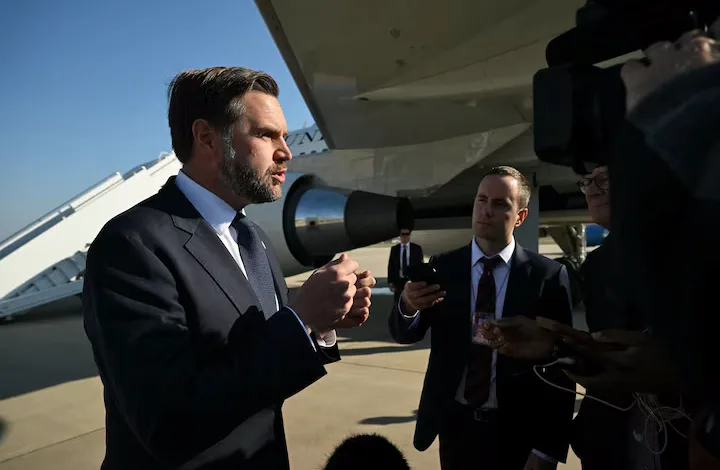
US President Donald Trump has said that Vice President JD Vance’s outreach to Iran was aimed at helping the country obtain medical supplies, following reports that Vance had written to Tehran’s top security official to revive peace talks.
Iran has received a letter from Vance but has yet to respond, the semi-official Tasnim news agency reported on Thursday. It added that Tehran wants the US to meet its conditions, warning that “any position that contradicts this framework is unacceptable.”
Also on Thursday, the US military’s senior officer overseeing the Middle East, Admiral Brad Cooper, met Trump at the White House to present military options concerning Iran, the Wall Street Journal reported, citing US officials and other people familiar with the meeting. Reuters could not immediately independently verify the report.
The Wall Street Journal and the New York Times had reported on Wednesday that Vance sent a letter to Iranian Security Council chief Mohsen Rezaei in an attempt to revive peace negotiations, citing US officials and people familiar with the matter. Reuters could not independently verify the reports.


The Wall Street Journal further reported that Vance sent the letter at Trump’s direction. However, when asked by reporters on Wednesday whether he had instructed Vance to contact Iran to restart peace negotiations, Trump said: “No.”
“What that is is they need help with medical supplies and various things. He (Vance) asked me what I thought. I said, if you want to do that, that’s okay. Basically, it’s getting supplies in to help people that are not well,” Trump told reporters.
Iran’s mission to the United Nations in New York and Vance’s office did not immediately respond to requests for comments on the letter and Trump’s remarks.
Meanwhile, Iran’s parliament speaker, Mohammad Baqer Qalibaf, said on Thursday that Tehran’s conditions had been repeatedly and clearly communicated to mediators, adding that progress could only be achieved if the country’s seven conditions were met.
He said the “carrot-and-stick approach has no effect on Iran.”
Among Iran’s conditions for reopening the strategic Strait of Hormuz are the lifting of the US blockade on Iranian ports, the removal of US sanctions on Iranian oil exports and an end to hostilities on all regional fronts.
The United States and Israel launched a war against Iran in late February. Washington has also imposed a naval blockade on Iran to restrict its oil export revenue and intensified efforts to isolate the country economically.
Iran has long accused the US sanctions regime of restricting civilian access to medical supplies. In an August letter to the UN Security Council, Tehran accused Washington of deliberately depriving civilians of access to food, medicines, medical equipment, energy and other necessities, with serious consequences for their rights to life, health and an adequate standard of living.
Meanwhile, Qatari mediators presented Iran with a new draft agreement on Sunday to end the war. However, a senior Iranian official said Doha had only presented unacceptable proposals that did not amount to an offer.
The impact of the war on global energy costs has also weakened support for Republican candidates and affected Trump’s approval ratings ahead of the US midterm elections, which will determine control of Congress. Trump’s Republican Party currently holds narrow majorities in both chambers.
Credit: Reuters