Egypt approves military support for Saudi Arabia after Houthi attacks escalate
Egypt’s parliament on Monday authorised President Abdel Fattah al-Sisi to take “all necessary measures” to help Saudi Arabia defend itself, a move that could draw Cairo more directly into the conflict between the kingdom and Yemen’s Iran-aligned Houthi movement.
Sisi had asked parliament to approve military support for Egypt’s Gulf Arab ally and the world’s largest oil exporter if Riyadh requested assistance in fighting the Houthis, whose advances also threaten the strategic Bab el-Mandeb Strait, the southern gateway to the Red Sea and Egypt’s Suez Canal.
At least two-thirds of lawmakers backed the measure, according to an official parliamentary statement. The vote was held in a closed session, and the tally was not published. No formal Saudi request for Egyptian troops has been announced.
The parliamentary statement did not specify the nature of the support Egypt would provide. However, Taher al-Khouly, deputy head of parliament’s legislative committee, told Reuters that Egyptian forces would be sent to Saudi Arabia in coordination with Riyadh and at its request.




Several opposition groups opposed or declined to support the move. The Civil Democratic Movement, a coalition of opposition parties, rejected Egyptian military involvement in a regional war, arguing that Cairo should focus on mediation. The Egyptian Social Democratic Party also said its lawmakers would abstain because they lacked information about the mission’s objectives, duration and cost, although the party expressed support for Saudi Arabia.
Egypt has repeatedly condemned Iranian and Iranian-backed attacks on Gulf countries but has not publicly engaged in direct combat in the current conflict. It has also not joined the mutual defence pact involving Saudi Arabia, Pakistan and Turkey, signed in August. Ministers from the three countries met in Riyadh earlier this month and agreed to ensure the rapid deployment of forces and military capabilities in Saudi Arabia. Pakistan approved the agreement last week, while Turkey’s parliament began ratification proceedings.
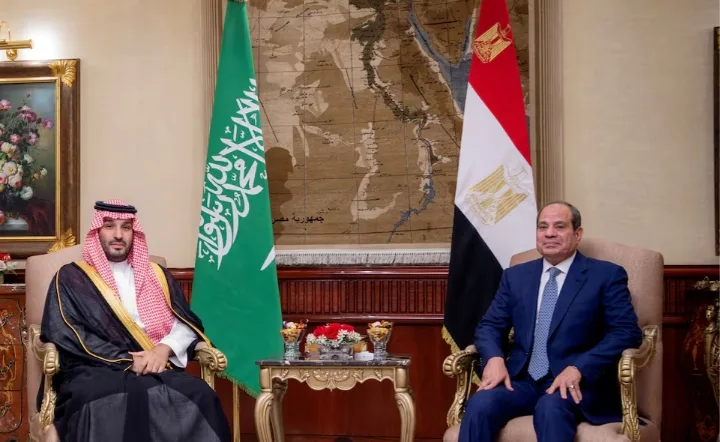
The Cairo parliament postponed the vote last week as Foreign Minister Badr Abdelatty and intelligence chief Hassan Rashad travelled to Riyadh to deliver a letter from Sisi to Saudi Crown Prince Mohammed bin Salman. Sisi said Egypt’s support would be limited to defending Saudi territory and borders rather than attacking Yemen. Abdelatty subsequently said Cairo supported exploring every opportunity to resolve the conflict diplomatically.
Senate Speaker Essam Farid said Egypt’s position was “purely defensive” and aimed at protecting Saudi territory, borders, sovereignty and holy sites from external attacks. He stressed that the support would not extend to an attack on Yemen, describing Egypt as “a shield that protects, not a sword that attacks”. He also said Yemen’s internationally recognised government supported Egypt’s participation in defending Saudi Arabia.
Egypt, the Arab world’s most populous country and home to one of the region’s largest militaries, joined the Saudi-led coalition in March 2015 during an earlier phase of Yemen’s war. It mainly served as a naval partner, deploying warships to secure Red Sea shipping lanes, although it also sent about 800 ground troops that played a limited combat role. Egypt previously conducted a costly military intervention in Yemen in the 1960s and has not undertaken a large-scale foreign ground deployment since the 1991 Gulf War.
Yahya Ali al-Rai, speaker of Yemen’s Houthi-run House of Representatives, last week urged Egypt’s parliament to reject the proposal, warning that involvement could threaten the country’s national security and internal stability. However, Ahmed Obeid bin Daghr, head of Yemen’s Shura Council, which is aligned with the internationally recognised government, backed Egypt’s participation, according to Farid.
Saudi Arabia is a major political and financial partner of Cairo, providing billions of dollars in aid, central bank deposits and energy supplies under Sisi’s administration.
Fighting between the Saudi-led coalition backing Yemen’s internationally recognised government and the Houthis, who control the capital, Sanaa, has escalated in recent weeks, adding another volatile front to the US-Israeli war on Iran. The Houthis have attacked Riyadh’s international airport and Saudi state oil company Aramco, disrupting flights and oil exports, while aid agencies have warned of worsening conditions in Yemen, which is already experiencing one of the world’s worst humanitarian crises.
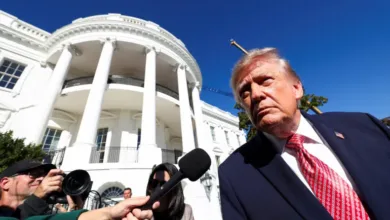
Saudi Crown Prince Mohammed bin Salman had sought military assistance from the United States, but President Donald Trump declined to authorise strikes against the Houthis, people familiar with the matter told Reuters in September. Washington instead told Riyadh it would provide intelligence-sharing and targeting support.
Credit: Reuters