Foreign diplomats in Brazil discuss quick recognition of runoff winner
Foreign diplomats in Brasília are discussing plans to quickly recognise the winner of Sunday’s presidential runoff in Brazil, four ambassadors told Reuters, in an effort to prevent outside actors from prematurely declaring either candidate the winner.
However, the diplomats have yet to formalise a plan, with several diplomatic missions still consulting their respective governments on the best approach, the sources said.
Right-wing Senator Flávio Bolsonaro, son of former President Jair Bolsonaro, holds a narrow but declining lead over leftist President Luiz Inácio Lula da Silva in opinion polls ahead of the runoff.
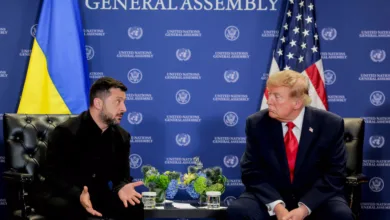
Two ambassadors told Reuters they were concerned that US President Donald Trump or his administration might question the result if Lula wins by a small margin.

“It wouldn’t surprise me if Trump or (right-wing Argentine President Javier) Milei declare Bolsonaro the winner before electoral authorities do,” one ambassador said, warning that such a move could trigger a major institutional crisis.
The ambassador, who spoke on condition of anonymity because of the sensitivity of the matter, said they were not involved in discussions among other governments.
The US State Department and the US Embassy in Brasília did not respond to questions about whether Trump would commit to recognising the runoff winner as confirmed by Brazil’s electoral tribunal. The tribunal also did not respond to a request for comment.
One ambassador said the concerns followed Trump’s comments on recent elections in Latin America, including Honduras’ 2025 presidential election. Amid delays in counting votes in that election, Trump alleged fraud without providing evidence and warned there would be “hell to pay” if Honduras changed preliminary results that had put his preferred candidate ahead.
A premature declaration of victory by Trump or another leader “could lead to an institutional crisis that nobody wants,” the ambassador said.
‘Faith in the Brazilian system’
Memories remain fresh of Brazil’s 2022 election, when foreign governments, including the United States, the European Union and several Latin American countries, played an important role in recognising Lula’s victory over former President Bolsonaro, who refused to concede for days.
The elder Bolsonaro was sentenced to 27 years in prison for plotting a coup after his 2022 election loss, which was followed by his supporters storming the capital in a violent attack.
“Our main objective is to recognise the outcome of an election that we expect to be held according to good standards. We have faith in the Brazil voting system,” one European ambassador told Reuters, adding that “speed is the main concern”.
Bolsonaro finished ahead of Lula in the first round of voting on October 4, prompting a rally in financial markets amid optimism that he was well positioned to win and push through business-friendly economic reforms with the support of a new Congress packed with his allies.
Bolsonaro maintains a narrow lead over Lula in opinion polls ahead of the runoff, although surveys suggest the gap is shrinking as election day approaches.
“If Lula wins, particularly by a small margin, it’s inevitable that at least some will say that the vote was somehow rigged in his favour,” one ambassador said, adding that such a scenario would increase pressure on Brazilian electoral authorities and international observers to confirm the result quickly.
Oliver Stuenkel, a professor at São Paulo’s Getulio Vargas Foundation, said a refusal by Trump to promptly recognise a Lula victory would mark a low point in relations between the two countries.
“I think that is a scenario that one has to keep on the radar,” he said.
The ambassadors expressed confidence in Brazil’s electoral process and institutions, saying their concerns were not about any particular candidate but about the potential impact of election denial on public confidence in the country’s democratic institutions.
“I don’t care if Lula or Bolsonaro wins,” one ambassador said. “I do care about the shape of Brazilian democracy after this election.”
Credit: Reuters


 Follow our WhatsApp Channel