Can Nigeria and Germany turn diplomacy into delivery? — by Collins Nweke
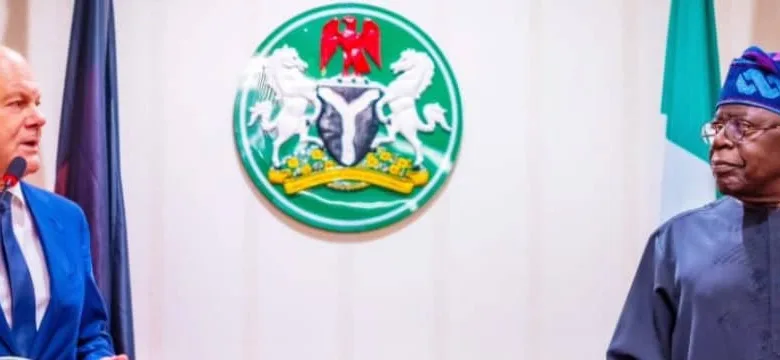
Diplomatic conversations are easy. Delivering infrastructure is not. Nigeria’s renewed engagement with Germany comes at a decisive moment. The real test is no longer about reform promises or international goodwill. It is about whether one major infrastructure project, the long-delayed Siemens-backed power initiative, can finally move from announcement to execution. If Nigeria delivers, investor confidence deepens, and infrastructure finance follows. If it falters, the credibility gap widens. This is not about symbolism. It is about proof.
In an Africa In Business – SABC interview, I argued that investor confidence in Nigeria is not about blind optimism. It is about whether one complex infrastructure project can finally be delivered properly
When Bola Tinubu held a phone conversation with German Chancellor Friedrich Merz on cooperation in power, infrastructure, and security, the significance of the exchange lay not in its symbolism but in its timing. At a moment when Nigeria is under pressure to convert reform rhetoric into tangible outcomes, Germany’s renewed engagement tests whether political alignment can finally translate into economic delivery.
Nowhere is this test more visible than in the long-delayed Siemens-backed electricity project. Launched in 2019 with ambitious targets, the initiative did not fail for lack of technical soundness. It faltered because of policy discontinuity, financing misalignment, and institutional fragmentation within Nigeria’s power ecosystem. The idea was right; the discipline in execution was missing.
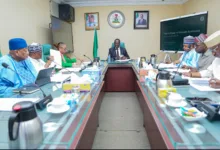
What makes the current engagement different is that it is no longer confined to technical committees. Leader-to-leader backing changes the incentives across the system. If Nigeria treats this project as national economic infrastructure, shielded from bureaucratic drift and political cycles, then accelerated delivery is realistic. If not, history will repeat itself.
Germany’s reported readiness, through Siemens and Deutsche Bank, to finance and implement the project sends an important signal to global markets. This is not blind optimism about Nigeria’s power sector; it is conditional confidence. Investors are responding to clearer reform signals, stronger political ownership, and more disciplined project structuring.
In effect, the power project has become a credibility test. The message tends to say: deliver it properly, and Nigeria reopens the door to large-scale infrastructure finance well beyond electricity.
Central to this effort is the often-misunderstood role of transmission. Nigeria’s electricity crisis is not solely about generation capacity; it is about the inability to reliably transmit power from source to user. Transmission is the missing middle, which is an overstretched, fragile grid that turns available megawatts into wasted potential. Upgrading it is not a technical afterthought; it is the keystone reform without which industrial growth, SME productivity, and investor confidence remain constrained.
The security dimension of the Tinubu–Merz discussion, including the possible supply of helicopters, must be viewed through a similar lens. Enhanced aerial capabilities can improve surveillance, mobility, and rapid response, particularly in the context of instability spilling across the Sahel. But equipment alone does not confer security. Its real value lies in its integration into broader intelligence-sharing, training, maintenance, and regional cooperation frameworks. Germany’s engagement matters less for the hardware itself than for what it signals: a growing European recognition that Sahel insecurity is a shared strategic risk, not a distant African problem.
Taken together, Nigeria’s renewed engagement with Germany reflects a deeper shift in economic diplomacy. This is no longer about aid or goodwill; it is about performance, credibility, and delivery. The question now is whether Nigeria can seize this moment to prove that partnerships can be translated into power, infrastructure into productivity, and diplomacy into measurable economic outcomes.
Collins Nweke is an International Trade Consultant & Economic Diplomacy researcher. He was a former Green Councillor at Ostend City Council, Belgium, where he served three consecutive terms until December 2024.