Nigeria’s economic comeback: EMT’s plan to transform the economy by 2027 — by Olabode Opeseitan
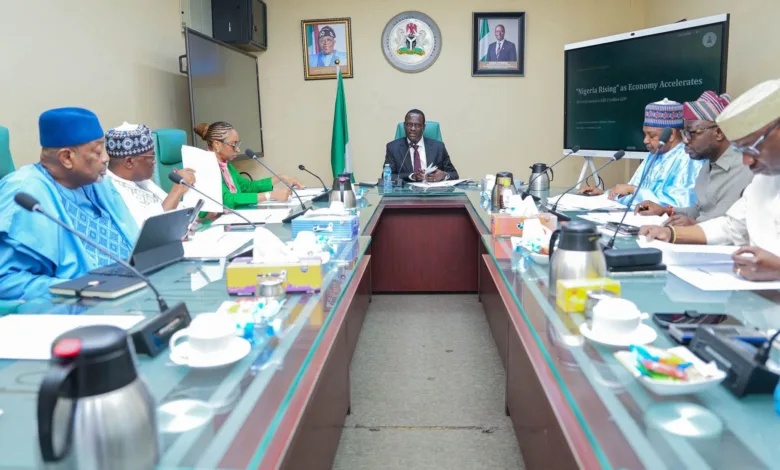
Nigeria’s latest Economic Management Team meeting marks a decisive shift in the country’s economic direction. The approval of a committee to harmonise macroeconomic assumptions across fiscal and monetary institutions signals a move toward disciplined, co‑ordinated and data‑driven governance. If the government sustains this strategy, the next 12 months could reshape Nigeria’s economic landscape significantly.
The current indicators already show momentum. Real GDP growth of 4.43% in Q2 2026, combined with an estimated 17% expansion in H1 2026 in USD terms, reflects broad‑based recovery across services, agriculture and industry. External reserves above $54bn place Nigeria at an 18‑year high, strengthening resilience against global volatility and improving investor confidence. FTSE Russell’s reclassification of Nigeria to Frontier Market status reinforces the credibility of recent reforms and signals renewed international trust.
These gains are not simply cyclical. They are structural. The harmonisation committee could become one of the most consequential institutional reforms in years. Nigeria’s budgets have long suffered from inconsistent assumptions on inflation, exchange rates, oil production and revenue forecasts. Aligning these variables across fiscal and monetary institutions will reduce variance between projections and outcomes, improve cash management and strengthen the credibility of medium‑term expenditure frameworks. By this time next year, Nigeria could see narrower fiscal deficits, more predictable budget execution and stronger alignment between monetary tightening and fiscal consolidation.
Agriculture’s elevated role in the EMT’s discussions is equally important. With Nigeria’s ambition to build a $1trn economy, productivity gains in agriculture remain essential. The sector’s integration into trade, industrial policy and food security frameworks suggests a shift toward a more modern, mechanised and export‑oriented model. If current interventions continue, Nigeria could witness higher yields, improved rural incomes and stronger agro‑processing value chains by 2027. This would support disinflation, expand employment and deepen the country’s non‑oil export base.


The EMT’s review of preparations for CANEX 2026 and IATF 2027 highlights a broader strategy to position Nigeria as a continental investment hub. Successful hosting of these events would amplify Nigeria’s visibility, attract new capital flows and strengthen its role in Africa’s creative, manufacturing and services ecosystems. Combined with rising reserves and improving macro stability, Nigeria could see a measurable increase in foreign direct investment and portfolio inflows over the next 12 months.
If the government follows through with the strategies endorsed by the EMT, Nigeria’s outlook by next year could be defined by stronger policy coherence, deeper sectoral productivity, improved investor confidence and a more resilient external position. The gains recorded so far are early signals of what disciplined execution can deliver.
Nigeria is entering a phase where consistency and clarity matter more than speed. The foundations are being laid. The next 12 months will show how far the country can rise.