Meet Nigeria’s first female professor, still publishing at 99 — by Tope Fajegbensi
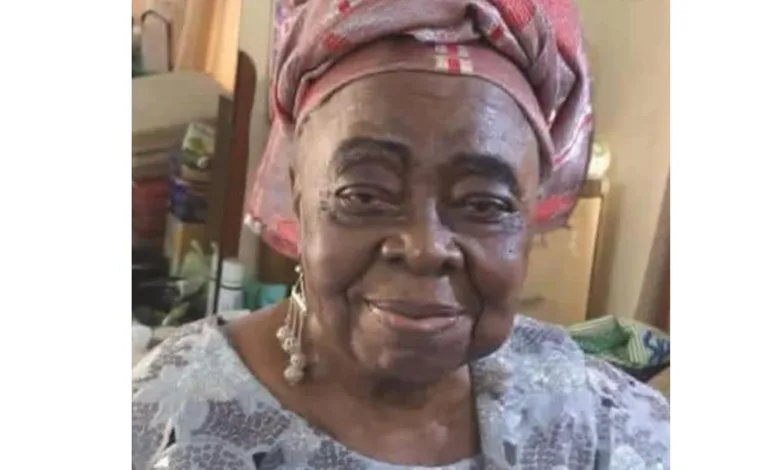
At 99, Professor Adetowun Ogunsheye is still writing. That single fact, more than any title on her long resume, tells you who she is.
Born in Benin City in 1926 to a missionary-teacher father and an Ijebu-Ode mother, Ogunsheye grew up in a household that treated her education as non-negotiable at a time when most Nigerian families didn’t extend that courtesy to daughters. When Yaba Higher College refused to admit her because it had never taken a female student, her father pushed back, arguing nothing in the school’s founding charter barred women from attending. She sat the entrance exam, got in, and never looked back.
What followed was a career built almost entirely on firsts. She became the first African woman admitted to Cambridge University after teaching herself Latin in a single year to meet the entry requirement. She returned home rather than stay abroad, later moving from geography teaching into library science, where in 1973 she became the first Nigerian woman ever appointed a university professor and the first woman to serve as Dean of a Faculty at the University of Ibadan. Under her leadership, Ibadan became the first library school in Nigeria to offer a doctoral programme, training a generation of librarians who fanned out across the country.
Her impact reached beyond the university gates. She helped found what became Nigeria’s National Council of Women Societies, led women’s advocacy groups across West Africa, and in 1974 established the Abadina Media Resources Centre, built specifically to put books into the hands of children from homes that couldn’t otherwise afford them.
Even personal tragedy became public record. Her brother, Victor Banjo, Nigeria’s first military graduate, was executed during the Civil War after siding with Biafra’s Igbo victims of the pogroms, a loss she later documented in her book “A Break in Silence.”
She hasn’t slowed since. At 95, she published a coffee-table history of Aso Oke textiles, sealing her status as Africa’s oldest publishing author, part of a bibliography now running past 50 works.
What she has not received, in over seven decades of firsts, is a national honour from her own country. For a woman who opened university doors, built institutions, and is still writing books in her tenth decade, that remains the one line in her story still waiting to be completed.