CANEX WKND: Obasanjo, Gonsalves, Ramsay push for reparations over slave trade
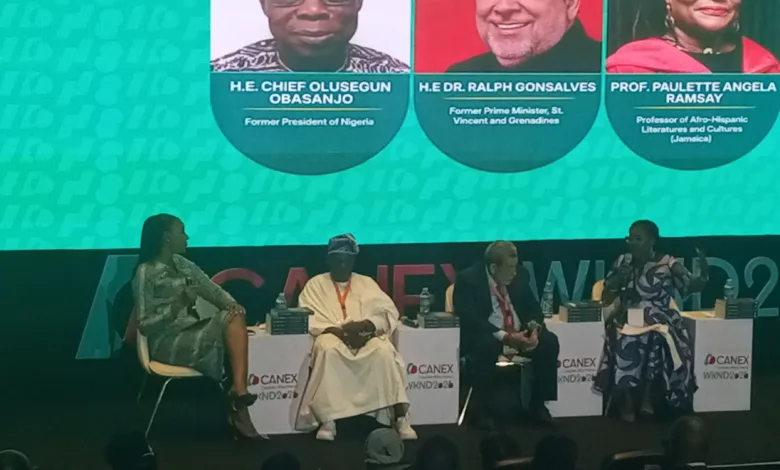
Former President Olusegun Obasanjo, former Prime Minister of St Vincent and the Grenadines, Dr Ralph Gonsalves, and Jamaican scholar, Prof. Paulette Angela Ramsay, have called for reparations for the transatlantic slave trade and colonialism, urging Africans at home and in the diaspora to unite in the pursuit of justice.
They made the call during a session themed “Lest We Forget” at the ongoing Creative Africa Nexus Weekend (CANEX WKND) 2026 in Lagos, where they discussed slavery, colonialism, reparations and the lasting effects of the exploitation of Africans.
In his presentation, Gonsalves said European slave-owning countries accumulated enormous wealth from the forced labour of Africans, while the enslaved received nothing. He noted that the wealth generated helped drive the growth of mercantile, industrial and financial capitalism in Europe, while African and Caribbean societies were left struggling with poverty and underdevelopment.
He advocated a structured conversation on reparations, citing CARICOM’s 10-point plan, which includes a formal apology, debt relief, financial compensation, improved healthcare, education, housing, technology and the return of stolen artefacts. “This is a matter of international justice. Everyone is interested in justice, whatever their ethnicity, group or geographical area, and they must join in this massive struggle,” he said.

Speaking about the book, Lest We Forget: Slavery, Slave Trade, Colonisation, Emancipation and Reparation, Ramsay, its author, thanked Obasanjo for his role in its production. She said the former president’s determination to tell the story of slavery and colonialism from an African perspective brought together academics, politicians, policymakers and cultural experts to contribute to the publication.
Ramsay warned that colonialism was presented as modernisation and development but was, in reality, another means of exploiting Africans and other colonised peoples. She called on African governments to establish policies and legal frameworks to protect the continent’s intellectual and creative works, while expressing concern over the limited attention given to history in African school curricula.
She also urged Africans across the continent and in the diaspora to embrace their shared history, insisting that reparations should go beyond financial compensation to include the return of stolen artefacts and an end to the exploitation of Africa’s resources. “We must not remember with bitterness. We must teach younger generations that we remember the horrible things that were done, but we survived, and that’s the best part of the African story, that we survived,” she said.
Obasanjo, in his remarks, also called for African unity and peaceful coexistence, stressing that the continent’s future depended on its people rediscovering their identity and shared history. “We must all think of unity as strength and continue in peace. The way forward is for Africans to remember who they are,” the former president said.




 Follow our WhatsApp Channel