Perspectives
-

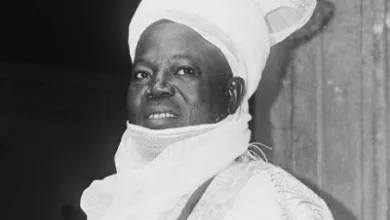
Would Ahmadu Bello still recognise today’s north? – by Adebayo Abubakar
The political air is thick with accusations from a section of the northern elite, alleging the marginalisation of their region under the current administration. This narrative, often weaponised to heat up the polity, conveniently sidesteps a monumental and uncomfortable historical truth: for approximately 46 of Nigeria’s over 65 post-independence years, the nation’s helm was held by leaders of northern extraction.…
Read More » -
FDI: Why reforms must balance ratings and reality — by Testimony Akinkunmi
On January 23, 2026, the African Export-Import Bank did something unprecedented in development finance: it fired its credit rating agency. Afreximbank’s termination of Fitch Ratings followed a bitter dispute where Fitch downgraded the Cairo-based institution to junk status (BB+) before withdrawing coverage entirely. The bank’s statement was blunt—Fitch’s methodology was “analytically and legally flawed,” failing to recognise Afreximbank’s treaty-based preferred…
Read More » -
How President Tinubu’s NELFUND provides equal access — by Dare Ojepe
In a country where identity often arrives before ability, it is no small thing when a public policy chooses to listen differently. Nigeria, with its many tongues and temperaments, has long struggled with the burden of translation of names into networks, of accents into access, of origins into opportunity. Too often, the gates of progress have opened not to merit…
Read More » -
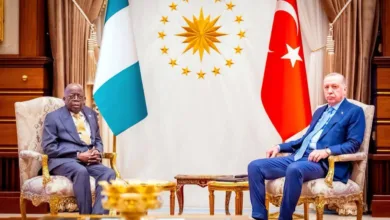
From misstep to myth: Deconstructing the Türkiye spectacle –by Abayomi Ishola
Public life has a peculiar cruelty: it can seize a fleeting human slip and inflate it into a symbolic sentence. President Bola Ahmed Tinubu’s brief loss of balance in Türkiye has been stretched beyond proportion, transformed from a momentary physical miscalculation into a sweeping allegory of decay. In Farooq Kperogi’s rendering, gravity ceases to be physics and becomes prognosis. A…
Read More » -
Tax reform is policy not politics – by Aderonke Atoyebi
Every administration is ultimately judged by its willingness to confront difficult structural problems. For President Bola Ahmed Tinubu’s government, tax reform represents one such necessary but challenging intervention, designed not for political convenience, but for long-term national stability and economic renewal. The recent controversy surrounding the newly enacted tax laws, particularly claims of falsification and lack of transparency, deserves to…
Read More » -
Niger State at 50: Renewing hope for a stronger future – by Mohammed Idris
Fifty years is more than a milestone. It is a testament to resilience, shared sacrifice, and the enduring hope of a people committed to progress. As Niger State marks its golden jubilee, we celebrate not just the passage of time but the collective journey of our people, our achievements, our struggles, and the promise that lies ahead. Created in 1976…
Read More » -
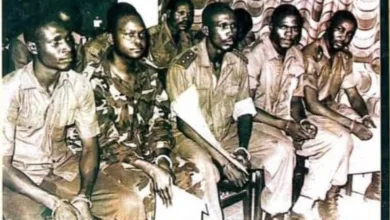
List of 117 publicly executed coup plotters since 1976 – by Richard Akinnola
A study of the number of those publicly executed for coups in Nigeria shows a preponderance of Middle-Belt and Southern soldiers. We have shed too much blood. Enough of coups and attempted coups. 1976 Dimka’s Coup Major-General I. D. Bisalla (Plateau) 2. Colonel Isa Bakar (Borno) Lt.-Col. Buka Dimka (Plateau) Lt.Col. A. R. Aliyu (Bendel) Capt. G. Parrwang (Plateau) Capt.…
Read More » -
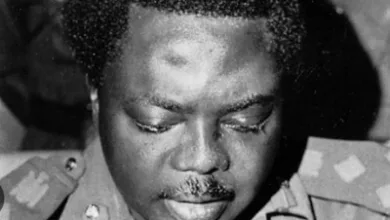
Time to celebrate Murtala, Abuja and G7 states at 50 — by Martins Oloja
It is indeed a time to celebrate with Abuja and a group of seven states Hurricane Murtala Muhammed who spent barely six months in office created 50 years ago. They all clock 50 years today Tuesday February 3, 2026. It is also a time to reflect on the consequences of that political choice of creating seven more states (Benue, Bauchi,…
Read More » -
Who writes our dead? Why Nigeria needs a serious obituary culture — by Folorunso Adisa
Among the world’s great newspapers, The New York Times is widely regarded as the gold standard for obituary writing. Its death notices are not hurried announcements or ceremonial farewells. They are deeply researched, narrative-driven biographies. Miniature histories, written with patience, texture, and moral curiosity. In many cases, they function as a final journalistic summation: a full portrait of a life…
Read More » -
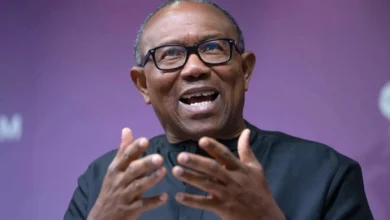
The silence that speaks: Peter Obi and the IPOB question — by Kayode Adebiyi
There is a kind of silence that says more than a thousand speeches. And in Nigerian politics, few silences have raised as many questions as Peter Obi’s prolonged quiet on IPOB. Over the years, Obi has carefully built a reputation as the voice of conscience by manipulation. The man of restraint. The apostle of good governance. The politician who speaks…
Read More »


 Follow our WhatsApp Channel