TRIBUTE: Apamaku, the night 40 bullets failed — by Wale Adedayo
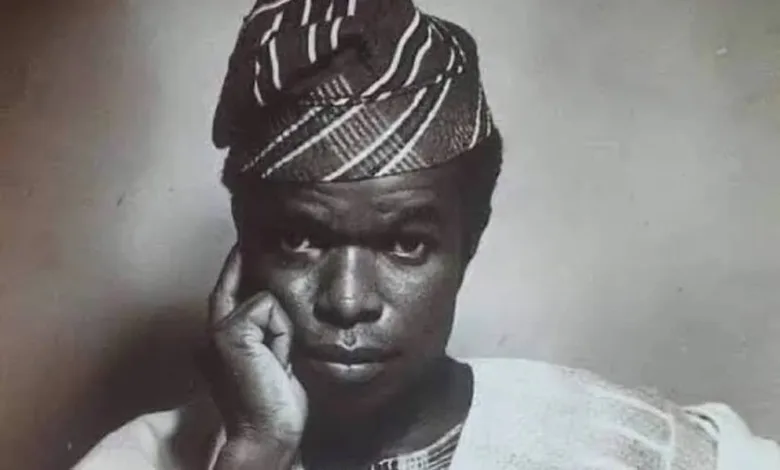
In the dark and fearful days of Nigeria’s military dictatorship, when whispers carried more safety than speeches and the knock on the door after midnight could mean disappearance, one man stood stubbornly upright against tyranny.
His name was Abraham Adesanya.
Among his people he was called Apamaku—the one whom death cannot kill.
It was not a nickname given lightly. It was earned in fire and gunpowder.

The Old Lion of the Yoruba
When the great sage Obafemi Awolowo passed into history in 1987, the Yoruba nation searched for men who could carry the torch of courage and principle.
From the ancient soil of Ijebu rose a quiet but steely figure—lawyer, nationalist, and defender of democracy: Chief Abraham Adesanya.
He became Asiwaju of Yorubaland, the political and moral rallying point of a people who believed that justice must not die in Nigeria.
Then came the national tragedy.
The historic election of June 12, 1993—widely believed to have been won by Moshood Kashimawo Olawale Abiola—was annulled by the military regime of Ibrahim Babangida.
Nigeria erupted in outrage.
Out of that outrage was born National Democratic Coalition, a formidable alliance of intellectuals, politicians, and activists determined to restore democracy.
Adesanya stood near the center of that storm.
Alongside fiery voices such as Gani Fawehinmi, Femi Falana, Olisa Agbakoba, and the legendary nationalist Anthony Enahoro, he challenged the might of the Nigerian military.
But when the iron grip of dictatorship tightened under Sani Abacha, terror descended upon the land.
Arrests.
Bombings.
Disappearances.
Assassinations.
Many activists fled into exile.
Adesanya did not.
At seventy-four, the old lion chose to stay in the lion’s den.
The Dictator’s Order
Abacha’s regime had little patience for dissent.
Those who challenged it often vanished.
One name soon appeared on the dictator’s list of enemies: Chief Abraham Adesanya.
The assignment was given to a feared operative of the regime’s deadly strike unit—
Barnabas Jabila, a man whispered about in fear within Nigeria’s security circles.
The mission was simple.
Eliminate Adesanya.
The Ambush — January 14, 1997
It was evening in Lagos.
The aging nationalist had just closed work at his law chambers. His chauffeur steered the familiar Mercedes-Benz into the busy Lagos road.
Then it happened.
Vehicles screeched.
Gunmen emerged.
Automatic rifles roared.
The air exploded with gunfire.
Bullets ripped through the night like angry spirits.
The assassins sprayed the car with a merciless hail of metal.
Glass shattered.
Metal screamed.
The Mercedes became a storm of sparks and flying fragments.
Inside the car, the terrified driver froze.
But in the back seat sat a calm old man.
Chief Abraham Adesanya.
The Words That Defied Death
The driver panicked as the bullets struck the vehicle.
But the old nationalist spoke quietly.
“Drive on.”
The driver hesitated.
The gunfire intensified.
Adesanya repeated himself with the calm authority of a village elder invoking ancestral certainty.
“Drive on. No bullet will touch us.”
It was a strange confidence.
Perhaps it came from courage.
Perhaps from faith.
Perhaps from the mysterious inheritance of his father—a famed traditional healer whose spiritual reputation was known across Yorubaland.
The driver pressed the accelerator.
The car rolled forward through the storm.
The assassins fired again.
And again.
And again.
Forty Bullets
By the time the attack ended, the vehicle looked like a wreck dragged from a battlefield.
The windshield was shattered.
The body of the car was punctured with holes.
The seats were torn open by bullets.
More than forty rounds had been fired.
Yet something extraordinary had happened.
Not one bullet touched Chief Abraham Adesanya.
Not one touched his driver.
The assassins had riddled the car.
But the men inside were untouched.
It was as if death had come… and missed.
When he was asked how he and his driver managed to escape such extenuating situation, Chief Adasanya simply smiled, responding with a proverb that still lingers in the memory today: “Ọ̀wọ̀ ti a fi wọ igbá là fi wọ kóró inú rẹ̀, ” literarily meaning, “The reverence/protection accorded the Calabash is the same given to the seed in it.” Did Adesanya’s African fortification extend to the driver of that day?
THE BIRTH OF A LEGEND
News of the miraculous survival spread across Nigeria like wildfire.
To many Nigerians living under the suffocating fear of dictatorship, the story felt almost supernatural.
The Yoruba gave him a name that would follow him forever:
Apamaku.
The man death refused to take.
The bullet-riddled Mercedes-Benz itself later became a relic of resistance, eventually preserved at the Lagos State Museum—a silent witness to the night when tyranny fired forty bullets and destiny refused to fall.
THE MAN WHO STAYED
What made the story even more powerful was this:
Adesanya could have fled the country.
Many leaders of NADECO had done so to escape imprisonment or assassination.
But the old Asiwaju remained in Nigeria.
He continued the struggle.
He spoke.
He organized.
He resisted.
Until the dictatorship itself finally collapsed.
THE FINAL JOURNEY
Chief Abraham Adesanya lived another eleven years after that night of bullets.
When he died on April 27, 2008, at the age of 85, Nigeria mourned a man who had stood unflinchingly in one of its darkest eras.
He left behind no armies.
No riches.
No palaces.
But he left something more enduring:
The example of a citizen who refused to bow before tyranny.
And the unforgettable legend of the night forty bullets bowed before courage.
-Adedayo is a senior journalist and Publisher of Uhuru Times