Why President Tinubu is building a serious claim to greatness — by Ademola Oshodi
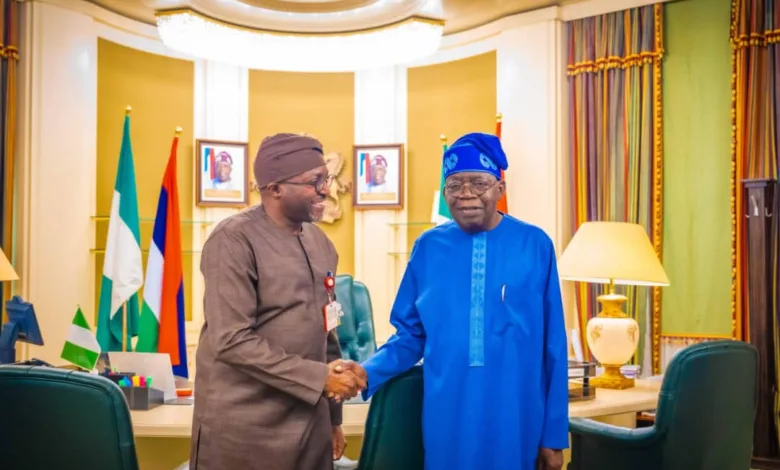
Nigeria’s history offers several examples of exceptional leadership amid profound national difficulty. General Yakubu Gowon presided over post-war reconciliation; General Murtala Muhammed revitalised the public service, despite lacking an electoral mandate; General Abdulsalami Abubakar swiftly restored civilian rule; and Dr Goodluck Jonathan’s 2015 election concession demonstrated democratic maturity. Chief Olusegun Obasanjo led reforms, rehabilitated Nigeria internationally and secured an $18 billion Paris Club debt write-off, although his third term bid diminished his democratic legacy.
Tinubu’s distinction is in uniting these strengths and making them endure through democratic renewal, economic recalibration, wider opportunity, security reform and renewed international influence.
Commitment to Democracy
Assessing President Tinubu’s leadership begins with his democratic record:
As a senator during Nigeria’s Third Republic, he became a prominent supporter of the National Democratic Coalition (NADECO) following the annulment of the June 12, 1993 presidential election. He later assembled the political coalition that became the All Progressives Congress, which achieved Nigeria’s first federal transfer of power from a governing party to an opposition party.
His election in 2023 attracted criticism from observers and was legally challenged, nevertheless, the Supreme Court affirmed the result. That historical record has been strengthened by President Tinubu’s conduct in office.
Osun’s August 2026 election demonstrated his commitment to democracy. Before the election,Tinubu urged INEC to uphold the process and directed security agencies to protect voters and officials before congratulating Governor Ademola Adeleke after the opposition Accord Party defeated his APC. Despite documented inducement and localised disruption, the electorate’s choice prevailed.
In Rivers State, the administration judged political paralysis and threats to public order grounds for emergency rule. Suspending the elected executive and legislature drew constitutional objections. Their restoration six months later kept the intervention temporary, but the controversy calls for protecting competitive politics in 2027.
That democratic conviction guides Nigeria abroad. At President Patrice Talon’s request, Tinubu authorised Nigerian airstrikes and troop deployments that helped defeat Benin’s December 2025 coup attempt. After Guinea-Bissau’s November coup, Tinubu authorised protection for opposition candidate Fernando Dias. His approach within ECOWAS did not restore constitutional rule in Niger, but reflected a democratic principle: negotiation first, protection where necessary, and force when required.
Economic Reformation
Democratic authority earns public confidence when government can correct economic decline. In 2022, petrol subsidies consumed 2.2 percent of GDP and 32 percent of government revenue, while federal debt-service exceeded retained revenue. Nigeria’s tax-to-GDP ratio stood at 8.2 per cent in 2023, against Africa’s 16.1 per cent average.
President Tinubu acted decisively. He dismantled the petrol-subsidy regime and converged official foreign-exchange windows as the Central Bank tightened policy and curtailed deficit financing. Hardship was felt and relief arrived slowly. Those deficiencies require correction, but preserving a system that rewarded arbitrage and smuggling would have deepened the crisis.
Four 2025 tax laws consolidated the tax framework, created the Nigeria Revenue Service, retained VAT at 7.5 per cent and waived VAT on essential supplies like food and medicine; a February 2026 directive channelled oil and gas revenue into the Federation Account and subjected operating charges to legislative appropriation. These sought to improve transparency, raise revenue and restore disciplined resource management.
Tinubu’s reform belongs to a recognisable history of bold but difficult recalibration. Deng Xiaoping’s reforms in China, India’s 1991 liberalisation and Margaret Thatcher’s contested economic programme all altered their economies in ways that subsequent governments largely preserved. Conversely, in Russia, Boris Yeltsin illustrated rapid liberalisation’s dangers amid institutional weakness.
Tinubu’s reforms are establishing a durable growth path while strengthening institutions to support production, employment and better livelihoods. Success hinges on turning stability into opportunity.
Economic Successes
Early results warrant cautious confidence while clarifying the work ahead: real GDP grew from 3.38 per cent in 2024, to 3.87 per cent in 2025, and 4.43 per cent in Q2 2026.
The IMF reported stronger macroeconomic stability and resilience, noting that gross reserves increased from approximately $40 billion to $46 billion during 2025, while net reserves rose from about $23 billion to $35 billion. S&P also upgraded Nigeria’s sovereign rating from B-minus to B. Capital inflows reached $23.22 billion, but roughly 85 per cent were portfolio investments. This is encouraging, yet Nigeria needs more productive capital to expand manufacturing, create decent jobs and build domestic capacity.
The purpose of macroeconomic stability is ultimately a better life for citizens. President Tinubu raised the minimum wage from ₦30,000 to ₦70,000 and exempted minimum-wage earners from income tax. By September 2026, the NELFUND had disbursed ₦355.87 billion after processing 1.66 million applications, establishing Nigeria’s first interest-free student-finance system at this scale.
Yet social challenges persist. The IMF estimated poverty at 63 percent and food insecurity affecting 27 million Nigerians in late 2025. The administration must turn macroeconomic stability into higher real incomes, dependable services and wider opportunity. Tinubu’s administration brought the case that secured the Supreme Court ruling for direct local government allocations from the Federation Account. This would empower government at the grassroots to provide social amenities and interventions for the masses.
Domestic refining shows how policy transforms capacity into national advantage. The Dangote refinery was largely constructed before Tinubu’s presidency and commissioned by President Buhari. Production, however, commenced under President Tinubu, whose administration supported domestic crude supply and introduced the naira-for-crude arrangement.
The US Energy Information Administration reports that seaborne petroleum-product exports rose from 46,000 barrels a day in 2023 to about 350,000 by the second quarter of 2026, while imports fell from almost 400,000 to below 130,000. Buhari commissioned it and investors built it; Tinubu helped turn its operation into a national shift towards refined-product exports.
Foreign Policy and National Power
Foreign policy is where domestic reform becomes national power. Nigeria’s removal from the FATF’s increased-monitoring list reduced international compliance concerns. Nigeria also joined BRICS as a partner country and became an Association country of the International Energy Agency.
During Tinubu’s state visit to Britain — the first by a Nigerian president in 37 years — UK Export Finance signed a £746 million port guarantee for port infrastructure. His administration has also intensified advocacy for permanent African representation on the UNSC and advanced Nigeria’s leadership of the African Group’s initiative on international tax cooperation.
Nigeria began that campaign in 2022, but Resolutions 78/230 and 79/235 established negotiations under Tinubu. If that diplomatic campaign eventually aligns with the domestic tax reform, this could enlarge Nigeria’s cross-border tax base and capacity to finance development.
Security and State Capacity:
Security reveals most clearly why domestic governance and foreign policy cannot be separated. The 750 terrorism-related deaths recorded in 2025 and the 7,825 abductions reported over the following twelve months demonstrate that Nigeria’s security situation remains below the standard Nigerians deserve.
President Tinubu is responding structurally: state-police legislation has advanced through both chambers; he ordered 20,000 police recruits, forest-guard deployments and officers’ withdrawal from non-essential VIP duties; approved four Army divisions and 28,000 recruits, and authorised military pay increases of 30 to 80 per cent.
New arrangements with Cameroon and Benin are strengthening cross-border operations. The US pledged to delivering long-outstanding military equipment and struck ISIS-linked camps in coordination with Nigeria.
Together, these measures address several longstanding weaknesses: inadequate local presence, insufficient manpower, low morale and transnational sanctuaries. If sustained, this structural approach could produce a durable reduction in violence and better protection of Nigerians.
The Measure of Greatness:
Viewed together, this is the record of a President confronting inherited weaknesses while restoring Nigeria’s capacity to act at home and lead abroad. The eventual judgment on President Tinubu’s legacy will depend on whether his decisions produce enduring outcomes: rising real incomes, stronger institutions, safer communities and credible democratic commitment. The foundations are visible and the work continues. On the evidence before us, President Tinubu is on track to become the best head of state Nigeria has produced.
–Oshodi is Senior Special Assistant to President Tinubu on Foreign Affairs and Protocol