Tokunbo Wahab is not the argument — by Folorunso Adisa
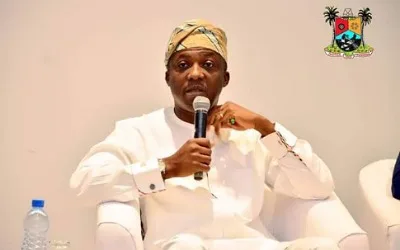
There is a curious disease in our public conversation. We begin by asking a legitimate question about public office and, before the question has finished breathing, we have dragged the office holder’s private life into the courtroom of Twitter, Facebook and other microblogging platforms. Accountability then loses its object. What began as a question about the government becomes an argument about a man’s wristwatch, his income, his wardrobe and, eventually, his worth as a human being. That is where the recent exchange involving the Lagos Commissioner for the Environment and Water Resources, Tokunbo Wahab, deserves a little intellectual housekeeping.
The commissioner is a public officer. His stewardship is therefore open to scrutiny. Lagosians have every right to ask what the ministry is doing about waste, flooding, drainage, wetlands, pollution and the general quality of the city’s environment. They can challenge policies, demand figures, question enforcement methods and ask whether public expenditure is producing the promised results. That is citizenship, exercised exactly as it should be. The problem begins when interrogation of the office quietly mutates into an indictment of the personality.
The distinction matters because a commissioner does not become a man without a past simply because he became a commissioner. He does not enter public office naked, without a wardrobe, a career, investments, property, relationships or possessions acquired before his appointment. Public service creates obligations concerning public resources. It does not, by itself, create a doctrine under which every possession of a public servant must have been purchased from his government salary.
If there is credible evidence that a public officer acquired an asset with public funds, that is a serious matter, and the appropriate response is evidence, documentation and investigation. The question then becomes forensic: what money was used, when was the asset acquired, through whom and from what source? That is accountability. Insinuating that a public officer is suspect because his lifestyle exceeds his publicly quoted salary is something considerably weaker than that.
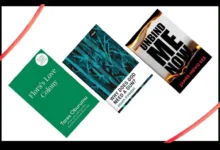
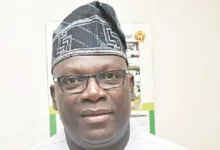
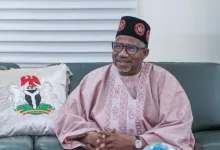
There is another problem. We have developed the unfortunate habit of using poverty as an investigative instrument. Once a public servant is seen wearing something expensive, some people instinctively calculate his salary and announce a contradiction. But wealth can precede office. It can also arise from legitimate sources unrelated to government remuneration. A serious society carries the burden of establishing facts rather than constructing guilt from appearances. A person’s pre-existing wealth does not exonerate corruption, just as a person’s modest appearance does not prove integrity.
It would be too generous, however, to treat this instinct as mere mob impatience. Nigerians have learned, across decades of asset declarations filed and never published, of panels convened and never concluded, that the forensic route rarely arrives anywhere. When the formal mechanisms of accountability function so inconsistently, the wristwatch becomes a kind of improvised evidence, the only exhibit an ordinary citizen feels he can examine for himself. That instinct is understandable. It is also, for all its understandable origins, not accountability. It is a substitute for accountability, adopted precisely because the real thing has so often failed to show up. The answer to that failure cannot be to lower the standard of proof until suspicion counts as verdict. It has to be to make the actual mechanisms, asset declaration, procurement audit, legislative oversight, work well enough that citizens no longer need to read a jacket as a confession.
Chinua Achebe understood this terrain better than most. In A Man of the People, the narrator Odili watches his former teacher, Chief Nanga, arrive in a convoy, dressed in a manner that instantly signals the gulf between a minister’s income and a minister’s visible life, and Odili’s suspicion curdles almost immediately into certainty, long before he has anything resembling proof. Achebe’s genius is that he does not simply indict Nanga. He indicts the whole arrangement that makes Nanga’s wealth both obviously excessive and almost impossible to challenge through any route except gossip and grievance, because the institutions that should have examined it have already failed to. The novel’s quiet tragedy is that Odili’s outrage, however justified in spirit, never converts into anything the state recognises as evidence. It converts instead into personal vendetta. Sixty years later, Lagos Twitter performs a compressed, accelerated version of the same failure: real suspicion, real grievance, nowhere forensic to put it, so it lands instead on a watch.
The environmental question, however, remains and should not be evaded. Lagos is not a spotless city. Anyone who lives here knows this without needing a laboratory. There are places where refuse remains a public nuisance, where drainage channels are abused, where indiscriminate dumping persists and where the city’s environmental ambitions collide daily with the habits of its residents. The government should therefore be interrogated, relentlessly and intelligently, about what it controls and what it has achieved. The ministry has pointed to measurable work in this period, continued dredging of major drainage channels, the removal of large volumes of plastic waste from circulation, and improvements to landfill turnaround. Those are the kinds of claims that should be checked against independent data, not simply accepted because they were announced, and not simply dismissed because they were announced by the government being scrutinised. But the Lagos environment is not produced by the commissioner alone. A city is also the physical expression of the habits of its inhabitants.
Metropolitan cities across the world carry their own share of environmental strain, much of it driven by population pressure they did not choose and cannot easily reverse. New York still contends with its rat-infested subway corridors. London has not solved the wristwatch and phone snatching that plagues several of its busiest streets. A city that succeeds at drawing people in pays a price for that success, in the form of strain that tips over into crime or filth or both. Managing that strain is a shared project between the government that must build the systems and the citizens who must not defeat them.
This is not an excuse for government failure. A city that cannot keep its drainage clear has a government that has not done its job, regardless of how its citizens behave. But a government that keeps its drainage clear can still watch a city go dirty within a week, if its citizens treat every open space as a private bin. The man who would never urinate by the roadside in London may find a corner in Lagos sufficiently anonymous for the same act. The person who would not throw a plastic bottle into a Canadian street may toss one through the window of a moving vehicle here. Someone who would not fly-tip in a city where enforcement is predictable may dump waste where he assumes nobody is watching. The geography changes. The moral principle should not.
Canary Wharf does not become cleaner because a mayor tweets more vigorously. Lagos does not become dirty because a commissioner wakes up one morning and decides to manufacture filth. The city’s environmental condition is the cumulative product of government policy, infrastructure, enforcement, commercial practice and millions of individual decisions made every day. The government has a duty to provide systems that work and enforce the rules fairly. Citizens, businesses and visitors carry the corresponding duty not to turn every street, drainage channel and open space into an extension of their personal waste bins.
This is why the commissioner should be questioned about his ministry’s record, and why Lagosians should also question themselves. The most convenient politics is to locate every social problem inside the personality of one public official. It spares us the discomfort of examining how we participate in the very problem we condemn. We complain about a dirty Lagos while some of us litter Lagos. We demand enforcement while some of us search for ways around the rules. We criticise the government for failing to maintain public spaces while treating those spaces as though they belong to nobody.
The temptation to personalise public accountability is particularly strong on social media, because outrage travels faster than evidence. A question about environmental policy is less entertaining than a quarrel about a wristwatch or lifestyle. A request for audited expenditure is less viral than an insult. Unfortunately, governance cannot be reduced to viral drama, however satisfying the drama feels at the moment.
Social media can, in fact, be a legitimate instrument of environmental accountability, a tool through which citizens document violations and press government institutions for answers. That is the useful side of the platform. The line is crossed when the institution disappears from view and the personality becomes the entire target.
Tokunbo Wahab should not be above scrutiny because he is a commissioner, and he should not be reduced to a salary figure because he is one. If his ministry has failed, show us where. If it has succeeded, show us the evidence independent of the ministry’s own press briefings. If public money has been abused, produce the trail. If enforcement has been selective, document it. Those are questions worthy of a city as consequential as Lagos, and they are considerably harder to answer, and considerably more useful once answered, than anything a wristwatch can tell us.
What does not help is turning a question about public accountability into a referendum on whether a public servant is entitled to own an expensive possession. Unless there is evidence connecting that possession to public funds, the argument has not established anything. It has established, at most, that somebody owns something another person considers too expensive for his position, which, as Achebe’s Odili eventually discovers, is a grievance, not a case.
Lagos is too important to be governed by sentiment and too troubled to be debated through personal abuse. The city needs citizens capable of distinguishing an uncomfortable question from an ignorant accusation, just as it needs public officers capable of distinguishing legitimate criticism from personal persecution. The real interrogation should remain where it belongs: on the office, its powers, its responsibilities, its decisions and its results. Once we lose that distinction, we are no longer holding power accountable. We are simply quarrelling with people.
The conversation does not end here. You can continue it with me on X via @folorunso_adisa, LinkedIn: Folorunso Fatai Adisa, or on Facebook at Folorunso Fatai Adisa.