The economist and the fallacy of overgeneralisation — by Olabode Opeseitan
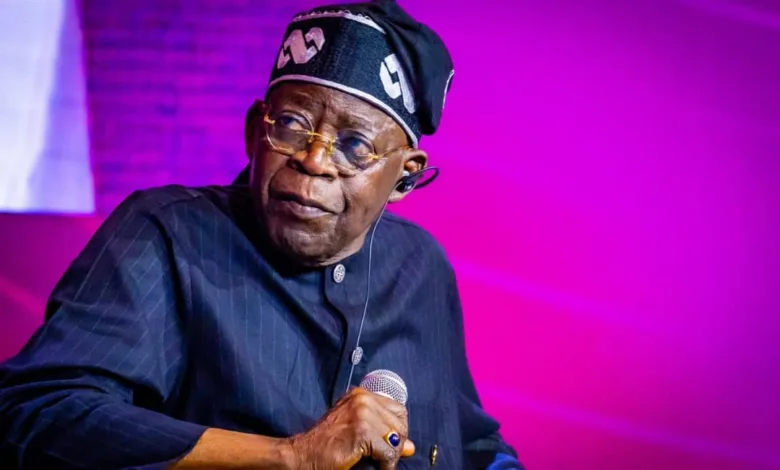
The Economist’s October 1 article, “Nigerians dislike their president, but may re-elect him anyway,” is serious foreign correspondence and deserves to be treated as such. It makes valid observations about hardship, insecurity and Nigeria’s fragmented opposition. But its headline reaches a national conclusion that its reporting does not sufficiently establish: that Nigerians, collectively, “dislike” President Asiwaju Bola Ahmed Tinubu.
That is the fallacy of overgeneralisation: turning the experience of one troubled but important locality, and a limited number of voices within it, into an emotional verdict on an electorate of roughly 100 million people across 36 states, the Federal Capital Territory, and vastly different economic, political and security environments.
What The Economist Got Right
The Economist is right to highlight the grave human cost of insecurity in Borno State. Two decades of Boko Haram and ISWAP violence have displaced communities, damaged livelihoods, disrupted farming and trade, and exposed many families to hunger, unemployment and fear. These realities warrant sustained national and international attention.

It is equally correct that hardship remains politically consequential. Fuel-subsidy removal and foreign-exchange reforms imposed immediate costs on households and businesses. Food, transport and other living costs have understandably produced anger and anxiety. No responsible assessment of the Tinubu administration should minimise that pain.
The magazine is also right that the opposition’s fragmentation matters. The 2027 election will not be determined by approval of the President alone. Turnout, party organisation, regional alliances, candidate credibility, security, electoral administration and the opposition’s ability to present a credible national alternative will all be decisive.
The Economist is entitled to these editorial judgements, as every serious publication is entitled to scrutinise government freely. But that right does not exempt any interpretation from proportion, evidence and caution.
The Overgeneralisation
The article begins with Borno’s suffering, gathers much of its moral force from Borno’s suffering, and then moves to a headline about how all Nigerians feel. Borno’s distress is real. But Borno is not Nigeria in miniature.
It is one state in a federation of 36, with a security burden and political economy that are exceptional. Its people must be heard. Yet their experience cannot fairly be deployed as evidence for one emotional judgement about some 100 million registered and potential voters across Nigeria.
The methodological question is unavoidable: how did The Economist establish that “Nigerians dislike their president”? Did it rely on a transparent, nationwide and representative poll? What was the sample size? Which states, demographic groups, faith communities and income brackets were included? What was the margin of error? How did it distinguish anger over present hardship from a settled national rejection of the President?
Authentic frustration is not unanimity. Economic hardship is not necessarily permanent political rejection. And selected testimony, however compelling, is not a substitute for nationally representative evidence.
The piece also gives too little attention to signs of recovery, including in Borno itself. The state remains fragile, particularly in communities vulnerable to continued terrorist attacks. Yet it is incomplete to portray Borno only as a landscape of despair when recovery, reconstruction and productive investment are visibly under way.
In July, Professor Babagana Umara Zulum mni, the Borno State Governor, launched the state’s 2026 wet-season agricultural intervention, providing subsidised fertiliser and farm inputs for 120,000 smallholder farmers. The initiative is intended to restore farm productivity, reinforce food security and rebuild livelihoods.
Borno’s fiscal capacity has expanded markedly. Governor Zulum presented a 2026 budget of about ₦890.33 billion, with more than 61 per cent assigned to capital expenditure. This does not erase insurgency’s damage, but it reflects an effort to translate recovery into schools, roads, farms, healthcare, resettlement and public services.
Federal intervention also matters. The rehabilitation of the Bama-Banki and Dikwa-Gamboru-Ngala roads is designed to reopen strategic trade corridors, support agriculture and commerce, improve security access and advance post-insurgency recovery.
Borno is not “fixed”. But an account that omits recovery, investment and improving security conditions is as partial as one that omits hardship.
Three Communication Lenses
Agenda-Setting Theory
Agenda-setting theory, associated with Maxwell McCombs and Donald Shaw, explains that the media shape public priorities by deciding which issues receive greatest prominence. The media may not always tell people what to think, but they exert enormous influence over what people think about.
The Economist places Borno’s crisis at the centre of its account, then extends the emotional implications of that crisis into a headline about Nigerians generally. The problem is not that Borno receives attention. It should. The problem is whether one crisis-affected state can bear the evidential weight of a national conclusion.
A more balanced agenda would place insecurity beside reconstruction, hardship beside reform, and public frustration beside evidence of economic stabilisation and institutional recovery.
Framing Theory
Framing theory, developed from the work of Erving Goffman and Robert Entman, explains how media select facts, define problems and organise information into a preferred meaning.
The Economist frames President Tinubu’s confidence mainly through public dissatisfaction and opposition weakness. But other interpretations exist. An incumbent who has absorbed political costs to advance structural reforms may reasonably conclude that the indicators are beginning to shift, especially when data from domestic and international institutions corroborate evidence of progress.
Nigeria’s gross external reserves reached $55.25 billion in September 2026, according to figures attributed to the Central Bank of Nigeria, the highest level in 18 years. That does not put food on every table overnight. It does, however, strengthen external buffers, support confidence in the foreign-exchange market and improve the country’s capacity to absorb shocks.
The wider picture includes reported real GDP growth of 4.43% in the second quarter of 2026, as well as initiatives in agriculture, education, primary healthcare, transport infrastructure and digital skills. These gains do not prove universal public approval. But they make it difficult to sustain an account in which hardship is the only politically relevant fact.
Cultivation Theory
Cultivation theory, associated with George Gerbner, warns that repeated exposure to narrow images can shape an audience’s broader perception of reality. If Nigeria is repeatedly presented through insurgency, hunger, kidnapping, official failure and cynicism, distant audiences may come to believe that these conditions define the whole country.
Nigeria is more than its gravest crisis zone. It is a federation of farmers, traders, students, entrepreneurs, professionals, innovators and public servants trying to build lives amid difficult conditions. Its citizens may simultaneously be frustrated by hardship, demand better governance, support some reforms, reject others and hold different views of the administration.
That complexity is not a concession to government. It is a more accurate account of political life.
A Fuller National Picture
No fair-minded observer should deny that millions of Nigerians remain under pressure. The true test of the government is whether economic improvement becomes tangible in homes, markets, farms, classrooms, hospitals and workplaces.
But it is equally unfair to assume that national opinion can be reduced to The Economist’s headline. Increasingly, Nigerians are acknowledging interventions in infrastructure, agriculture, health, education, social investment and digital skills, even as they insist that the government must do more and act faster.
Youth stakeholders in the North-West, for instance, have recently commended interventions in infrastructure, education, healthcare, agriculture, digital innovation and social investment. They pointed particularly to the Nigerian Education Loan Fund and the Three Million Technical Talent programme as initiatives capable of expanding opportunity, employability and participation in the digital economy.
Their views do not constitute a national consensus. Nor should they be presented as one. They do, however, demonstrate why Nigerian public opinion cannot honestly be compressed into a single sentiment of universal dislike.
The same balance applies in Borno.
Governor Zulum has cited relative progress in security, reconstruction and recovery, while acknowledging the scale of unfinished work. That is the language required of serious governance: progress without triumphalism; realism without fatalism.
A More Defensible Conclusion
The Economist is right that the 2027 election will be shaped by the cost of living, insecurity and public judgement of the Tinubu administration. It is right to examine dissatisfaction and to question the advantages of incumbency.
But it is not justified in transforming regional hardship, anecdotal anger and a narrow editorial frame into an unqualified verdict that “Nigerians dislike their president”.
A more defensible conclusion is this: Nigeria is undergoing a difficult transition. Many citizens are angry about the cost of living and impatient for relief. Others, including citizens who may disagree with aspects of the government’s record, see evidence of recovery in foreign reserves, economic growth, infrastructure, educational intervention, healthcare investment and security-related reconstruction.
That is not blind loyalty. It is democratic discernment.
The Economist is entitled to its editorial judgement. Nigeria is entitled to a fuller narrative.