Pete Edochie, Olu Jacobs and the missing link — by Abdullahi Haruna
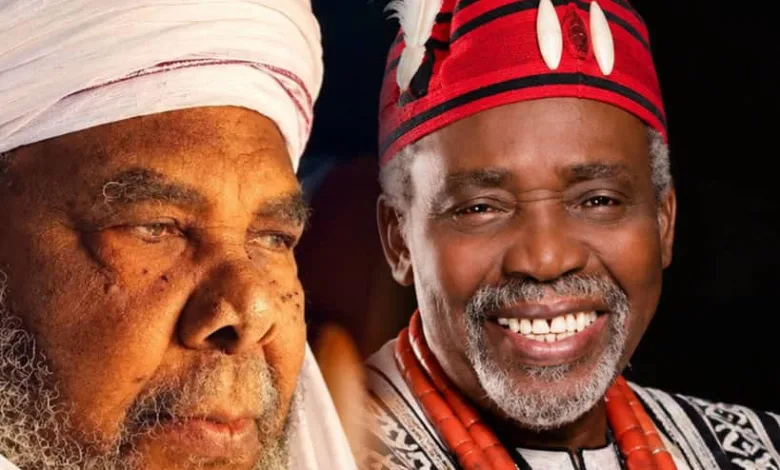
Recently, the land was enveloped in grief. It was the passing of the mercurial thespian, the Bashorun of the screen, the Eze Gburugburu of the creative hub, the Danmasanin of our literary theatre—his majesty, Olu Jacobs.
Many mourned. Many wept. But one expression of grief caught my attention: the tribute of another screen oracle, His Eminence Agabaidu Pete Edochie, the lion of Nigeria’s motion picture industry.
In visible anguish, Edochie cried out in nostalgic lament, invoking Hausa dirges as he mourned his departed friend. He called into the air: “Abokina Olu Dan Kano!”—my friend Olu, son of Kano.
Yet Olu Jacobs was not from Kano. He was not Hausa. He was Yoruba. That was the point.



What many saw as a simple expression of grief was, to me, something deeper. It was a patriot mourning a friend while unconsciously summoning the fading spirit of Nigerian nationalism. In that singular phrase, Edochie reminded us of a Nigeria that once existed—a Nigeria where friendship transcended ethnicity, where cultural identities intertwined naturally, and where belonging was larger than tribe.
That was vintage Pete Edochie resuscitating a dying national ethos.
Many missed the significance of that moment. I did not. Indeed, I am surprised that our national institutions charged with promoting unity did not seize upon it.
For Edochie’s lament was not merely about death. It was about memory.
It was a reminder that nations are sustained not only by constitutions, governments or territorial boundaries, but by shared emotional bonds. Every enduring nation is built upon an invisible covenant among its people—a collective agreement to see one another first as compatriots rather than competitors, as fellow citizens rather than ethnic representatives.
Nigeria once possessed that covenant in abundance.
There was a time when identities flowed freely across regional and ethnic lines; when friendships were forged without suspicion; when diversity was celebrated not as a fault line but as a national asset. The Nigerian project was imperfect, but it carried a powerful sense of common belonging.
Somewhere along the journey, we misplaced that spirit.
Today, we are increasingly united by geography but divided in sentiment. Ethnic identities often speak louder than national identity. Regional loyalties frequently overshadow collective aspirations. We inhabit the same country, yet too often retreat into separate emotional territories.
This is why Edochie’s tribute matters.
It was not simply an old man mourning an old friend. It was Nigeria mourning a disappearing Nigeria.
When he called out “Abokina Olu Dan Kano,” he evoked a generation that understood that friendship required no ethnic passport. He reminded us of a time when Nigerians embraced one another with a natural ease that now seems painfully distant.
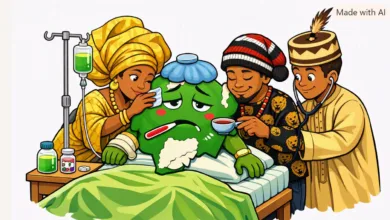
As Nigeria marks 66 years of independence, perhaps there is no better moment to reflect on that missing link.
Independence is more than freedom from colonial rule. It is a continuous obligation to nurture the ideals that make nationhood meaningful. The true measure of a country is not how long it has existed, but how deeply its people believe in one another.
The challenge before us is therefore not whether Nigeria should survive. The challenge is whether Nigerians can rediscover themselves.
Can we recover the spirit that produced friendships like that of Pete Edochie and Olu Jacobs?
Can we rebuild trust across our divides?
Can we teach a new generation that patriotism is not an annual ritual but a daily commitment to the common good?
These are questions worth asking because every great nation is first a moral project before it becomes a political one. The strongest bridges are not built with steel and concrete but with trust, empathy and shared purpose.
The passing of Olu Jacobs has therefore become more than the departure of a legendary actor. It has become a metaphor—a poignant reminder of what we have lost and what we must regain.
Chief Pete Edochie is giving one of his final public lessons to the nation. It would be a tragedy if we failed to listen.
As the green-white-green rises across the country in celebration of our 66th Independence Anniversary, may his lament become our reflection and his nostalgia become our resolve.
And may that haunting cry—“Abokina Olu Dan Kano”—reawaken in us the forgotten music of Nigerian brotherhood.
Because perhaps the missing link was never truly lost.Perhaps it has simply been waiting for Nigerians to find it again.