Things we grew up knowing that have disappeared — by Babafemi Ojudu
There was a time when the presence of government was felt less through radio announcements, billboards, convoys and grand promises than through the ordinary services that made life safer and more orderly.
Government lived among the people. Its workers maintained roads, inspected schools, watched over public health, treated minor ailments, graded farm produce and helped settle everyday disputes. They were visible in villages, towns, markets, schools and farm settlements. Some were respected, many were feared, and a few were thoroughly disliked. But they performed duties that kept society working.
Those services were never perfect. Some officials were overbearing; some abused their powers. Yet their responsibilities were clear, and people knew whom to approach when something needed attention.
Today, many of those modest but essential systems have disappeared or become shadows of what they once were. We build magnificent headquarters while neglecting the daily work that protects public health, preserves infrastructure and improves people’s lives.



Here are some of the officials, institutions and practices many of us grew up knowing.
- Public Works Department road camps
Along major highways stood camps maintained by the Public Works Department, popularly known as the PWD. Workers stationed there patched damaged roads, cleared drains, cut back shrubs and removed obstacles before they became serious hazards.
They did not wait for a road to collapse before responding. Maintenance was a continuing duty.
Today, bushes obscure road signs, blocked drains undermine roads built at enormous cost, and small defects are allowed to become major failures. Then comes another huge contract to rebuild what routine maintenance might have saved.
- School inspectors
School inspectors were dreaded by headmasters, teachers and pupils alike. Their visits were sometimes unannounced.
They examined lesson notes, attendance registers, teaching methods and pupils’ exercise books. They checked whether teachers were present, whether the syllabus was being followed and whether the school was fit for learning. We also remember visits during which our teeth and general health were checked.
The inspector’s arrival could throw an entire school into a frenzy. It also reminded everyone that standards mattered and that somebody was paying attention.
Today, some schools go for years without meaningful inspection. Teachers may be absent, children may struggle to read, and buildings may deteriorate while official reports suggest that all is well.
- Sanitary or health inspectors
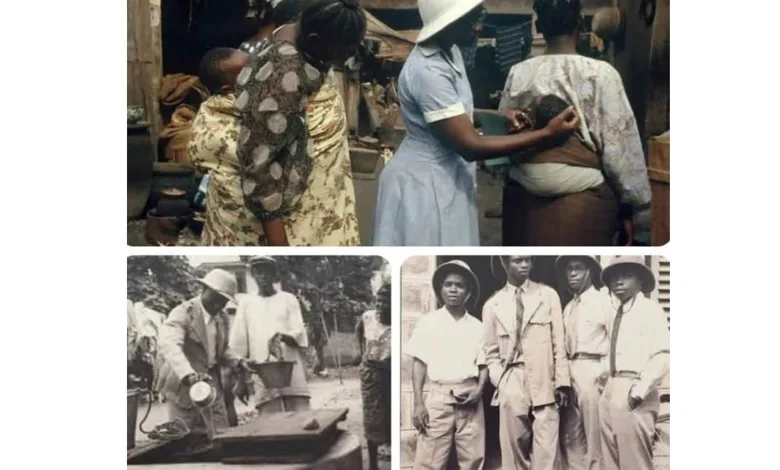
Who can forget the sanitary inspectors with their broad hats, spotless uniforms and stern expressions?
Their appearance sent a neighbourhood scrambling. Compounds were swept, drains cleared, stagnant water emptied and dirty kitchens hastily cleaned. They inspected toilets, wells, refuse dumps, food stalls and residential premises.
People feared them, but their work helped prevent disease. They understood that public health did not begin in a hospital. It began with clean water, proper sanitation and a healthy environment.
Today, we spend vast sums treating preventable illnesses while refuse accumulates, drains remain blocked and mosquitoes breed in stagnant water beside our homes.
- Dispensary attendants
In many communities, the local dispensary was the first point of contact with healthcare.
Attendants cleaned and dressed wounds, treated minor ailments, dispensed basic medicines and supported immunisation and deworming programmes, often at little or no cost to patients. Even now, the memory of that peculiar greenish syrup we were made to drink gives me goosebumps.
To ordinary people, these attendants were trusted healers. They were nearby and approachable, and they dealt with minor conditions before they became emergencies.
Today, many people must travel long distances or spend money they do not have to obtain simple treatment. Hospitals are left to handle ailments that should have been treated within the community.
- “On” and “off” licences
Local councils regulated the sale of alcoholic beverages through what were known as “on” and “off” licences.
An on-licence permitted alcohol to be sold for consumption on the premises. An off-licence permitted its sale for consumption elsewhere. Where appropriate, a business could hold both.
These licences raised revenue, but they also gave councils a way to oversee drinking establishments and protect public order.
Today, drinking joints spring up almost anywhere, sometimes with little regard for noise, safety or the people who live nearby.
- Tax collectors
Tax collectors were everywhere, and they were greatly feared.
Some positioned themselves on roads leading to farms and markets, demanding proof that adults had paid their annual taxes. Those unable to produce a receipt risked arrest or prosecution. The fear of the tax collector was, indeed, the beginning of wisdom.
Their methods could be harsh and humiliating. Yet taxation also created a direct relationship between citizens and government. People paid, and they expected roads, schools, dispensaries and other services in return.
I recall a story about one of Chief Obafemi Awolowo’s visits to Akure to explain how taxes would support free education. The hall was packed. The first question came from the then Deji of Akure.
“Mr Awolowo, I have many wives and several children. Must I pay a separate tax for each child to go to school?”
“No, Kabiyesi,” Awolowo replied. “You will pay your tax once, and all your children will enjoy free education.”
The king turned to his people. “Akure people, have you heard?”
The exchange made the policy clear in a way no poster could. Government had come among the people, listened to a question that mattered in their homes and answered it plainly.
Today, governments depend heavily on revenue that citizens do not pay directly, while many people remain outside the tax system. The bond between payment, service and accountability has weakened.
- Customary court judges
Customary courts handled disputes involving marriage, divorce, inheritance, land and family obligations.
When a marriage had broken down, a woman could approach the court to seek its dissolution, popularly described as jáwè. If she intended to remarry, questions about the return of bride price might also arise. People joked that such settlements happened more readily after the harvest, when farmers had money.
There were colourful stories, perhaps part fact and part folklore, about judges who used their position to acquire additional wives. Whatever the truth of those tales, the courts were close to the people and understood their language, customs and circumstances.
- Produce inspectors
Produce inspectors examined and graded cocoa, palm kernels and other crops to ensure that they met the standards required by buyers and export markets.
Their work protected the reputation of Nigerian produce. Farmers and buyers learned what was expected in the handling, storage and presentation of their crops. Agricultural agencies and cooperatives also helped farmers obtain seedlings, chemicals, sacks, tools and advice.
Today, we speak constantly about agricultural exports while too many small farmers lack dependable support with quality control, storage and access to markets.
- Agricultural extension officers
Extension officers travelled into rural communities to advise farmers on seeds, pest control, soil management and improved farming methods.
They connected agricultural research to the people who needed it. Knowledge did not remain locked in universities and government offices; it reached the farm.
Many farmers now face crop diseases, changing weather patterns and declining soil fertility with too little guidance.
- Veterinary officers
Government veterinary officers vaccinated livestock, monitored diseases and advised farmers on breeding, feeding and hygiene. Their work protected farmers’ livelihoods and the wider community.
I remember taking my grandmother’s goats and cats to a community veterinary facility for treatment at no cost. A private hotel owned by a former governor now stands where that facility once stood. For me, that change captures a larger loss: a place where an ordinary family could seek help has vanished.
- Cooperative officers
Cooperative officers helped farmers, traders and artisans form and manage societies. They taught bookkeeping, supervised elections and helped members pool resources to obtain credit, buy equipment and market their products.
Through cooperatives, people who could never have secured bank loans built businesses, educated their children and improved their homes.
Today, many cooperative societies receive too little support or oversight, leaving members vulnerable to fraud and mismanagement.
- Public water taps and community wells
Many communities had public taps and maintained wells. Water did not always flow, but there was an understanding that providing safe water was a public responsibility.
Today, households drill their own boreholes, sometimes dangerously close to septic tanks, while public water systems decay. Families are left to solve, one household at a time, a problem that demands a collective solution.
- Mobile libraries and reading rooms
Regional and local authorities maintained public libraries, reading rooms and, in some places, mobile library services. Books and newspapers reached people whose families could not afford to buy them.
These places encouraged literacy, curiosity and self-education. I first encountered books in a public library. Then, one day, a man converted the site of that library into a market and named it after himself.
We lament declining reading habits while allowing libraries to close, starving them of funds or giving their premises away.
- Forestry guards and fire watchers
Forestry guards protected reserves, regulated tree felling and helped prevent destructive bush burning. Local authorities also enforced rules on clearing farmland by fire.
A friend’s father was known throughout his life as Ajayi Guard. People knew and respected him for protecting the forest. Today, forests disappear, indiscriminate burning continues and environmental rules are too often ignored.
- The weekend police
I also remember reputable men and women from the community who assisted with policing at weekends. They had their regular occupations, but after some training they were given uniforms and called upon to help keep neighbourhoods safe from Friday evening through Sunday.
Their presence reflected an idea we should revisit: public safety works better when responsible people within a community are involved, properly trained and answerable for their conduct.
What did we lose?
What disappeared was more than a collection of officials in uniforms. We lost a philosophy of government built on proximity, prevention, maintenance and accountability.
We stopped maintaining roads and began rebuilding them after they collapsed. We weakened school inspection and started holding emergency education summits. We neglected sanitation and now struggle with preventable disease. We allowed local dispensaries to decline and sent minor ailments to overcrowded hospitals. We withdrew extension officers and then wondered why farmers were not benefiting from new knowledge.
The lesson is not that everything was better in the past. It was not. We should not revive the harassment, extortion or excessive powers that sometimes accompanied these offices.
We should restore the principle behind their work: government must be present where people live, learn, farm, trade and fall ill. Its officials must have clear duties, the means to perform them and the obligation to answer to the public.
Good governance is found in the cleared drain, the inspected classroom, the functioning dispensary, the graded cocoa, the vaccinated animal, the maintained road and the clean market. These may seem like little things. Together, they determine whether everyday life works.
The government that touches people most deeply is seldom the one that makes the loudest announcements. It is the one people can find when they need it—and whose work they can see long before a crisis comes.