Quiet revolution in the oil sector — by Okoi Obono-Obla

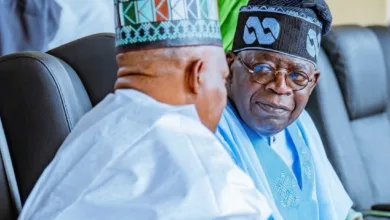
In our highly polarized political environment, it has become fashionable to claim that President Bola Ahmed Tinubu has done nothing since assuming office on May 29, 2023. That narrative is not only unfair, it is dishonest.
No serious mind expects any government to fix in less than four years the monumental, decades-long problems grappling the Nigerian economy. We are talking about a country that for years produced less than one million barrels of crude per day due to theft, underinvestment, and policy incoherence; where not a single major Final Investment Decision (FID) was taken in the oil and gas sector for over a decade; where fuel subsidy consumed over four trillion naira annually while our refineries remained comatose; and where the Nigerian National Petroleum Company Limited deducted revenues at source before remitting a kobo to the Federation Account.
These are not problems created in 2023. They are structural deformities accumulated over twenty years.
It is against this background that the recent commendation by Arise News — a station not known for being pro-establishment — deserves attention. On its Morning Show of October 2, 2026, while discussing the revelation that NNPCL had committed 186,000 barrels per day to debt repayment, its anchors were unambiguous: “Kudos to President Tinubu. He did very well in the oil sector.”
That is not sycophancy. It is record-keeping.
For the first time in many years, we are seeing movement:
First, investor confidence has returned. Through the full implementation of the Petroleum Industry Act and the signing of critical Executive Orders, including the Deep Offshore Oil and Gas Incentives Order and the February 2026 order ending NNPCL’s discretionary deductions, Nigeria has become investable again. FIDs that lingered since 2013, such as the $800 million IMA Gas Project, have now been taken.
Second, production has recovered. From less than one million bpd at inception, we are now averaging about 1.8 million bpd. Oil theft, which once threatened our very existence as an oil nation, has significantly reduced.
Third, we have finally begun to treat gas as the foundation for industrialization.
Does this mean all is well? No. The cost of living remains high and Nigerians are understandably impatient for relief. Those are legitimate concerns that government must continue to address.
But Chinua Achebe, in his timeless novel Things Fall Apart, gave us the perfect analogy for this moment. He wrote of the lizard that jumped from the high iroko tree to the ground. The iroko is the tallest tree in our forest. When the lizard landed safely after such a perilous fall, no one clapped. So the lizard said, “I will praise myself if no one else does,” and began to nod his head.
President Tinubu jumped from the high iroko. He took the difficult, politically costly leaps — subsidy removal, ending opaque deductions, incentivizing deepwater investment — that many before him avoided.
Now, as Achebe foresaw, envious colleagues will not applaud him. The opposition would want us to believe he has done nothing.
Yet when even his fiercest critics in the media are forced to nod and say “kudos,” then the feat can no longer be denied. Like Achebe’s lizard, the President may have to nod his own head in praise of his feat in the oil sector, but history is beginning to nod with him.
Where he has done very well, he truly deserves commendation.
Obono-Obla is a lawyer and public affairs analyst based in Abuja.