The man who conquered the terrain: A tribute to Dele Alake at 70 — by Olabode Opeseitan
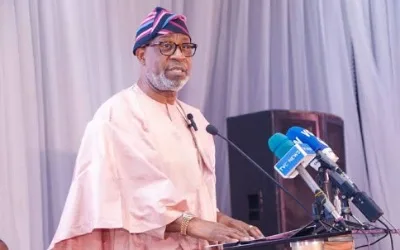
At 70, Henry Dele Alake projects the kind of presence that years of public life either refine or expose. The well-manicured white beard, the carefully settled cap, the glasses that hold his gaze in firm focus, the composed carriage of a man who has spent decades navigating institutions, crises and competing ambitions. He does not announce himself loudly. Yet there is something unmistakably deliberate about his bearing, a quality that suggests preparation before performance and reflection before reaction.
His life has been a sustained rebuke to the idea that serious ability must remain imprisoned in a single profession. Journalism taught him that every human enterprise has a language, and that the first duty of intelligence is to learn it before endeavouring to improve it. The editor moves from law to labour, markets to morality, security to sorrow, learning not everything but enough to distinguish sense from performance. This is how Alake acquired his defining gift: not versatility as a display of range, but the elastic capacity to enter strange terrain, understand its burdens, discover its possibilities and excel without losing his centre.
That apprenticeship began in broadcasting. From Ogun State Radio, where the young graduate learnt the unforgiving disciplines of deadline, accuracy and public attention, he moved to the Lagos State Broadcasting Corporation and helped to establish its sister television station, Lagos Television, LTV 8. Before he became a strategist of national consequence, he had already learnt the practical art of building a platform, organising its message and making it answer to a public larger than itself.
At Concord, amid the anguish and danger that followed the annulment of the June 12, 1993 presidential election, this capacity was tested by something more exacting than professional ambition. He belonged to those who suffered for the democracy Nigeria now enjoys. In the orbit of MKO Abiola’s media and democratic struggle, fidelity was neither convenient nor ornamental. It carried real hazard. To remain standing near a cause when the militarised state had made standing costly was to learn, in the body and not merely in theory, that liberty has invoices and history remembers who paid them.
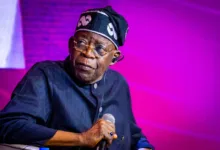

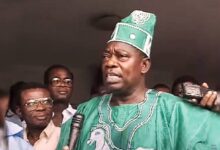
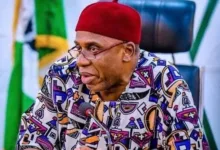
His bond with Asiwaju Bola Ahmed Tinubu was forged in that same difficult school. It was sustained not by the easy arithmetic of proximity to power, but by the hard mathematics of shared memory. When the transition returned Nigeria to civil rule in 1999, Alake and his close friend Tunji Bello reportedly urged Tinubu to seek the governorship of Lagos rather than return to the National Assembly. Their reasoning was acute: Tinubu’s contribution to the democratic struggle gave Afenifere, then the South-West’s dominant political and socio-cultural force, a basis on which to rally behind him. They read the political weather correctly, and the forecast became history.
That instinct would define Alake’s work as a communications strategist. He brought the editor’s stern economy to political language, knowing that a message is not strengthened by noise but by structure, timing and proof. In Lagos, in national campaigns and in the management of public argument, he proved unusually alert to the relationship between narrative and power. Where others saw a microphone, he saw the machinery behind it. He understood that the right sentence can clarify a policy, steady a coalition and prevent an opponent from writing the first draft that controls your purpose.
Then came solid minerals, a ministry whose technical vocabulary might have daunted a lesser learner. Alake approached it in the manner that has defined his life: he entered the terrain, studied the files, located the fractures and organised the response. Illegal extraction met the force of the Mining Marshals. A sector long treated as a buried promise began to acquire the architecture of a national priority. The reported rise in revenue from ₦16 billion in 2023 to more than ₦70 billion in 2025, a 337% increase, offered measurable evidence of renewed attention to a neglected sector. Whether every ambition of the reforms is ultimately realised remains to be seen, but mining has acquired a seriousness, visibility and policy coherence that would have seemed unlikely only a few years ago.
The deeper ambition has been to move the conversation beyond extraction and toward value creation. Under the Tinubu administration, with Alake supervising the sector, Nigeria advanced a policy discouraging the export of unprocessed mineral resources and encouraging greater domestic beneficiation.
Lithium-processing projects emerged or advanced in Nasarawa, Kaduna and other locations; multi-billion-dollar investment commitments were announced; and the ministry began to articulate a mining future in which a larger share of the value generated from Nigerian resources is retained within Nigeria. The long-term success of that vision will depend on execution, but the direction of policy is unmistakable.
In September 2026, Alake signed with the United States a framework designed to deepen cooperation and investment across Nigeria’s estimated $700 billion mineral-resource base. Its significance is monumental: it creates a platform for viable projects, commercial partnerships and investment across geological data, exploration, processing, infrastructure and technical capacity. A country is not made wealthy because its soil is full. It becomes wealthy when its institutions learn to listen to the soil.
This, then, is the true distinction of Dele Alake at 70. He has made grit look intelligent, loyalty look strategic and preparation look like destiny. He has been eloquent without vanity, fearless without noise and resourceful without fuss. He did not merely survive the storms of politics; he kept the map dry.
Some men spend their lives searching for favourable ground. Dele Alake built a career by learning to read the terrain beneath everyone’s feet before they knew it had shifted. And wherever that terrain happened to be, the newsroom, the barricades of democracy, the machinery of government or the mineral wealth beneath the soil, he left it more organised, more legible and more consequential than he found it.