Subsidy without ruin: Relief that works, and relief that wrecks — by Olabode Opeseitan
Nigeria spent decades paying for petrol it could not afford. The subsidy ate revenue, drained reserves and left NNPC mortgaging oil it had not yet pumped. By 2023, 27 states could not reliably pay salaries. Removing it ended that, but it hurt. The average pump price was ₦238.11 a litre in May 2023. It had climbed to about ₦830 before the Middle East war, and it now averages about ₦1,400, nearly six times the 2023 level, after the war pushed crude above $100 a barrel. Alhaji Atiku Abubakar says the answer is to bring subsidy back as a “production subsidy”. President Asiwaju Bola Ahmed Tinubu says relief is necessary but ruin is not. This series asks whose plan Nigerians can afford, and which plan can wreck or save the nation.
Part One: Two Ideas, One Word
Atiku and Tinubu both promise cheaper petrol. They disagree on who pays when prices rise, and on who controls the oil that feeds the pump.
Tinubu leaves pump prices to the market, but not alone. He pairs that with a package of relief measures, while the government still has debts from a profligate past to service. It also has a state to run, with health, security, education and power to fund, and dilapidated infrastructure to fix. Atiku offers one instrument: cheaper crude for refiners.

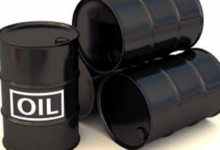

Atiku says his plan is a “production subsidy”. The state would sell crude to domestic refiners below the market price, and refiners would accept price caps and supply obligations. A capped allocation, voted by the National Assembly, would pay for it, with a sunset as local refining grows.
Tinubu’s 8 October package has ten points. The centrepiece is a 30-day margin discount at NNPC stations, with priority for public transporters. Other points include a negotiated ceiling of ₦1,350 a litre on ex-gantry or landing cost, more cash transfers and subsidised credit for small businesses, and a faster CNG rollout. The package also considers an excess profit tax, creates a National Strategic Fuel Reserve and cuts illegal levies.
Finance Minister Professor Taiwo Oyedele rejects the “production” label. A true production subsidy supports a producer who cannot compete at market prices. This is a discount on crude passed through to the pump, “a consumption subsidy by another route, with the same bill attached”.
In plain terms, someone must cover the gap when fuel costs more than motorists pay. Under Atiku’s plan, that someone is the government, which means taxpayers. The money comes from what would otherwise fund salaries, pensions, hospitals and roads. The ministry puts a return to the pre-reform price at over ₦20 trillion a year, and even ₦500 a litre at over ₦16 trillion. That is nearly everything the Federation Account shared among all three tiers of government in 2025.
The second danger is control. Atiku would have the National Assembly vote the allocation, which puts crude back under annual political bargaining. That unwinds the reform that gave NNPC commercial autonomy. Before it, NNPC remitted little to the Federation Account and was itself rescued by the government. A sunset tied to refining capacity is no safeguard, because no date, trigger or volume has been published in the material available.
The barrel is the hardest fact. Oyedele says production of about 1.8 million barrels a day is not all free for domestic use. Production-sharing contracts, joint ventures and cost recovery take much of it. NNPC had exhausted its revenues and mortgaged future output to fund consumption. By May 2023, less than 100,000 barrels a day of free crude was left for the whole federation to share. A scheme to hand out discounted crude must first find it.
The two plans are also unequal in detail. Atiku’s, as set out, gives no cost estimate, discount rate or crude volume. Tinubu’s measures are mostly in operation already, as Part Two shows.
The choice is therefore not subsidy against no subsidy. It is relief that is costed, short and reviewed, against relief that is open-ended, politically allocated and paid for by the public.
Not His First Rodeo
The 8 October 2026 package is the latest major wave of relief since President Bola Tinubu declared “subsidy is gone” on 29 May 2023. Earlier waves relied largely on cash transfers, grants and credit. The latest intervention reaches directly into the fuel market, though the government insists it is a temporary cost-price discount rather than a return to subsidy.
October 2026: NNPC Limited will forgo its retail margin for 30 days to sell petrol at cost, prioritising public transport operators. The package also proposes a ceiling of ₦1,350 per litre on ex-gantry or landing costs.
2025: A ₦200 billion agriculture fund and zero-duty grain imports aimed at easing food inflation.
2024: A ₦1 trillion household and construction programme, including ₦50,000 grants to vulnerable families.
Late 2023: A ₦35,000 monthly wage award for six months and ₦25,000 monthly conditional cash transfers to 15 million households.
Mid-2023: A ₦500 billion intervention fund for MSMEs, manufacturers and the acquisition of CNG-powered buses for mass transit.
Seen as a whole, the record suggests a government that has repeatedly adjusted its response as the consequences of reform unfolded, moving from broad income support towards more targeted interventions aimed at transport, food prices and productive activity.
That evolution has not silenced criticism. Critics call the handouts modest against double-digit inflation, and the 30-day discount a “sugar rush”. That is fair comment on the relief. It misses the real strategy, which is to raise supply and cut costs so that prices ease without a subsidy.
The social costs of deregulation have been severe. Transport costs surged, food inflation accelerated and real wages came under pressure. However, it would be inaccurate to suggest the government simply stood aside. The administration has repeatedly deployed targeted interventions, ranging from conditional grants and wage awards to CNG investment, subsidised credit and agricultural support. The stronger criticism is therefore not that government failed to respond, but that implementation and coverage have struggled to keep pace with the scale of the adjustment.
That distinction matters. The evidence increasingly points to a delivery challenge rather than an absence of policy response. Hundreds of billions of naira have been committed to households, small businesses, agriculture and mass transit. Yet significant bottlenecks remain. Only about one in four eligible SMEs has successfully accessed support programmes, while the national CNG rollout remains constrained by refuelling infrastructure. The central question is no longer whether government has acted, but whether those interventions can be scaled quickly enough to reach the majority of citizens affected by the reforms.
Raising Output
Output has climbed to 1.8 million barrels a day with condensates, according to Oyedele. He is candid that production is still below forecast. Legacy crude commitments from the subsidy era also absorb much of the windfall from higher oil prices.
Cutting Costs
Nigeria’s cost of crude production is among the highest in the world. The upstream regulator, NUPRC, put it at $25 to $40 a barrel, against about $10 in Saudi Arabia, and has set a target of $20. In 2025 Tinubu signed an executive order linking oil-industry tax relief to cost-cutting.
Naira for Crude
This is the policy closest to Atiku’s goal, and it preceded his plan. Local refiners buy Nigerian crude in naira, which eases demand for dollars and keeps the transaction transparent. Fuel has stayed available in every state through the Gulf crisis, with no queues.
Atiku intends to supply crude to qualified refiners at a discount. Tinubu has already built much of the channel, and Nigerians can see it at work. An intention with no published costings cannot match that.