Israel’s economy prospers despite years of war, but rising prices worry voters
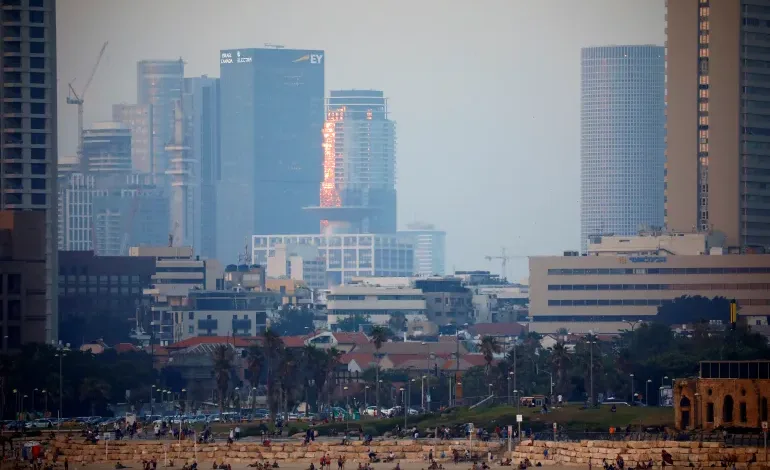
After three years of Israel’s multi-front war in the Middle East, the country’s economy has remained resilient, with strong growth, rising investments and a booming technology sector. However, increasing food prices, mounting government debt and the high cost of living remain major concerns for voters ahead of the October 27 election.
Despite slowing sharply following the Hamas-led attacks of October 7, 2023, and Israel’s subsequent war on Gaza, the economy has rebounded to become one of the fastest-growing among advanced economies in recent years.
Government figures show that Israel’s gross domestic product (GDP) grew by 2.9 per cent in 2025, up from one per cent in 2024, and expanded by 3.2 per cent in the first half of 2026.
The Bank of Israel has projected economic growth of four per cent for the whole of 2026 and 5.5 per cent in 2027, exceeding forecasts for major economies, including the United States, the United Kingdom, France, Canada and Japan.


The Israeli shekel has strengthened against the US dollar over the past three years, reaching a three-decade high in May, while the country’s benchmark TA-125 stock market index has risen by more than 110 per cent. Unemployment stands at 2.8 per cent, while inflation is relatively modest at 1.5 per cent.
Despite these positive indicators, the economy has played a secondary role in the election campaign, with national security dominating debates between Prime Minister Benjamin Netanyahu, leader of the right-wing Likud party, and retired general Gadi Eisenkot, head of the centrist Yashar party.
A major driver of Israel’s economic resilience has been its technology sector, which has continued to attract investments despite the country’s military conflicts across Gaza, Lebanon, Syria, Iraq, Iran and Yemen.
The technology industry accounts for about one-fifth of Israel’s economic activity and has benefited from the global artificial intelligence boom. Direct foreign investment reached a record $26.2 billion in 2025, representing a 78 per cent increase from 2024, driven partly by major acquisitions of Israeli cybersecurity companies Wiz and CyberArk by US technology giants Alphabet and Palo Alto Networks, respectively.
Foreign investment continued to grow in 2026, with inflows reaching a quarterly record of $14.1 billion between January and March, according to government figures. The technology sector has also benefited from close ties with the defence industry, which has increased orders from startups supplying radar systems, communications platforms and anti-drone technology.
Keren Uziyel, a senior analyst for the Middle East and Africa at the Economist Intelligence Unit, said Israel’s economic resilience was largely driven by strong global demand for its technology products and services, particularly in cybersecurity and artificial intelligence.
She added that foreign direct investment and venture capital inflows had supported capital markets, increased wealth and boosted government revenue.
However, Israel’s military campaigns have imposed substantial costs on public finances. In March, the Bank of Israel estimated that the wars had cost the country approximately 350 billion shekels, equivalent to $114.6 billion, excluding the then recently launched war with Iran.
Military spending is expected to rise further as the government prioritises national security. Netanyahu has proposed increasing the annual defence budget to 183 billion shekels, or about $60 billion, representing roughly nine per cent of GDP. If approved, the proposed budget would raise military spending to two and a half times its pre-October 7 level.
Although security remains the dominant campaign issue, opinion polls indicate that the economy and the cost of living are also major concerns. A poll released by the Israel Democracy Institute last month found that 38 per cent of Jewish Israelis and 46 per cent of Palestinian citizens of Israel identified the economy and living costs as either their most important or second-most important election issue.
Israel has consistently ranked among the most expensive countries in the Organisation for Economic Co-operation and Development, with economists attributing the high cost of living partly to limited trade relations with neighbouring countries and cumbersome regulations.
While overall inflation has remained modest, food prices have risen sharply. According to consumer advocacy group Lobby 99, food prices increased by eight per cent between the beginning of 2024 and mid-2026.
Ayal Kimhi, vice president of the Shoresh Institution for Socioeconomic Research in Tel Aviv, said many Israelis were more concerned about their personal financial circumstances and the cost of living than the country’s broader economic indicators.
He, however, expressed doubt that economic concerns would significantly influence the election outcome, given the dominance of security issues in public discourse.
Economists have also cautioned that Israel’s impressive growth figures do not necessarily translate into improved living standards for all citizens. The country’s population has grown by an average of nearly two per cent annually over the past decade, contributing to overall economic expansion.
The Bank of Israel estimated that the economy had suffered an accumulated loss of output equivalent to 8.6 per cent of annual GDP by the end of 2025, despite the subsequent recovery.
Joseph Zeira, an economics professor at the Hebrew University of Jerusalem, said the country’s economic performance had been disappointing when measured against the growth trajectory expected before the conflict began.
He added that many Israelis were experiencing higher prices, declining real wages and incomes, and deteriorating public services, although housing prices had eased somewhat because of increased construction.
Rising government debt is another major concern. Israel’s debt-to-GDP ratio stands at approximately 68 per cent, below those of countries such as the United States, the United Kingdom, France and Italy. However, the gap between government revenue and expenditure has widened significantly over the past three years.
In its latest annual report, the Bank of Israel urged the government to restore orderly budgetary processes and implement credible measures to reduce public debt.
Other structural challenges include increasing labour force participation among ultra-Orthodox Jewish men and Arab women, whose employment rates remain significantly below those of the general population.
Omer Moav, a professor of economics at the University of Warwick and Reichman University, said the cost of military operations and mobilisation had placed considerable pressure on public finances, while growing deficits and national debt had made current spending patterns increasingly difficult to sustain.
Economists say Israel’s economic outlook will depend largely on developments in the region, particularly whether conflicts involving Gaza, Iran and Lebanon intensify or subside.
Uziyel maintained that growth could reach about four per cent in 2026 and exceed that level in 2027, but warned that renewed conflict could undermine the projections.
Kimhi also said Israel’s economic prospects could improve significantly if the wars ended and military expenditure declined.
Credit: Reuters